

Food for the Nerves: Use These Tips to Boost Your Energy
For many people, everyday stress has long been a way of life: Mornings start off hectic, appointments pile up, and there’s barely any time to catch your breath in between. No wonder we often reach for chocolate, snacks, or coffee during stressful moments. But that quick sugar rush usually doesn’t last long—shortly afterward, we feel tired, irritable, and drained.
This makes it all the more important to have a diet that provides lasting support for the body and nervous system. Certain foods provide valuable nutrients like magnesium, B vitamins, or omega-3 fatty acids and can help us cope better with stress and find greater inner balance.
The Foundation of a Healthy Diet: Micronutrients
A varied and balanced diet forms the foundation for more energy and inner balance. To ensure that the body and brain remain productive even during stressful periods, they need the right nutrients on a regular basis. The three macronutrients—carbohydrates, proteins, and fats—are particularly important; they supply the body with energy and support numerous metabolic processes.
1. Carbohydrates
Carbohydrates are our body’s most important source of energy. Complex carbohydrates from whole-grain products, oatmeal, or potatoes, in particular, help keep blood sugar levels stable and ensure a steady supply of energy.
2. Proteins
Proteins provide valuable amino acids, which are needed, among other things, for cell growth and various bodily functions. Good sources of protein include legumes, dairy products, and lean meat.
3. Fats
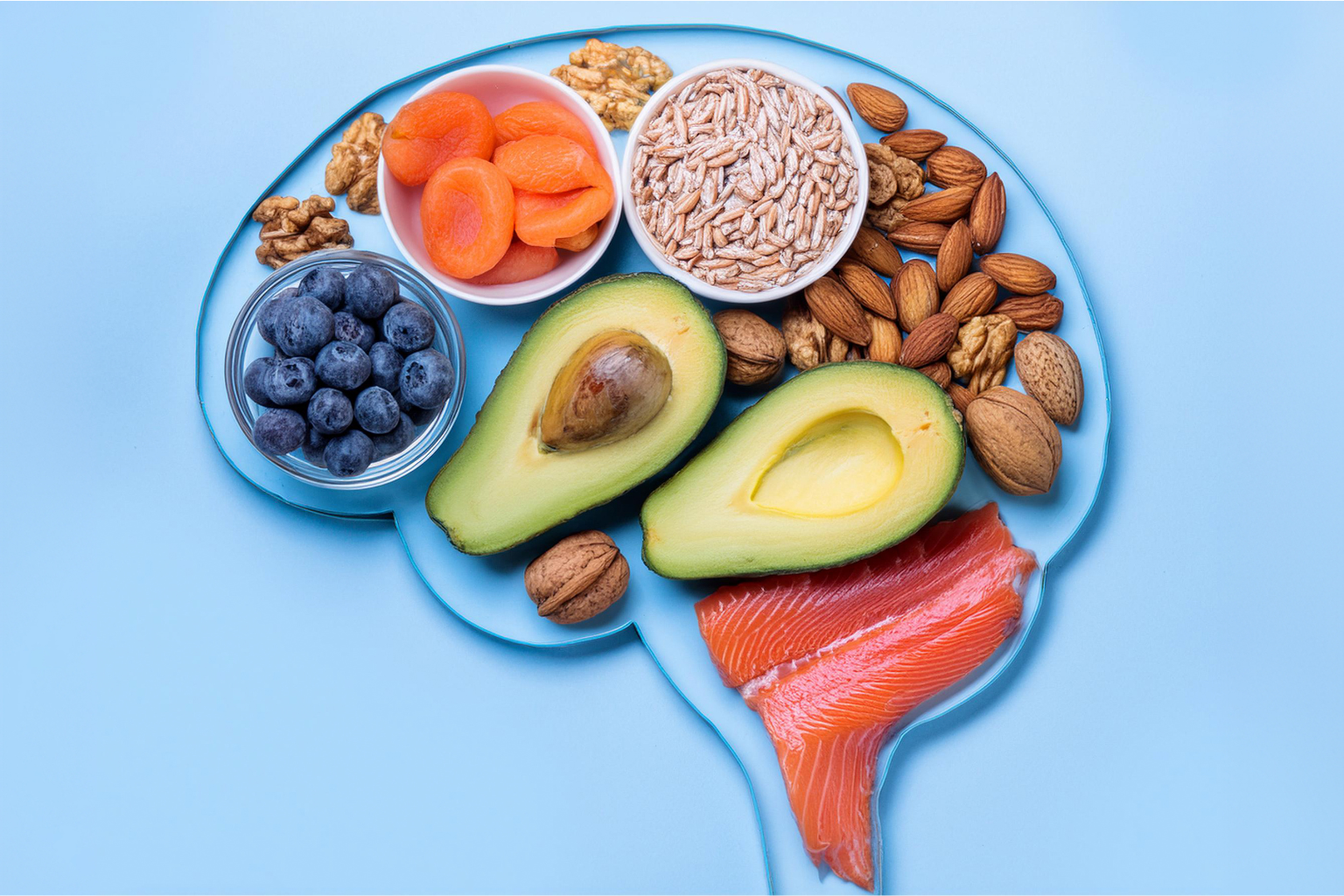
Healthy fats also play an important role—especially unsaturated fatty acids such as omega-3 fatty acids. Among other things, they support the heart, brain, and nervous system. They are found, for example, in nuts, avocados, salmon, and high-quality vegetable oils such as olive oil.

A balanced diet as the foundation for a healthy nervous system: Complex carbohydrates, high-quality proteins, and healthy fats provide the body and brain with essential energy and support the nervous system in everyday life.
These Foods Can Help Reduce Your Stress Levels
A balanced diet can help better support your body and mind during stressful times. Certain foods provide important nutrients such as magnesium, B vitamins, and healthy fatty acids, which contribute to the normal functioning of the nervous system and can help you find greater inner balance.
1. Nuts, kernels, and seeds
Almonds, walnuts, pumpkin seeds, and sunflower seeds are ideal snacks for in between meals. They contain valuable B vitamins, magnesium, and healthy fatty acids that support the nervous system and can make the body more resilient to stress.
2. Bananas
Bananas are considered “happy food” for good reason. They contain tryptophan—an amino acid that helps the body produce serotonin. They also provide magnesium and vitamin B6, which are important for nerve function and energy metabolism.
3. Oatmeal
Oatmeal provides long-lasting energy and, thanks to its complex carbohydrates, helps maintain stable blood sugar levels. This makes it easier to avoid energy slumps and cravings. They’re an ideal way to start the day, especially for breakfast as porridge or muesli.
4. Green Vegetables
Spinach, broccoli, and kale contain many important minerals and vitamins—including magnesium, iron, and potassium. These nutrients support various bodily functions and help boost energy and performance in everyday life.
5. Dark chocolate
Chocolate, too, can be part of a nerve-friendly diet when consumed in moderation—especially dark chocolate with a high cocoa content. Cocoa contains valuable plant compounds and tryptophan, which supports the production of serotonin.
6. Fatty fish
Fish provides valuable omega-3 fatty acids. These healthy fats support the brain and nervous system and are an important part of a balanced diet.
These vitamins are important for a healthy nervous system
Certain vitamins play a particularly important role in maintaining a healthy nervous system and promoting mental balance. Among other things, they support concentration, energy balance, and the protection of cells against stress.
- Vitamin B12: Supports the normal function of the nervous system and helps reduce fatigue and exhaustion.
- Vitamin A: Helps protect cells from free radicals.
- Vitamin B4 (choline): Supports concentration and memory function.
- Vitamin C: Helps protect the body’s cells from oxidative stress.
- Vitamins B2 and B6: Support energy metabolism and help reduce fatigue.
Minerals: An essential part of nerve nutrition
Minerals perform many important functions in the body and are involved, among other things, in the functioning of nerves, muscles, and metabolism. Since the body cannot produce them on its own, they should be regularly obtained through the diet.
- Magnesium supports normal muscle and nerve function and can help better manage tension and stress.
- Calcium is important for strong bones and teeth and supports nerve signal transmission.
- Potassium plays a key role in the transmission of nerve impulses, as well as in muscle function and fluid balance.
- Zinc helps protect cells from oxidative stress and supports growth and regeneration.
5 Tips for Reducing Stress Vulnerability
Stress can’t always be avoided in everyday life. This makes it all the more important to consciously create periods of balance and strengthen the body over the long term. Often, even small changes in your daily routine can help you cope more calmly with stress and promote inner balance.
1. Change Your Perspective
Try to take a brief step back in stressful situations and view the situation from a different perspective. A new perspective often helps you react more calmly.
2. Breathe deeply and consciously
Even just a few deep breaths can help you calm down and reduce stress responses. Consciously take a brief moment just to focus on your breathing.
3. Communicate openly
Misunderstandings and unspoken thoughts often cause additional stress. A calm conversation can help resolve conflicts more quickly.
4. Accept support
You don’t have to do everything on your own. Accepting help or sharing tasks can lighten the load and open up new perspectives.
5. Take short breaks
Whether it’s a walk, your favorite music, or a deliberate break—small moments of well-being help you recharge and approach everyday life with more ease to cope with.
Medicinal plants from Zimply Natural for stress and frayed nerves
Prolonged stress can affect not only your well-being but also your sleep, concentration, and inner balance. In naturopathy, medicinal plants have therefore long been used to support the body and nervous system during stressful periods.
Zimply Natural’s spagyric formulations are based on selected medicinal plants and traditional manufacturing methods according to Dr. Zimpel and Glückselig. They combine various naturopathic approaches into individualized formulations for everyday use.

- Angelica - Traditionally used for inner restlessness and stress-related tension.
- Taiga root - Considered an adaptogen and used to treat stress and exhaustion.
- Lemon balm - Known for its calming properties in cases of nervousness and tension
- Kava-kava - Traditionally used to promote relaxation and inner peace
- St. John's Wort - A well-known medicinal plant for emotional well-being and mental balance.