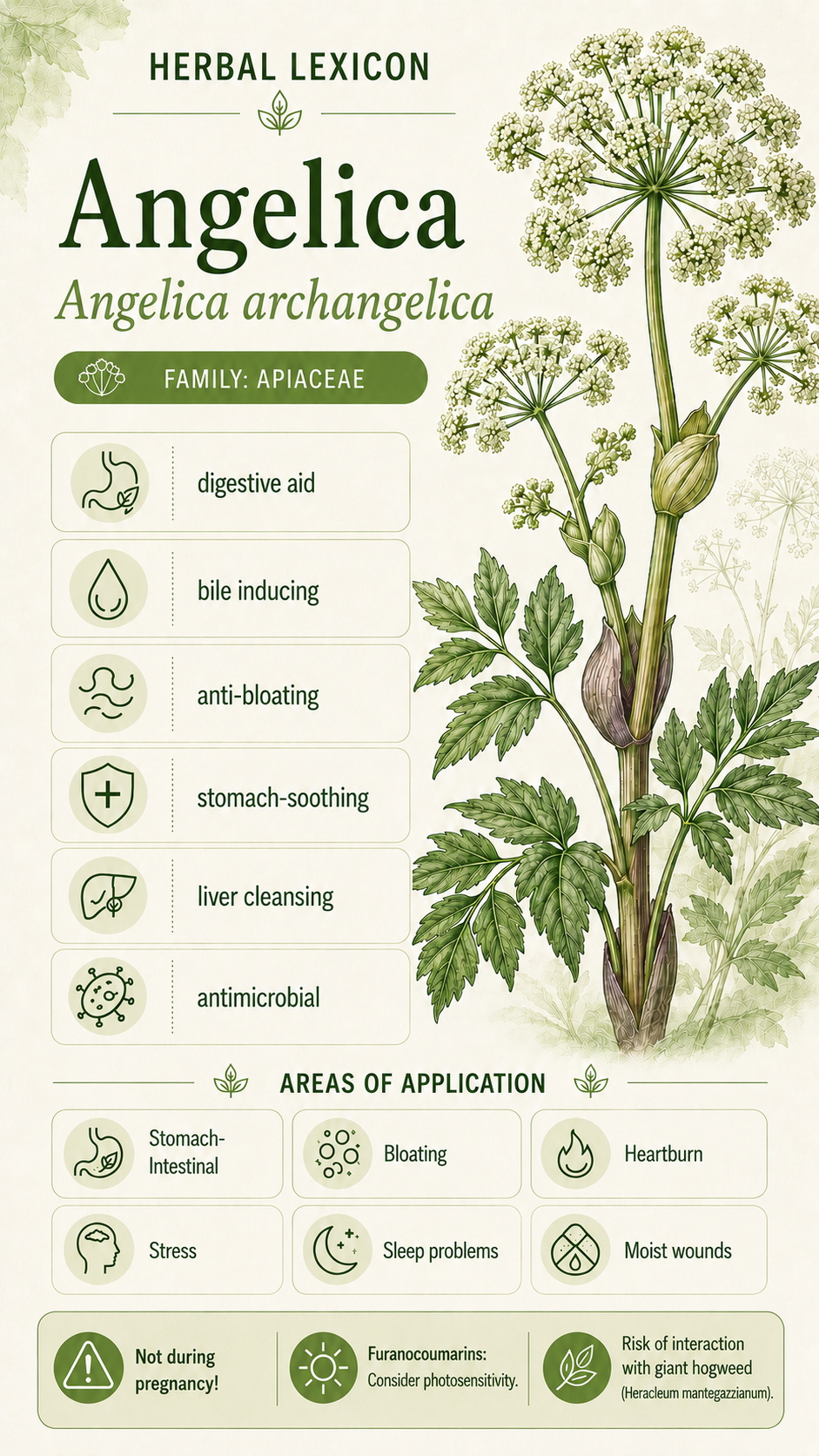


Majestic, bitter, and healing—angelica is one of the great Amara plants, with a history dating back to the Vikings and the years of the Plague.
Interesting facts about angelica
- In the Middle Ages, angelica was considered THE plant for treating the plague.
- The Vikings brought them to Central Europe in the 10th century.
- The candied stems are considered a delicacy.
Effects & Properties
Bitter compounds and essential oils stimulate the liver, gallbladder, and pancreas to increase secretion. Cumarins promote blood flow and have a vasodilatory effect. The plant has antimicrobial properties against intestinal and bronchial pathogens.
Features: aids digestion, relieves bloating, promotes bile flow, strengthens the stomach, cleanses the liver, antimicrobial.
Applications
Angelica for stomach and digestive problems
Digestive problems are often caused by a decline in stomach acid production—the stomach does not produce enough acid and enzymes, and food is not fully digested. The bitter compounds in angelica stimulate the parietal cells of the stomach to increase hydrochloric acid production and stimulate the liver and pancreas. The result: optimal digestion, no bloating, and no indigestion.
Angelica archangelica for bloating
Flatulence is caused by putrefactive gases produced during incomplete digestion—bacteria in the intestines break down undigested food particles. Angelica stimulates all the digestive glands, ensuring that food is fully digested before it reaches the large intestine. No putrefactive gases are produced, so no flatulence occurs.
Angelica for heartburn
Heartburn occurs when stomach acid flows back into the esophagus. Paradoxically, the cause is often a lack of stomach acid—the lower esophageal sphincter opens too early. Angelica regulates the parietal cells and restores optimal stomach acid levels. The lower esophageal sphincter closes properly, and the heartburn subsides.
Angelica archangelica as an emotional remedy
In traditional Chinese medicine, the liver is considered the seat of vitality. A stressed liver can lead to irritability, low mood, and a lack of energy. Angelica relieves the liver by stimulating bile production and improving bile flow. A relieved liver means more energy and a greater zest for life.
Angelica for skin problems
Many skin problems arise when the liver, kidneys, and intestines are overloaded and the body eliminates waste products through the skin. Angelica specifically stimulates elimination through the liver, kidneys, and intestines—this relieves the skin of this detoxification burden, and the blemishes disappear.
Angelica archangelica for stress
Stress hormones such as cortisol are broken down in the liver. In cases of chronic stress, the liver becomes overburdened with this breakdown process—stress hormone levels remain elevated, and the cycle of stress and exhaustion continues. Angelica supports the liver in breaking down stress hormones by stimulating liver function. This results in increased energy and vitality.
Angelica for sleep problems
In Chinese medicine, the liver phase occurs between 1 and 3 a.m. People who wake up during this time and cannot fall back asleep often suffer from liver stress. The liver is overloaded during its regeneration process and sends a warning signal to the body. Angelica relieves the liver—and sleep disturbances during the liver phase subside.
Angelica archangelica for weeping wounds
Slow-healing, weeping wounds are often caused by poor blood circulation and bacterial colonization. Angelica has antimicrobial properties that combat wound-related bacteria, and its coumarins promote blood circulation in the affected area. The improved healing environment allows weeping wounds to finally heal.
Instructions for Use
3 times a day before meals, as a short course of treatment.
Pregnancy & Breastfeeding
Do not take – Coumarins promote bleeding and can lead to serious complications.
Additional important information
Sensitivity to light: Furanocoumarins can cause skin irritation when exposed to the sun—be sure to use sunscreen. Do not take in cases of active gastrointestinal ulcers. Likelihood of confusion with giant hogweed (severe burns) – pick only if you are certain you have identified it correctly!
Plant Profile
- Scientific name: Angelica archangelica
- Plant family: Umbellifers (Apiaceae)
- Other names: Angelica, wild angelica
- Flowering period: June through August
- Origin: Northern and Eastern Europe
- Toxicity: Not poisonous – Do not confuse it with giant hogweed!