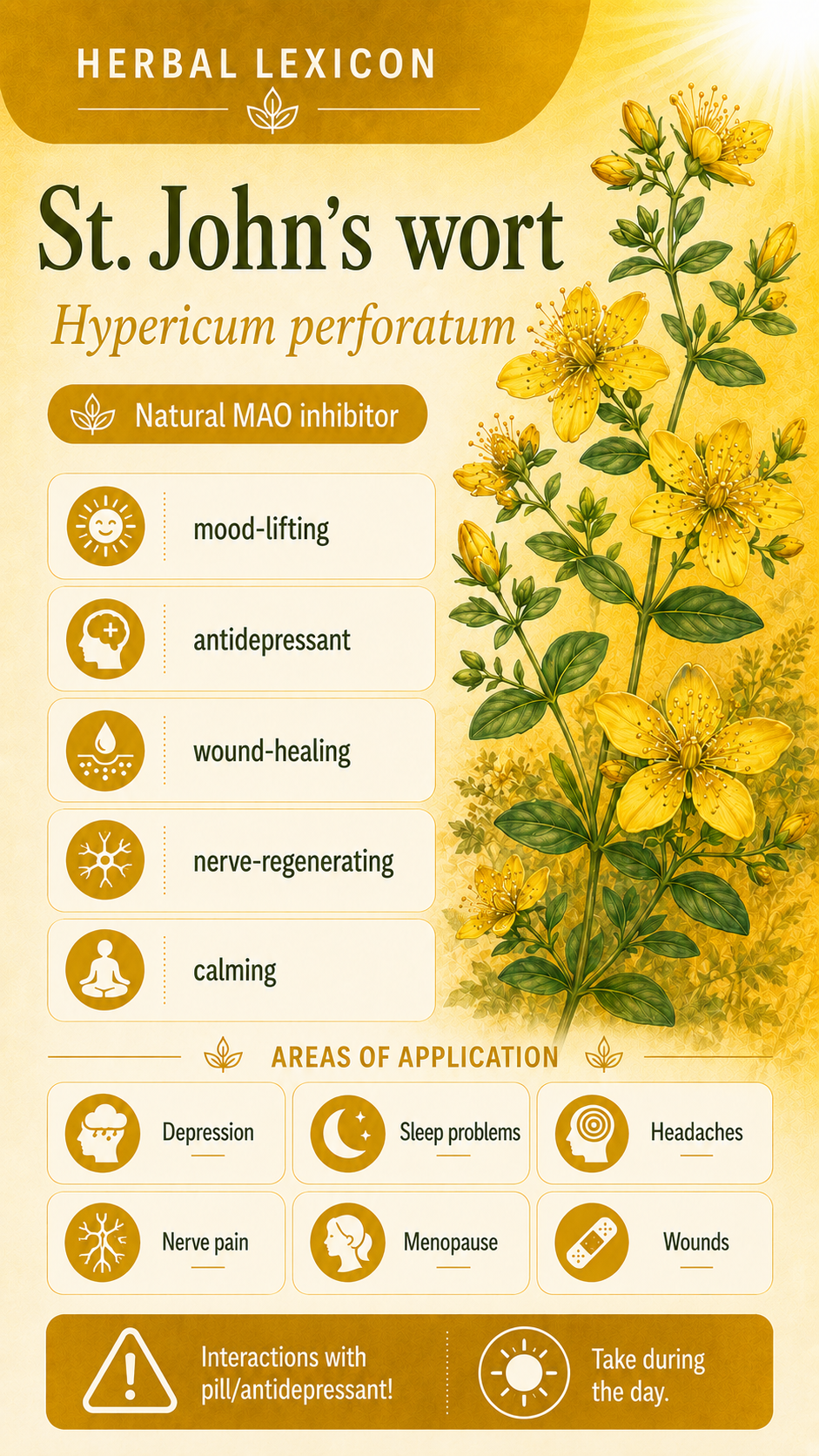

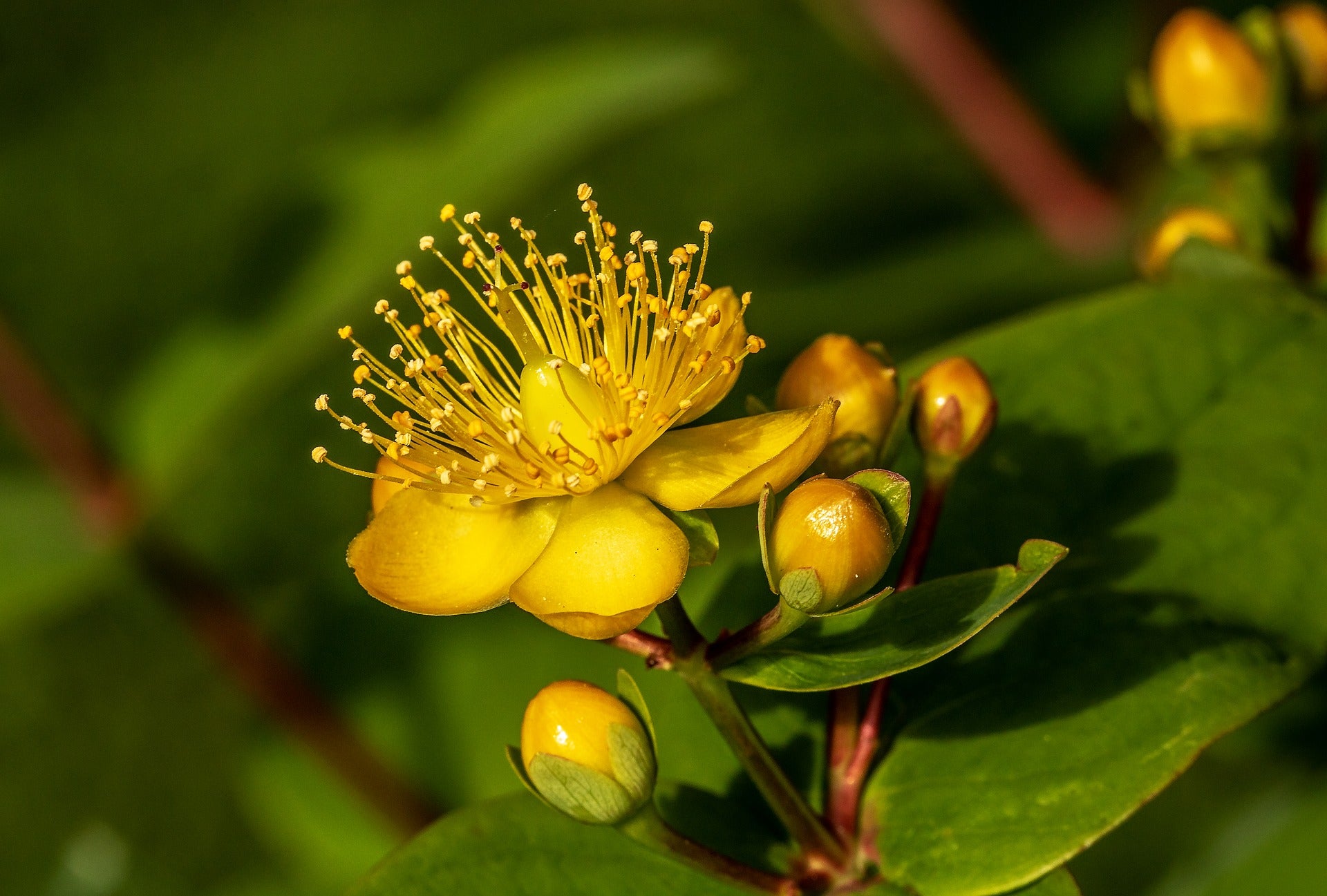
The natural antidepressant—St. John's wort—brings back the light and plays a direct role in regulating neurotransmitter levels.
Interesting facts about St. John's wort
- Blooms around the summer solstice—the sacred herb of the solstice dances.
- Red fingers when grinding the flowers—due to hypericin.
- Red oil is traditionally used in the relaxing Breuss massage.
Effects & Properties
Hypericin As an MAO inhibitor: it blocks the breakdown of serotonin, dopamine, and norepinephrine—these neurotransmitters remain in the synaptic cleft longer and continue to exert their mood-enhancing effects for a longer period. Light sensitivity: more UV light → more vitamin D → enhanced antidepressant effect. Hyperforin: antibacterial and wound-healing.
Features: mood-lifting, antidepressant, wound-healing, nerve-regenerating, soothing.
Applications
Hypericum perforatum for depression
Depression occurs when serotonin, dopamine, and norepinephrine are broken down too quickly in the brain—leading to a chronic decline in mood. Hypericin acts as a natural MAO inhibitor and blocks the enzyme that breaks down these neurotransmitters. They remain effective longer, and mood improves. Studies show: The effect of the whole plant is stronger than that of isolated hypericin. Combined with vitamin D production stimulated by light sensitivity, the antidepressant effect is enhanced.
St. John's Wort for Headaches
Nervous overstimulation and chronic stress are common causes of tension headaches—the nervous system is constantly on edge, and muscles tense up. St. John’s wort calms the overstimulated nervous system through its serotonin-boosting effect and helps regenerate exhausted nerve pathways. Baseline tension decreases, muscle tension eases, and the headache subsides.
Hypericum perforatum for sleep problems
Sleep problems combined with low mood respond particularly well to St. John’s wort. Its mood-lifting effect breaks the vicious cycle of poor sleep and low mood associated with depression. Important: Take St. John’s wort during the day—in the evening, its mood-lifting effect can cause restlessness in sensitive individuals.
St. John's Wort for Menstrual Cramps
Menstrual cramps of a nervous or stress-related nature respond well to St. John’s wort. Taken internally as a capsule or tincture, it has a calming effect on the nervous system and alleviates the stress-related component of the cramps. When applied externally as a red oil and massaged into the lower abdomen, it improves blood circulation and directly relaxes the uterine muscles.
Hypericum perforatum during menopause
During menopause, hormonal fluctuations can put a strain on the nervous system, leading to irritability, mood swings, and sleep disturbances. St. John’s wort strengthens the nervous system, restores a sense of calm and serenity, and helps the body cope with hormonal changes in a more balanced way.
St. John's Wort for Wounds
St. John's wort oil is the standard treatment for nerve regeneration following injuries. Hyperforin has antibacterial properties, prevents infections, and promotes wound healing. St. John's wort is most effective when applied as an ointment dressing at night—nerve pathway and tissue regeneration occurs primarily during the resting phase.
Hypericum perforatum for skin problems
For atopic dermatitis that worsens with stress, St. John’s wort addresses the key factors: the overstimulated nervous system and impaired neural metabolism. When taken internally, it reduces stress levels and improves neurotransmitter balance; when applied topically as an ointment, hyperforin has antibacterial and anti-inflammatory effects on the skin.
Instructions for Use
Throughout the day, not after 4 p.m.. As tea, capsules, drops, red oil, or ointment.
Pregnancy & Breastfeeding
We advise against it as a precaution—there is limited information available, and no conclusive studies exist.
IMPORTANT: Interactions
Antidepressants: A dangerous serotonin overdose is possible. pill: may become invalid! chemotherapy drugs: Effect has changed. Always consult with your therapist.
St. John's Wort and the Sun
Internal use: Increased sensitivity to light—use sunscreen. External use as red oil: no increased risk according to current research.
Plant Profile
- Scientific name: St. John's Wort
- Plant family: St. John's Wort family (Hypericaceae)
- Other names: Bloodroot, Hartheu, St. John's Blood
- Flowering period: From the summer solstice through August
- Origin: Europe, North Africa, Central Asia
- Toxicity: Non-toxic