

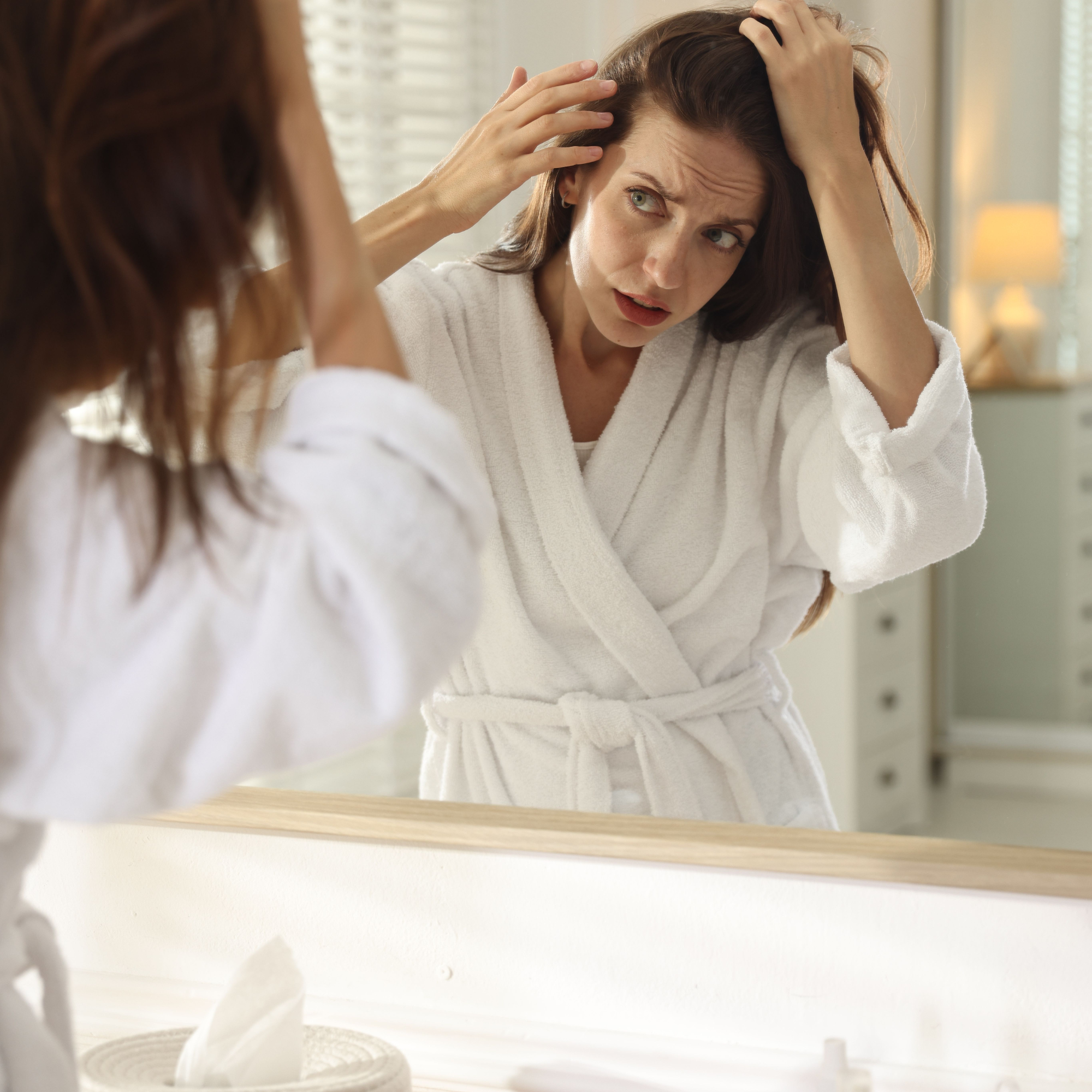
Why Does Hair Loss Occur During Menopause?
Many women notice during menopause that their hair is becoming thinner or falling out more frequently. This is often due to the hormonal changes that occur during this stage of life.
As women age, the ovaries produce less estrogen and progesterone. This disrupts the hormonal balance. At the same time, male hormones have a relatively stronger effect on the hair follicles, which can affect hair growth and contribute to hair loss.
Not every woman is affected by this. The extent to which these changes are noticeable depends, among other things, on genetic predisposition, lifestyle, and overall health.
What exactly is hair loss?
Hair constantly goes through a natural growth cycle. Losing a few strands of hair every day is therefore completely normal. We usually speak of hair loss when significantly more hair falls out than grows back, and the hair becomes visibly thinner overall.
Especially during menopause, many women notice that their part is widening or that their hair is losing volume.
Causes of Hair Loss During Menopause
Hair loss during menopause is not uncommon and can have many causes. Hormonal changes often play a significant role.
Possible causes of hair loss include, among others:
1. Hormonal fluctuations
During menopause, estrogen levels drop. This throws the hormonal balance off, which can affect hair growth.
2. An excess of male hormones
As the proportion of female hormones decreases, male hormones have a proportionally stronger effect on the hair follicles. This can contribute to hair loss.
3. Genetic predisposition
Whether increased hair loss actually occurs is often hereditary. Some hair follicles are more sensitive to hormonal changes than others.
4. Stress & Pressure
Emotional or physical stress can also affect the hair.
5. Thyroid & Nutrient Deficiencies
In addition, thyroid problems or a deficiency in essential nutrients can affect hair growth.

How can I tell if I’m losing my hair?
Typical signs may include:
- Thinning hair
- A widening part
- Increased hair loss when brushing or washing
- Visible loss of volume
Since some hair loss is normal every day, you should always consult a doctor if you’re unsure.
How long does hair loss during menopause last?
The duration can vary from woman to woman. While some notice only temporary changes, others suffer from thinning hair for several years.
How long the symptoms last depends, among other things, on hormonal changes, genetic predisposition, and overall health. Hair loss often subsides again once menopause is complete.
5 Tips for Stronger Hair During Menopause
Hormonal changes are inevitable. However, there are ways to specifically support your hair and scalp. Often, even small changes in your daily routine can help promote your well-being and gently care for your hair.
1. Reduce Stress
Relaxation techniques such as yoga, meditation, or taking walks can help relieve inner tension and support the body during stressful times.
2. Maintain a Balanced Diet
An adequate intake of vitamins, minerals, and trace elements plays an important role in maintaining healthy hair and a normal hair structure.
3. Care for your hair gently
Avoid frequent coloring, high heat, and harsh hair care products whenever possible. Gentle hair care can help minimize stress on your hair and scalp.
4. Provide targeted support for the scalp
Regular scalp massages can promote blood circulation and support scalp health. Natural care products such as aloe vera or plant-based oils are also frequently used to moisturize the hair and scalp.
5. Stay patient
Hormonal changes take time. Improvements often don’t show up within a few days, but only after several weeks or months. That’s why it’s important to give your body time and not put additional pressure on yourself.
Natural Support with Medicinal Plants
When hormonal changes affect hair growth, many women seek gentle and natural support. Certain medicinal plants are traditionally used to support hair follicles, the scalp, and overall well-being.
The best-known medicinal plants are:

Discover the medicinal plants from Zimply Natural and find natural support for hair loss during menopause.
- Monk’s pepper is traditionally used to balance female hormone levels.
- Arnica is known for its circulation-boosting properties and is often used for scalp care.
- Horsetail contains silicic acid and is traditionally used to support hair structure and connective tissue.
- Rosemary can promote blood circulation in the scalp and is frequently used in hair care products.
- Small stinging nettle is rich in minerals and is traditionally used to support hair and scalp health.