
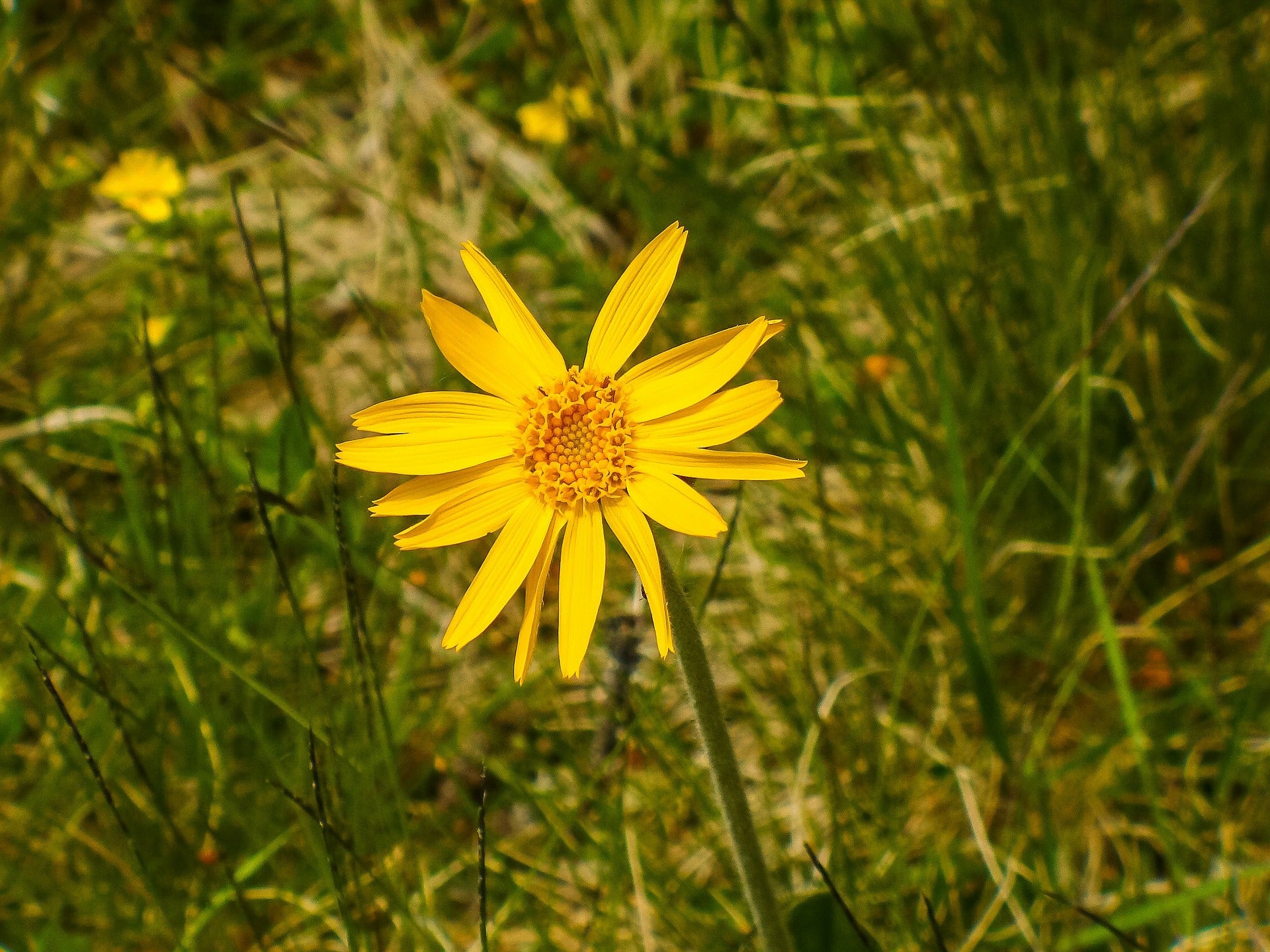
Arnica is undoubtedly one of the most widely used medicinal plants in practice. It is considered THE go-to remedy for any type of blunt injury—whether fractures, contusions, bruises, or hematomas. The fact that it grows in the mountains of all places seems like a happy coincidence: for it is precisely where hikers twist their ankles and knees that the right herb for treatment grows.
Interesting facts about arnica
Arnica not only has an impressive history of medicinal use—it’s also full of surprising details.
- Arnica used to be added to snuff to irritate the nasal mucous membranes.
- Flowers picked on St. John's Day were considered to have special healing properties.
- Arnica was considered a magical plant—it was used to protect cornfields from the reaper.
Effects & Properties
Arnica's effects are due to its rich complex of active ingredients: sesquiterpene lactones such as Helenalin and dihydrohelenalin are the main active ingredients and have anti-inflammatory and antimicrobial effects. Flavonoids and phenolic carboxylic acids enhance the anti-inflammatory effect. The essential oil gives the plant its antiseptic properties. The antiseptic and anti-inflammatory effects of arnica flowers can even surpass those of some synthetic anti-rheumatic drugs.
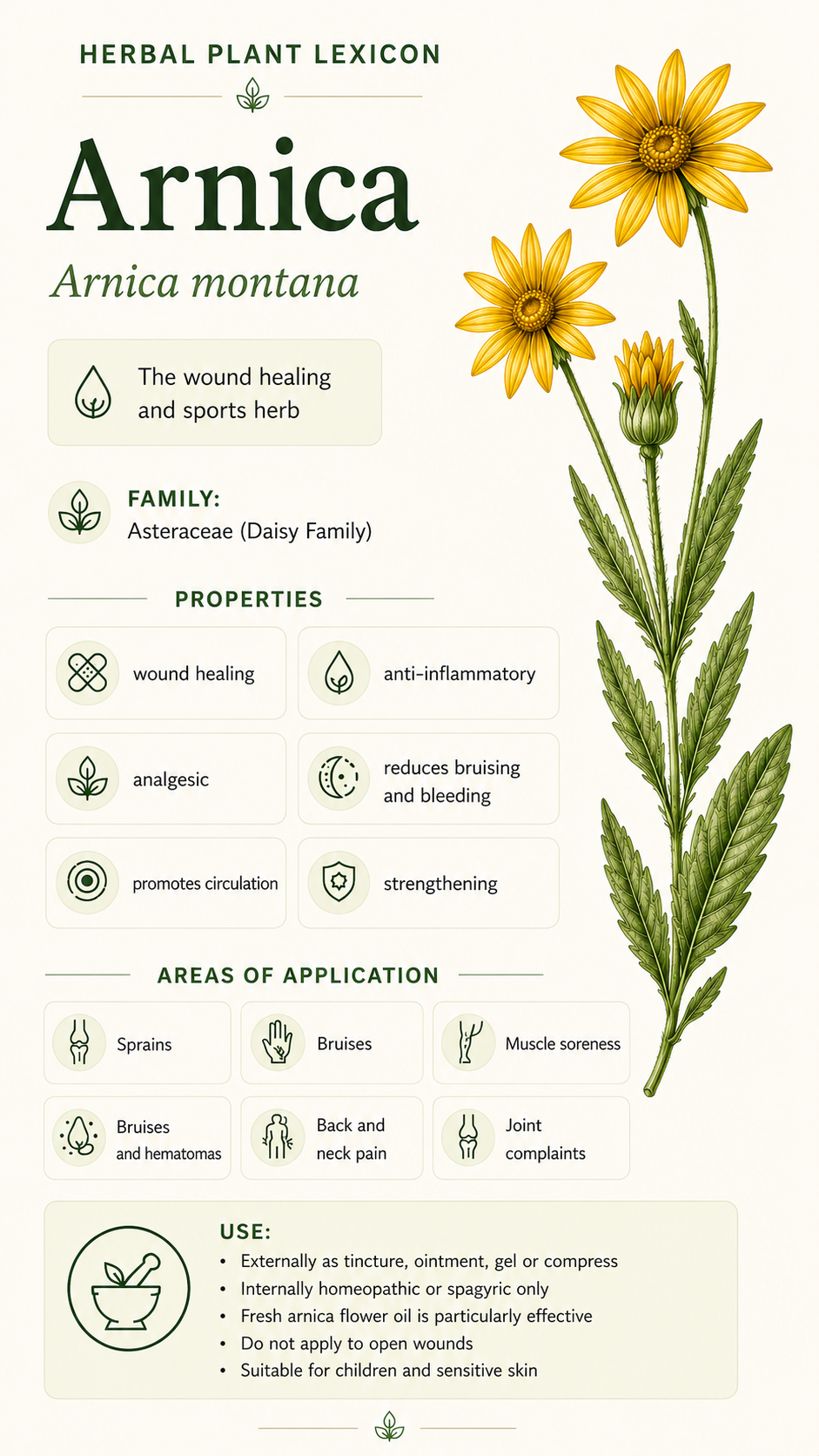
Features: wound-healing, anti-inflammatory, pain-relieving, bruise-reducing, hemostatic, nourishing.
Applications
Arnica is one of naturopathy’s wound remedies—its uses are consistently based on this fundamental property.
Arnica for Bruises
With bruises, the tissue is compressed without damaging the skin—blood vessels rupture, blood leaks out, and swelling and pain result. Arnica helps stop bleeding into the tissue, relieves pain and reduces inflammation, and stimulates the tissue to heal. This significantly shortens the healing time.
Arnica montana for muscle soreness
Muscle soreness is caused by intense physical exertion, which creates tiny tears in the muscle fibers and triggers micro-inflammation. Arnica helps the tissue recover more quickly by reducing inflammation and promoting blood circulation. The muscle is then able to function optimally again.
Arnica for bruises
With bruises, blood has leaked into the surrounding tissue, causing discoloration, swelling, and tenderness. Arnica reduces inflammation, relieves pain, and accelerates the reabsorption of the leaked blood. Because it promotes reabsorption, the bruises fade much more quickly.
Arnica montana during childbirth
During childbirth, the mother’s body is subjected to extreme stress. Arnica can help reduce excessive bleeding, and its soothing, healing properties can help the mother recover more quickly from the physical strain. Swelling and exhaustion subside more quickly.
Arnica before and after surgery
After surgery, arnica helps stop bleeding from fresh wounds, accelerates tissue healing, and relieves pain—which prevents patients from adopting a protective posture and speeds up recovery overall. When taken before surgery, it helps the body prepare for tissue trauma.
Arnica montana for toothaches
After tooth extractions, the tissue is irritated, swollen, and painful. Arnica reduces swelling, slows secondary bleeding from the wound, and promotes wound healing. Discomfort following the procedure is significantly reduced, and healing proceeds with fewer complications.
Instructions for Use
In cases of injury, arnica is taken internally only in homeopathic or spagyric preparations is used. In acute cases, it may even be taken hourly; for chronic conditions, 3 times a day. For external use, arnica is usually applied as an alcoholic solution using wound dressings or bandages—these are changed 2 to 3 times a day.
Pregnancy & Breastfeeding
Always consult a doctor or naturopath before taking arnica internally during pregnancy. Arnica can be used externally without hesitation, provided you are not allergic to it.
Allergy to Asteraceae
Since arnica is a strong allergen, people with a known allergy to the Asteraceae family should avoid it. When using it topically, watch for allergic skin reactions—if any occur, wash it off immediately.
Plant Profile
- Scientific name: Arnica montana
- Plant family: Asteraceae
- Other names: Mountain wellwort, woundwort, mountain buttercup, fallwort
- Flowering period: June through September
- Origin: Native to alpine regions—from the Pyrenees to the Balkans, up to 2,500 m in elevation
- Toxicity: Slightly toxic (if ingested)