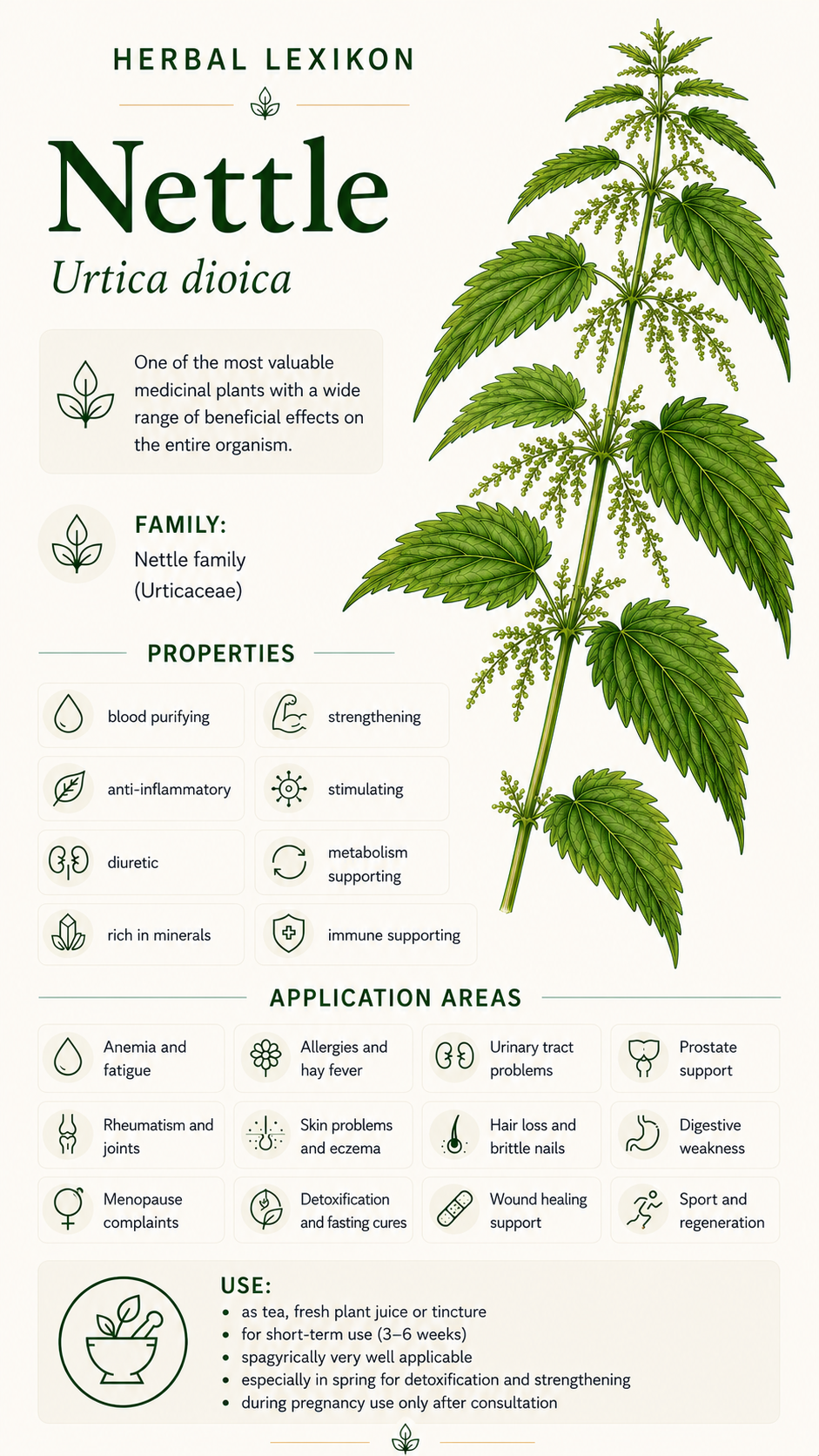

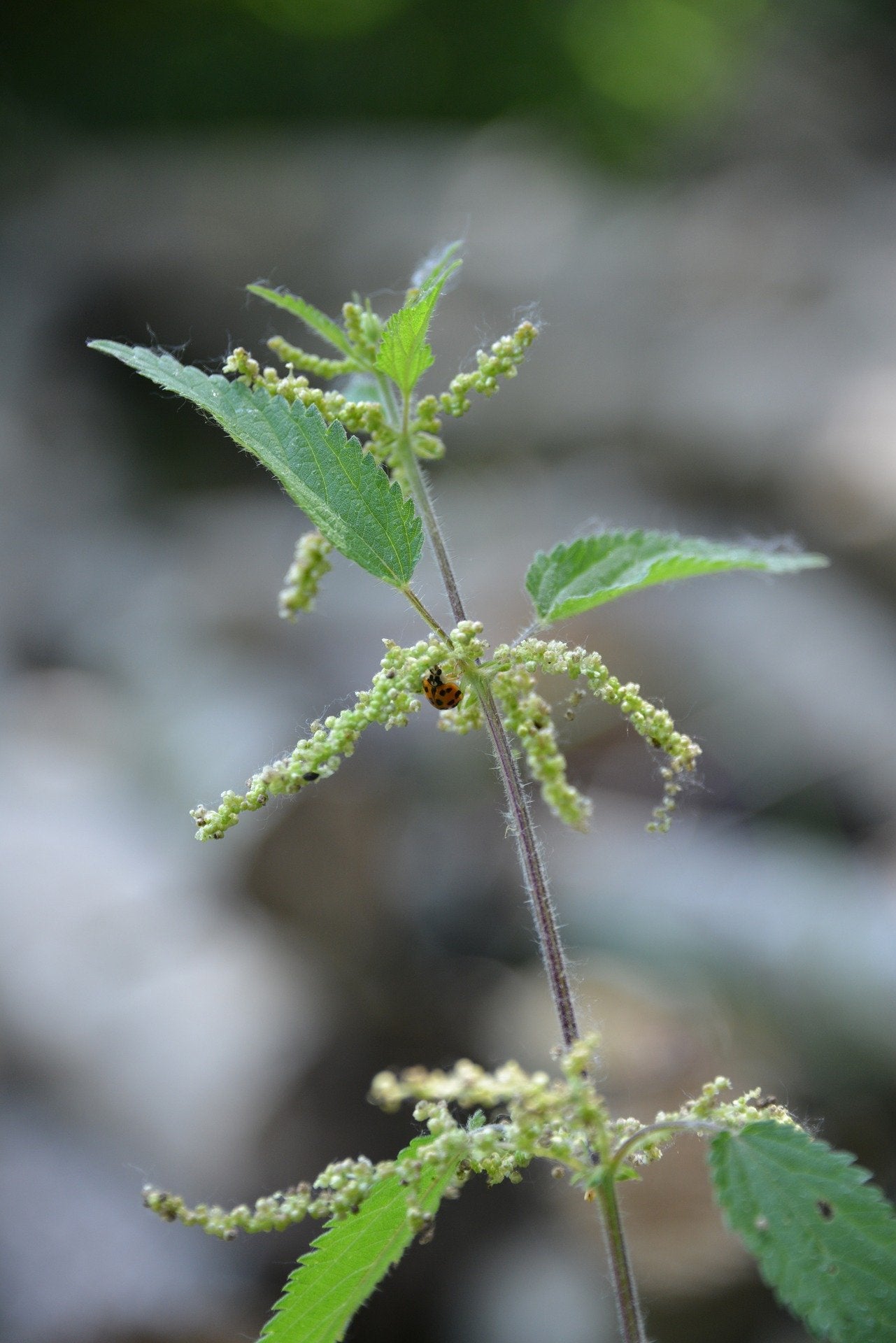
The stinging nettle is one of the most versatile medicinal plants. In hard times, young nettle shoots were used as a tasty substitute for spinach. It is important for wildlife—it serves as a food source for countless insect species. As a nitrogen indicator, it helps farmers assess soil conditions.
Interesting facts about stinging nettles
- Stinging nettles are a good edible plant—the young shoots taste like spinach.
- Nettle tea is an excellent plant protection product for the garden.
- Nettle seeds make a horse's coat shine.
Effects & Properties
Stinging nettle is a true detoxifier. It supports the body’s ability to eliminate waste and is therefore a key component of many spring detox regimens. It cleanses the connective tissue, flushes the kidneys, and supplies the body with fresh minerals and trace elements: Iron, potassium, silicon and silicic acid. As a source of iron, it helps produce red blood cells, ensuring optimal oxygen transport. Active ingredients: trace elements, silicic acid, histamine, lignans, formic acid.
Features: detoxifying, fortifying, iron-rich, promotes hair growth, blood-building, cleansing, metabolism-boosting.
Applications
Because of its significant effect on metabolism, there are a number of conditions for which stinging nettle is a good treatment of choice.
Stinging nettle for urinary tract disorders
In urinary tract infections, pathogens settle in the mucous membrane of the urinary tract, causing inflammation, a burning sensation, and pain during urination. Stinging nettle significantly increases urine output and stimulates flushing of the entire urinary tract—bacteria are literally flushed away from the mucous membrane. This relieves the immune system, allowing it to combat the remaining pathogens more effectively.
Urtica urens for skin blemishes
Many skin blemishes occur because the body eliminates waste products through the skin when other excretory organs are overloaded. Stinging nettle stimulates the metabolism and promotes detoxification through urine—this relieves the skin of this burden, and the blemishes disappear. At the same time, stinging nettle supplies the skin with important minerals.
Stinging nettle for stomach problems
Nettle provides relief for mild gastrointestinal discomfort. The tannins it contains form a protective layer on the irritated mucous membranes, shielding them from further irritation. At the same time, they help regulate bowel movements and restore normal bowel function.
Urtica urens for menstrual cramps
Many women lose a significant amount of iron due to heavy menstrual bleeding and subsequently suffer from fatigue and weakness. Stinging nettle helps replenish iron stores, as it is itself a high-quality plant-based source of iron. It also helps regulate menstrual bleeding, reducing its intensity and easing the strain on the body.
Stinging nettle for high blood pressure
In naturopathy, high blood pressure is associated with congestion and toxin buildup, which put strain on the blood vessels. Because stinging nettle cleanses, detoxifies, and regenerates, it is often used as part of treatments to lower blood pressure. Recent studies also show a direct positive effect on vascular tone.
Urtica urens for rheumatism
In rheumatic diseases, pro-inflammatory substances circulate in the blood and accumulate in the tissues. Stinging nettle detoxifies the body, cleanses the connective tissue, and helps reduce the amount of inflammatory substances circulating in the body. This has a proven positive effect on the body’s tendency to become inflamed and helps reduce rheumatic inflammation and alleviate symptoms.
Instructions for Use
Stinging nettle can be used as an ingredient in medicines or, more commonly, as a tea—either the dried leaves or the whole plant are used. It is particularly popular as part of a spring cleansing regimen or detox program.
Pregnancy & Breastfeeding
Consumption should be avoided during pregnancy – Nettle has a strong diuretic effect and can also trigger premature labor. It poses no risk during breastfeeding and can be consumed without hesitation.
Allergy
People with starch allergies should exercise caution due to the histamine content. If you have histamine intolerance, it is recommended that you consult your healthcare provider.
Plant Profile
- Scientific name: Stinging nettle
- Plant family: Nettle family (Urticaceae)
- Other names: Nettle, Small Nettle
- Flowering period: July through October
- Origin: Native to (Europe)
- Toxicity: Non-toxic