


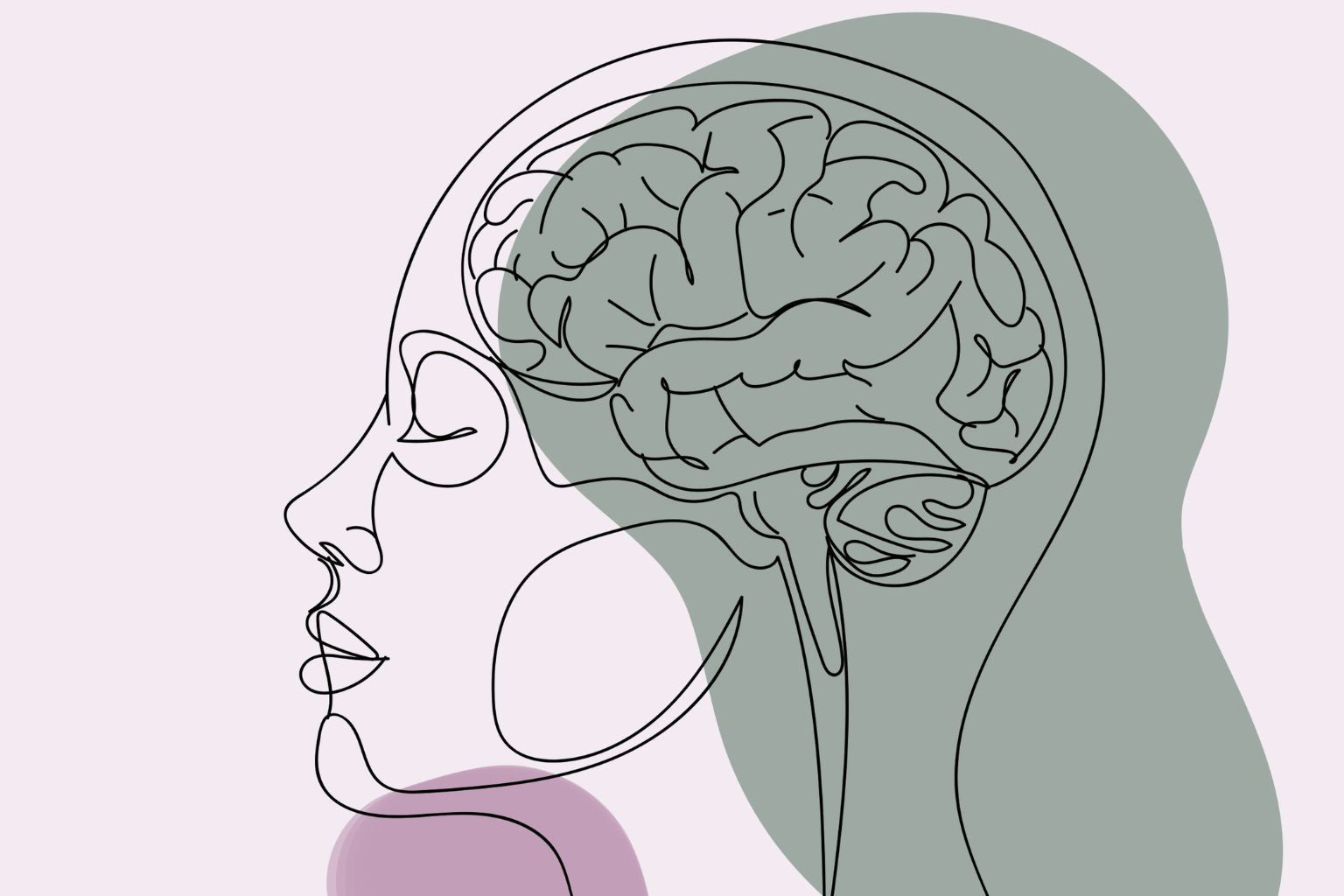
Why does an overloaded nervous system feel so unpleasant?
It’s the end of the workday. This should actually be the time to wind down. Yet your shoulders remain tense, you can’t sit still, and your mind seems to be already on the next problem. You know that nothing urgent is happening right now—but your body clearly feels otherwise. It’s exactly this feeling that’s often described as an “overstimulated” or “overloaded nervous system.” Medically speaking, these terms aren’t particularly precise. However, there may be something very real behind them: Your body remains in a state of heightened arousal, even though the situation that triggered it may have long since passed.
1. What the sympathetic and parasympathetic nervous systems have to do with this
To understand why this happens, it’s worth taking a quick look at the autonomic nervous system. It controls numerous bodily functions that you don’t have to constantly think about—including, for example, your heartbeat, breathing, and digestion. One part of this system is the sympathetic nervous system. It helps the body respond to demands. Heart rate and circulation are adjusted, energy is mobilized, and alertness increases. When you have an important appointment, need to react suddenly, or become physically active, you need precisely this kind of activation.
Its counterpart is often simply referred to as the parasympathetic nervous system. Among other things, it’s involved in processes related to rest, recovery, and digestion. The vagus nerve is an important component of this system. So the problem isn’t that your body can shift into an activated state at all. On the contrary: it has to be able to do that. Things can get more difficult, however, when tension becomes a constant state and periods of recovery become increasingly rare.
2. Why Your Body Can Be on High Alert Even When There Is No Danger
Stress responses don’t occur exclusively when you’re actually facing an immediate danger. Time pressure, conflicts, worries, or a consistently high workload can also trigger a stress response in the body. In the case of anxiety, even the mere thought of a potential threat can be enough to trigger a significant physical reaction. That’s why you might find yourself sitting on the couch, objectively completely safe—while your body remains tense nonetheless. This often leads to a misunderstanding: If there’s no danger, I should be able to relax. But the nervous system doesn’t work like a light switch. You can’t simply decide: “The stressful part of the day is over; from now on, it’s the parasympathetic nervous system.” Especially after prolonged periods of stress, it can take a while for physical tension to subside. And sometimes this creates a second problem. You notice that you can’t calm down and start fighting against the tension. Why isn’t relaxation working for me? Why am I still so wound up? What’s wrong with my nervous system? Suddenly, it’s not just the original stress that’s taking a toll. The very feeling of stress itself becomes a problem. That’s exactly why it’s worth asking what we actually mean when everyone talks about “regulating” the nervous system.
Can you really “calm” the nervous system?
On social media, it sometimes sounds surprisingly simple: a specific breathing rhythm, splashing cold water on your face, or an exercise for the vagus nerve—and the nervous system is supposed to be “reset” within a few minutes. The body doesn’t work that simply. That doesn’t mean, however, that breathing exercises, movement, or other physical strategies are ineffective. The key difference lies in what we expect from them.
1. What Lies Behind the Term “Regulation”
A well-regulated nervous system isn’t constantly relaxed. That would actually be quite impractical in everyday life. You want to be able to concentrate when a task demands your attention. You want to be able to react quickly when something happens. And after a stressful situation, you want to be able to wind down again. Regulation, therefore, means being able to switch flexibly between activation and recovery.
Imagine a stressful day at work. Your body revs up because a lot is being demanded of you. Later, the stress subsides—and little by little, your inner tension eases as well. This is different from a daily routine where one stressful situation follows another immediately, leaving hardly any time for genuine recovery periods. So the goal isn’t: “How can I manage to never be stressed?” But rather: “How can I support my body in returning to a calmer state after stress?” This perspective is important because otherwise, even relaxation can become the next performance challenge.
2. The Actual Role of the Vagus Nerve
Hardly any other term comes up as often these days when discussing the nervous system as the vagus nerve. It is the tenth cranial nerve and an essential component of the parasympathetic nervous system. Among other things, it is involved in regulating various functions of the heart, lungs, and digestive system. However, this has led to the misconception circulating online that all one needs to do is find the right “vagus hack” to practically eliminate stress, anxiety, or inner restlessness. That’s an oversimplification.
Certain breathing techniques and other relaxation methods can influence physical processes and help reduce arousal. But the vagus nerve isn’t a hidden reset button that you just have to press correctly. This is also important because otherwise you’ll quickly end up with the next form of self-monitoring: Am I breathing correctly? Did I exhale long enough? Is my vagus nerve even working? Suddenly, an exercise that’s supposed to calm you down becomes yet another thing you have to monitor. It’s better to view such methods for what they can be: tools that can help your body transition from arousal to rest.
How can you calm your nervous system in the moment?
If you’re feeling very tense right now, you probably don’t want to spend time trying to understand what’s happening in your nervous system. Above all, you want that feeling to subside. One thought can help here: You don’t have to completely relax your body within two minutes. For now, it’s enough to just reduce the arousal a little.
1. Why Slow Breathing Can Help
Breathing is particularly interesting because it happens automatically—yet at the same time, we can consciously influence it. During stress or anxiety, breathing can become faster and shallower. Conversely, slow breathing exercises can support physical relaxation responses. A slightly longer exhalation is often used in these exercises.
For example, you can breathe in calmly through your nose and then breathe out a little longer. A simple guideline would be: breathe in for 4 seconds—breathe out for 6 seconds. The exact number, however, is less important than many social media videos suggest. You don’t have to time the seconds perfectly or take particularly deep breaths. Very deep or forced breathing, in particular, can feel uncomfortable. Your breathing should remain calm and comfortable. And above all: Don’t check after every breath to see if you’re already feeling more relaxed. Otherwise, you’ll quickly find yourself thinking: I’ve been doing this exercise for two minutes. Why am I still nervous? That turns a breathing exercise back into a performance. A better mindset is: I’m giving my body the chance to wind down a bit right now. I don’t need to control how quickly that happens.
2. Movement Instead of Fighting the Tension
When your body is full of energy, “Sit down and relax” doesn’t always seem like the most logical answer. Sometimes it can be more pleasant to channel that existing energy into movement first. A brisk walk, a few minutes of light exercise, or consciously shaking out your arms and legs can help shift your focus away from constantly monitoring your own tension. Regular physical activity is also generally recommended for stress management.
This doesn’t mean you can literally “shake off” stress or shake adrenaline out of your body. Such explanations sound catchy, but they oversimplify the processes taking place in the body.
The practical idea behind it is much simpler: an activated body doesn’t always need to come to a complete stop right away. You might feel better going for a ten-minute walk and then settling down to rest, rather than sitting tensely on the couch and desperately waiting for relaxation to set in.
3. Cold, Humming, & More: What Actually Works?
Cold water on the face, humming, singing, gargling—there’s now an astonishingly long list of supposed tricks related to the vagus nerve. Some of them can certainly feel pleasant or have a regulating effect. However, this shouldn’t automatically lead to the claim that each of these methods specifically “activates” the vagus nerve and thus reliably calms the nervous system.
Cold, in particular, warrants a more nuanced consideration. Cold stimuli trigger physical reactions in themselves and are not pleasant or suitable for everyone. Therefore, you don’t need to splash ice water on your face or take a cold shower to “properly” regulate your nervous system. If a cool washcloth or some cold water helps you feel more grounded in the moment, you can give it a try. But it’s not a necessary part of relaxation.
The same goes for humming. Slow humming often automatically lengthens your exhalation and can feel calming. That’s a good reason to give it a try—without turning it into a medical vagus nerve therapy. The best short-term strategy, therefore, isn’t necessarily the method that looks the most spectacular online. It’s the one that helps you resist fighting your current state and slowly wind down again.
How can you make your nervous system more resilient in the long term?
A breathing exercise can make a stressful moment more bearable. But it doesn’t automatically change your daily routine, which may be creating new stress every day. If you get up in the morning under time pressure, work all day without a break, respond to messages in the evening, and then meditate for five minutes, the problem is probably not that your meditation was too short. Long-term regulation therefore often begins in a less spectacular place: with the way stress and rest are distributed throughout the day.
1. Why Rest Should Begin Before Complete Exhaustion
Many people take a break when it’s actually already too late. Just this one more task. Then a quick email. After that, the phone call. And at some point, the body sends such a clear signal that you can’t go on anymore. Then a half-hour on the sofa is supposed to make up for the past ten hours.
However, rest doesn’t work solely as a recovery measure at the end of an overwhelming day. Short breaks can help separate periods of stress from one another in the first place. It doesn’t have to be a twenty-minute meditation session. Sometimes a break really just means getting up, stepping outside for a moment, having a drink, or looking away from the screen for a few minutes.
The key idea is this: You don’t have to be completely exhausted before you allow yourself to rest. If you only schedule breaks once your body is already clearly protesting, you’ll spend a large part of the day constantly pushing yourself to the limit.
2. Exercise and Sleep as the Foundation
When it comes to the nervous system, a lot of things quickly sound like specialized techniques. Yet two of the most unspectacular things are also among the most important foundations: exercise and sleep.
Regular physical activity can help regulate stress. You don’t have to do an intense workout every day. Walks, biking, or other forms of exercise that fit easily into your daily routine also count.
Sleep is just as important. If you consistently don’t get enough sleep, you’ll start the next day at a disadvantage. Stressors can feel more overwhelming, while at the same time you’ll have less energy available for recovery. That doesn’t mean you have to perfect your sleep. Here, too, a well-intentioned resolution can quickly turn into yet another task to manage. It’s much more helpful to have a daily routine where sleep isn’t regularly the first thing sacrificed for work, appointments, or screen time.
3. Can medicinal plants and tea help with relaxation?
Not every way to promote calm has to be an exercise. For some people, a cup of tea is part of an evening ritual that helps them consciously transition from the active part of the day to a calmer phase. Traditionally, herbs such as valerian, lemon balm, lavender, or passionflower are used for this purpose. Some herbal remedies have also been scientifically or regulatory evaluated for mild nervous tension or sleep disturbances. However, the wording is crucial: A tea doesn’t simply “fix” or “regulate” the nervous system. Sometimes the benefit lies in the ritual itself: putting the kettle on, setting your phone aside, sitting down, and doing nothing else for a few minutes. The cup of tea thus becomes a conscious transition from activity to calm.
4. Why Short Breaks Can Be More Beneficial Than the Perfect Evening of Relaxation
It’s tempting to view self-regulation as something you have to fit into your schedule. Ten minutes of breathing exercises. Twenty minutes of meditation. Yoga on Wednesdays. Maybe even an app to remind you to be mindful. All these things can be helpful. But if the rest of your daily life leaves practically no room for rest, relaxation quickly becomes just another item on your to-do list. That’s why it’s worth asking a different question:
Where in my daily life does unnecessary, constant tension arise?
Maybe you always reply to messages right away. Maybe you never take a proper lunch break. Maybe you switch from work to personal obligations without a break. Or even your free minutes are automatically filled with your cell phone.
Not every one of these habits needs to disappear. But small, regular changes can be more realistic than trying to compensate for a constantly overwhelming daily routine with a relaxation technique every evening. After all, a balanced nervous system doesn’t come from simply becoming particularly good at relaxing. It also requires a daily routine in which your body actually has the opportunity to not be constantly geared toward performance and reaction.
When Is There More to Constant Tension?
Not every phase of tension means that something is wrong with your nervous system. After stressful days, little sleep, or an emotionally taxing situation, it’s perfectly understandable that your body needs a while to wind down again. The situation is different, however, when this state hardly ever goes away.
1. When relaxation alone isn’t enough anymore
Perhaps you’ve already tried a lot of things: breathing exercises, walks, meditation, cutting back on coffee. Things get better for a short time—but the tension keeps coming back. In that case, it’s not worth searching for the next “nervous system hack.” After all, there can be various causes behind persistent physical arousal. Psychological stressors such as chronic stress or anxiety can play a role. But physical illnesses, medications, or other factors may also be to blame. That’s why a medical evaluation makes sense, especially if symptoms are new, unusually severe, or have changed significantly. This also serves as an important counterpoint to much of the content about nervous system regulation online: Not every instance of heart palpitations, exhaustion, or inner restlessness can be explained by a “dysregulated nervous system.” The term can describe how a condition feels, but it is no substitute for a diagnosis.
2. When a Medical or Psychotherapeutic Evaluation Is Recommended
A good point of reference is your daily life. Despite occasional tension, can you still work, sleep, meet with others, and enjoy things? Or is your life increasingly revolving around finding a way to calm down again?
Professional support may be helpful if the tension persists over a long period of time, significantly interferes with your sleep or daily life, or if you find yourself avoiding situations more and more often because you feel physically overwhelmed or tense. Your primary care physician’s office can be a first point of contact. There, you can discuss possible physical causes and next steps.
If stress, anxiety, or other psychological burdens play a central role, a psychotherapy session may also be helpful. And with that, the key question changes as well. It’s no longer: “Which exercise calms my nervous system the fastest?” but rather: “Why is my body so often tense—and what is keeping this state going?” Because in the long run, it’s not about controlling your body as perfectly as possible.
A healthy nervous system is allowed to be activated. It’s allowed to react to stress. And you’re allowed to feel tense after a difficult day. The goal is rather for your body to be able to return to a state of balance after stress—without you having to monitor and regulate every single reaction.