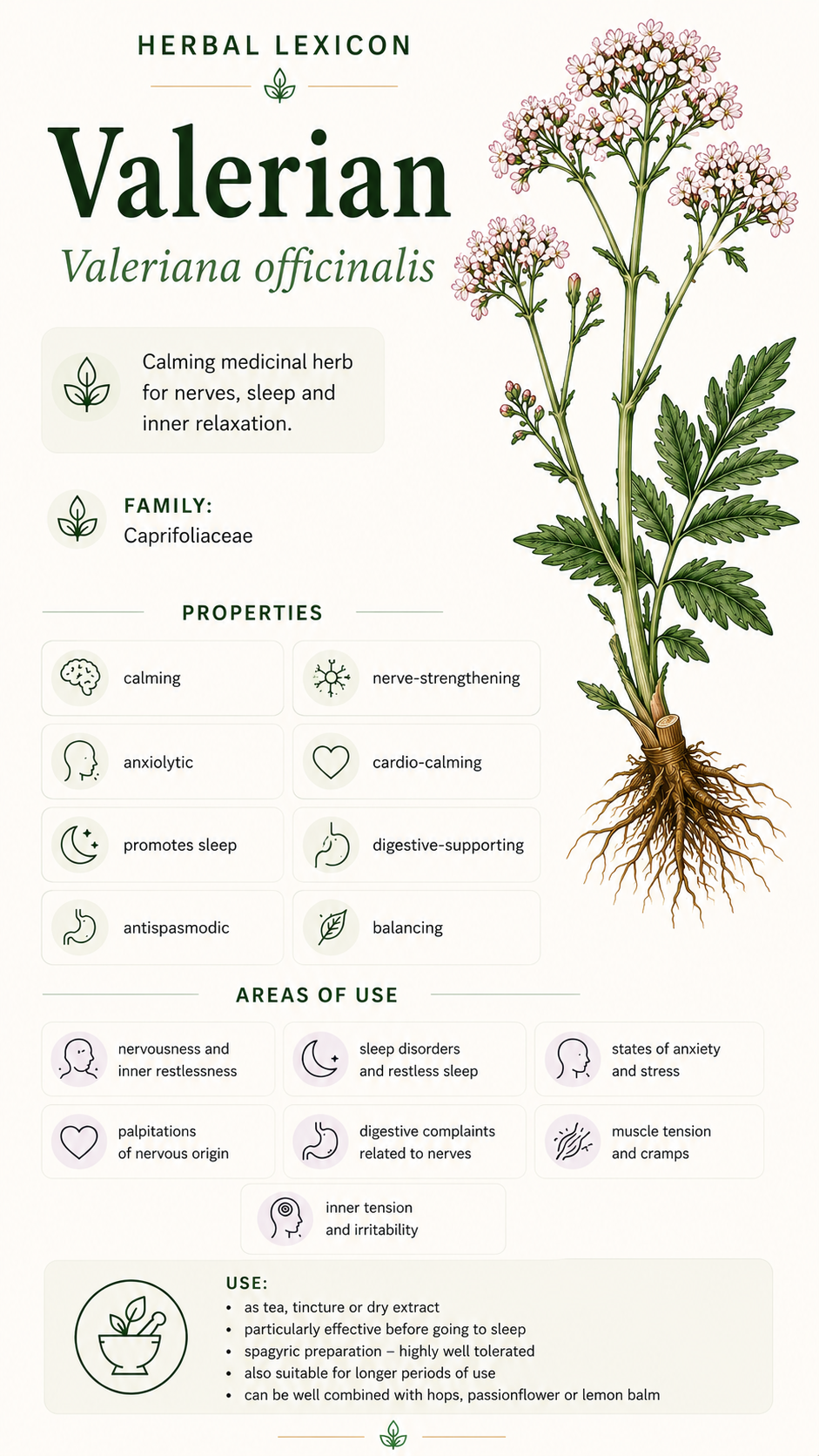

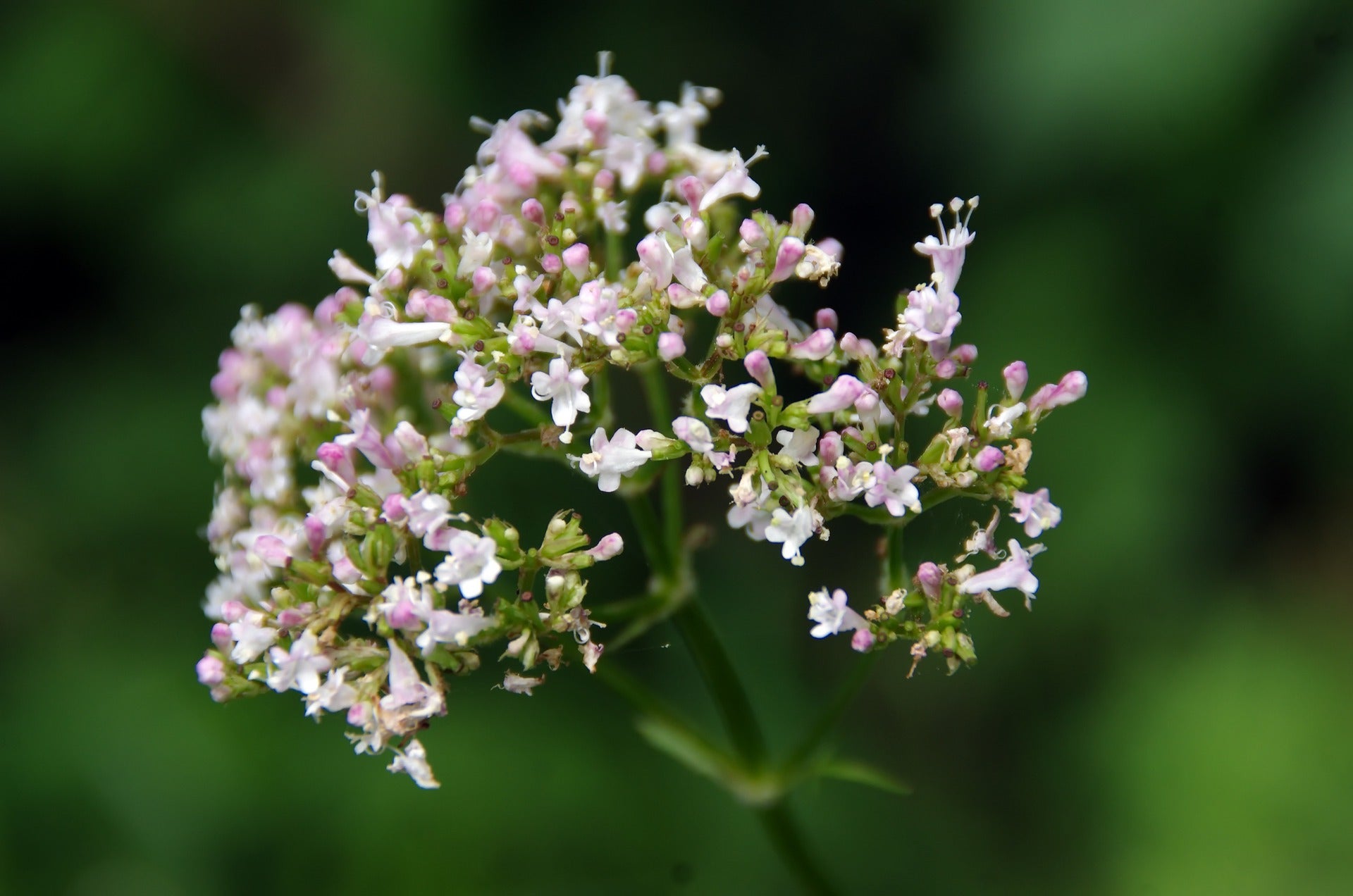
Since ancient times, valerian has been a staple of the naturopathic arsenal in our part of the world as a major medicinal plant. It reached the height of its popularity in the Middle Ages, when it was prescribed as a panacea for a myriad of ailments. As a medicinal plant for nervous disorders and neurological conditions, it remains one of the treatments of choice even today.
Interesting facts about valerian
- Valerian leaves are also delicious in salads.
- Valerian is a popular spice in Indian cuisine.
- Valerian gives off a scent that cats love—hence its nickname, "catnip."
Effects & Properties
Valerian's well-known efficacy today relates to its effects on the central nervous system: it has relaxing, regulating, and anxiolytic properties. The flavonoid Linarin has a pharmacologically proven sleep-promoting effect in humans. Valerian does not cause drowsiness or numbness—it helps regulate the nervous system to a normal level and creates a natural foundation for relaxation and sleep. Active ingredients: essential oils such as isovaleric acid, valepotriates, alkaloids, and flavonoids.
Features: calming, balancing, relaxing, promotes sleep, relieves anxiety, improves concentration.
Applications
Valerian exerts its effects on the central nervous system—therefore, all of its indications are neurological in nature.
Valerian for sleep disorders
Sleep disorders are the most common reason for using valerian. When the nervous system cannot wind down in the evening, thoughts race and the body struggles to fall asleep. The flavonoid linarin provides a pharmacological explanation for its sleep-promoting effect. Valerian gently calms the overactive nervous system—the body falls asleep more easily without causing drowsiness. For sleep problems, it is recommended to take it in the evening and shortly before bedtime.
Valeriana officinalis for nervousness and restlessness
Inner restlessness and nervousness arise when the nervous system remains in a constant state of alert—the body can no longer relax. Valerian is one of the best-known herbal sedatives. Its effect is subtle: it does not cause drowsiness as a side effect. It calms the nervous system, promotes relaxation, and helps people find peace of mind again without impairing their alertness or responsiveness.
Valerian for Anxiety
Valerian is used to treat mild anxiety, such as stage fright or test anxiety. Anxiety triggers the body’s stress response—leading to a racing heart, sweating, and difficulty concentrating. Valerian calms this stress response, relaxes the nervous system, and reduces feelings of anxiety, making it easier to focus on the task at hand.
Valeriana officinalis for poor concentration
Difficulty concentrating often stems from anxiety or inner restlessness—the mind jumps uncontrollably from thought to thought and cannot find a calm focus. Valerian calms the nervous system and alleviates the underlying restlessness, allowing you to regain your center and concentrate for longer periods of time.
Valerian for nervous tension
When the nervous system is subjected to prolonged stress or pressure from family or work, it becomes increasingly exhausted. Valerian gently soothes without causing excessive drowsiness. The nerves relax, allowing the body to recover during moments of calm. It is often used as a natural supplement during times of stress and difficult life phases.
Valeriana officinalis for headaches
Many types of headaches are caused by nervous tension—the muscles in the neck and shoulder area become tense, impairing blood flow to the head. Valerian has a positive effect on the nervous system, calming the nerves and relaxing tense muscles. The headaches subside and are less likely to return.
Instructions for Use
Valerian can be used as an ingredient in calming teas or in herbal blends—usually combined with plants that have similar effects. For restlessness, it is recommended to take it throughout the day; for sleep disorders, it is better to take it in the evening and before bed.
Pregnancy & Breastfeeding
Valerian is considered safe and can be used during pregnancy and while breastfeeding.
Interactions
Valerian may enhance the effects of other sedatives or sleep aids. If you are taking sedatives or sleeping pills at the same time, consult your doctor or naturopath.
Plant Profile
- Scientific name: Valeriana officinalis
- Plant family: Honeysuckle family (Caprifoliaceae)
- Other names: Catnip, Skunk Cress
- Flowering period: May through July
- Origin: Native to (Europe, Asia)
- Toxicity: Non-toxic