

What does the thyroid gland do?
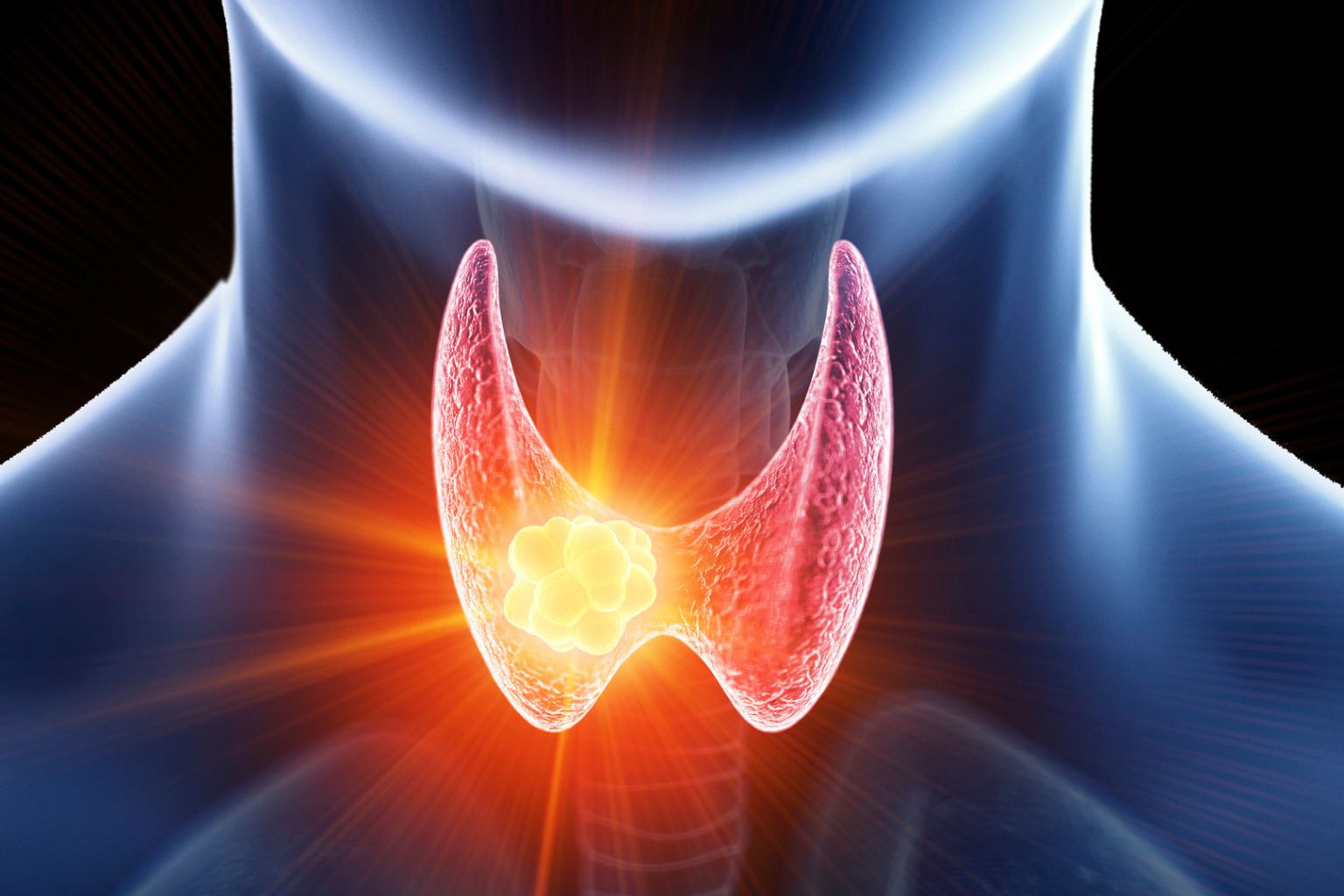
The thyroid gland (glandula thyreoidea) is a small but vital gland located below the larynx. Like a central engine, it regulates our entire metabolism, growth, and energy levels by releasing hormones. When the body needs more energy—for example, in cold weather or during pregnancy—it flexibly boosts its hormone production.
If this sensitive system becomes out of sync, hypothyroidism can develop. Since the gland produces too few hormones in this case, the entire metabolism essentially runs on low: all bodily processes slow down, and performance declines. Hypothyroidism is one of the most common metabolic disorders and affects women significantly more often than men.
Causes of Hypothyroidism
Hypothyroidism can be congenital or develop over the course of a person’s life. Doctors classify the causes based on where in the body the trigger lies:
1. Primary hypothyroidism
This is by far the most common form. It is subdivided into:
- Congenital causes: In rare cases, children are born without a thyroid gland (athyroidism) or with a malformation of the gland (thyroid dysplasia).
- Acquired causes: The most common cause of all is Hashimoto’s thyroiditis, a chronic autoimmune disease in which the immune system mistakenly destroys the body’s own thyroid tissue. Severe iodine deficiency, as well as medical procedures such as thyroid surgery or radioiodine therapy, can also lead to permanent tissue loss and, consequently, hypothyroidism.
2. Secondary Hypothyroidism
In this case, the thyroid gland is actually healthy but no longer receives signals to function properly. Due to a deficiency (pituitary insufficiency), the pituitary gland produces too little of the regulating hormone TSH. In blood tests, this form is characterized by low levels of both thyroid hormones (T3/T4) and TSH.
3. Tertiary hypothyroidism
This form is extremely rare. The cause lies in the hypothalamus (a part of the diencephalon). It releases too little TRH—the hormone that is supposed to activate the pituitary gland. The hormonal chain reaction thus breaks down right at the very beginning.
Symptoms of Hypothyroidism
Hypothyroidism usually develops gradually in adulthood. Initially, symptoms often go unnoticed, but over time, the metabolism slows down noticeably. The symptoms are varied and can differ in severity from person to person:
1. Energy & Mental Health
- Extreme fatigue and excessive exhaustion
- Lack of drive, disinterest, and general lethargy
- Difficulty concentrating and mental sluggishness (“brain fog”)
- Depressive moods and low spirits
2. Metabolism & Digestion
- Unexplained weight gain (although often accompanied by a loss of appetite)
- Extreme sensitivity to cold (chills, cold hands and feet), as the body produces less muscle heat
- Constipation due to sluggish intestinal muscles
3. Skin, Hair & Appearance
- Cool, dry to rough skin
- Dull hair and increased Hair loss
- Puffy swelling (myxedema), especially on the face, around the eyes, or on the tongue
4. Other physical warning signs
- Cool, dry to rough skin
- Dull hair and increased hair loss
- Puffy swelling (myxedema), especially on the face, around the eyes, or on the tongue

Symptoms of hypothyroidism
Diagnosis of hypothyroidism
Fortunately, suspected hypothyroidism can be clarified fairly easily and quickly through targeted diagnostic testing by a doctor. This usually consists of three components:
1. Blood work
The TSH level is particularly important. If it is elevated, this indicates hypothyroidism. In addition, the thyroid hormones fT3 and fT4 are measured.
2. Antibody test
If Hashimoto’s thyroiditis is suspected, the doctor will test for specific thyroid antibodies in the blood (e.g., TPO antibodies).
3. Ultrasound
This allows for the assessment of the thyroid gland’s size, structure, and any possible changes or nodules.
Treatment of Hypothyroidism
Since the body can no longer produce sufficient amounts of these vital hormones on its own when the thyroid is underactive, the deficiency must be compensated for externally. Doctors refer to this as replacement therapy.
1. The drug of choice
L-thyroxine is typically prescribed; this is a synthetically produced hormone whose structure exactly matches that of the body’s own T4 hormone. The body converts it into its active form (T3) as needed.
2. Lifelong Use
Since hypothyroidism (especially in cases of Hashimoto’s disease or following surgery) is usually irreversible, the tablets generally must be taken for life.
3. Important for Daily Life
L-thyroxine is sensitive to food. For optimal effectiveness, the tablet must be taken in the morning on an empty stomach, at least 30 minutes before breakfast, and with only a sip of tap water. Coffee and calcium-rich foods (such as milk) in particular can significantly impair absorption in the intestines.
Medicinal Plants to Support Hypothyroidism
In addition to conventional therapy, naturopathy offers valuable approaches to gently support the sluggish body. Certain medicinal plants and natural substances can help boost metabolism, alleviate accompanying symptoms, and promote hormonal balance.

Medicinal Plants That Help Support Hypothyroidism
- Coffee plant
In low, homeopathic, or spagyric dosages, it paradoxically has a calming effect. It helps with stress-related inner restlessness, anxiety, and sleep disturbances, which would otherwise place additional strain on hormonal balance. - Hawthorn
A slowed metabolism often puts a strain on the cardiovascular system. Hawthorn strengthens heart function, promotes blood circulation, and relieves strain on the circulatory system in cases of hypothyroidism. - Sea sponge
The classic natural remedy provides organic iodine compounds as direct building blocks for hormone production and has traditionally been used to help restore balance to an underactive thyroid. - Rosemary is traditionally used to support metabolism, energy, and vitality.