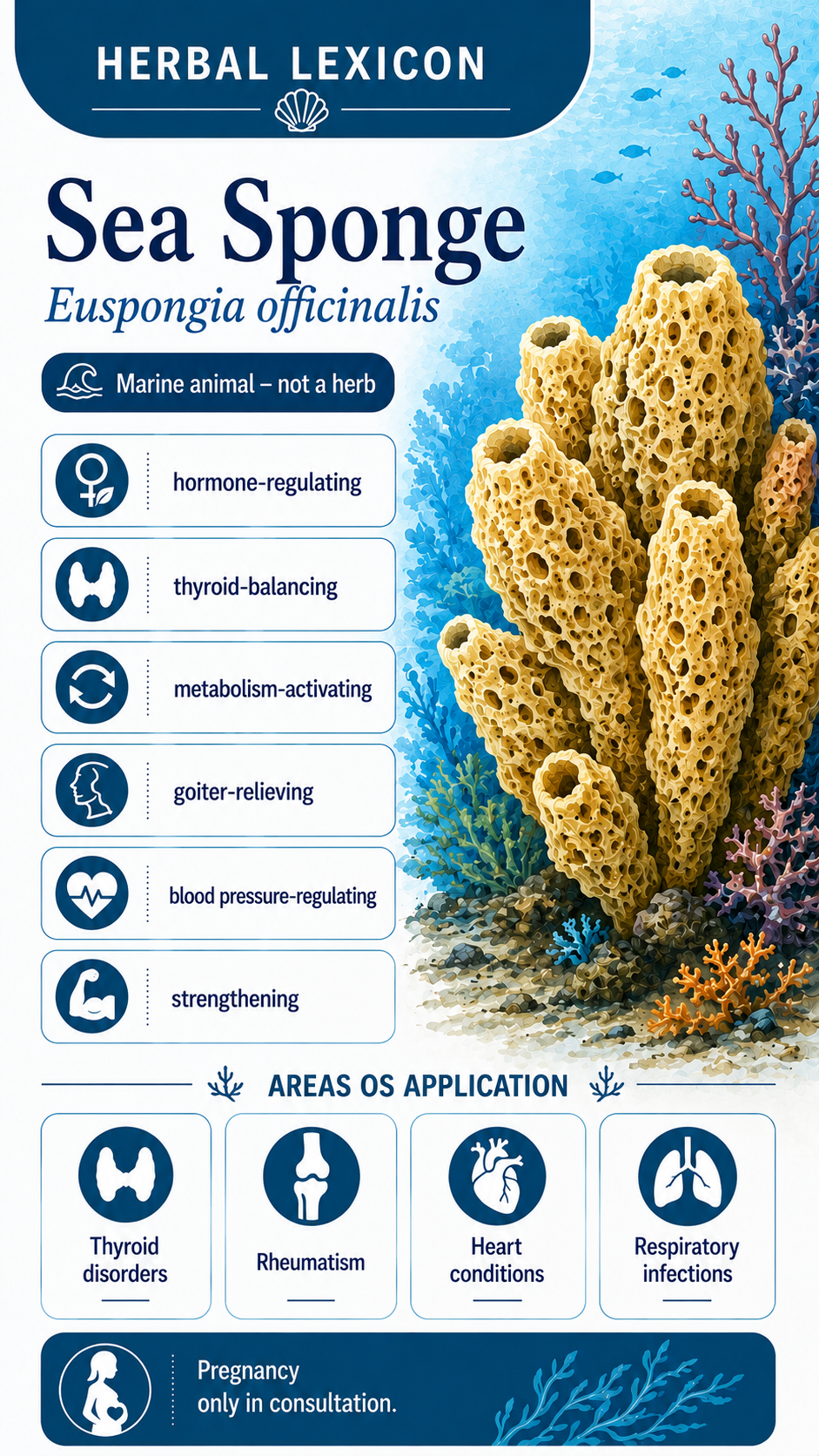

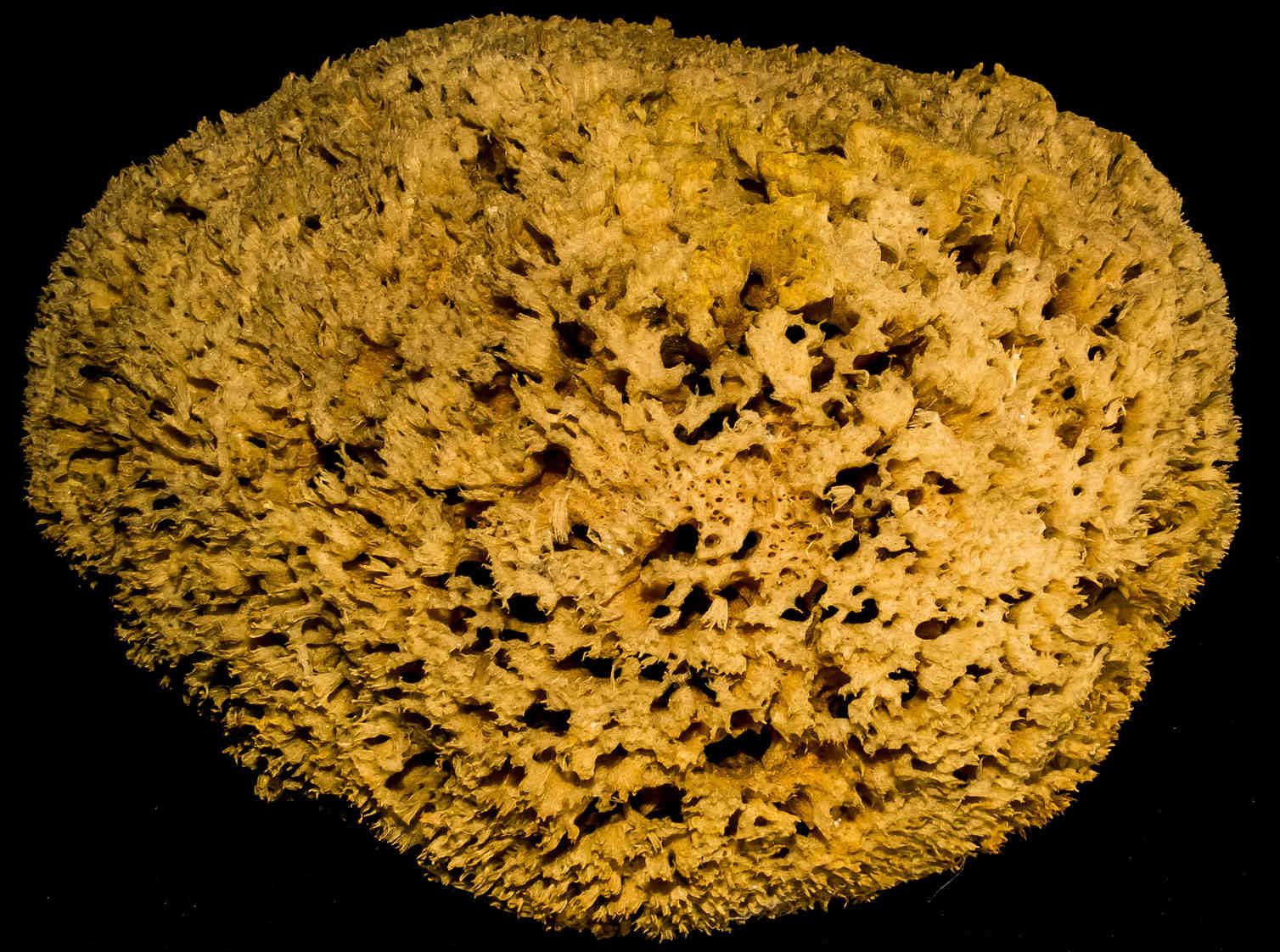
Not a herb, but a marine animal—the sea sponge provides highly bioavailable iodine for the thyroid gland.
Interesting facts about sea sponges
- No nerve or muscle structures—despite the presence of highly differentiated cells.
- Filters seawater and enriches it with iodine.
- Sponges can move around.
Effects & Properties
The calcium silicate skeleton of the sea sponge contains highly bioavailable iodine compounds (Diiodotyrosine, Monoiodotyrosine) – the human body can use them directly to produce thyroid hormones. Thyroid hormones regulate basal metabolic rate, cellular metabolism, and all organ functions.
Features: hormone-regulating, thyroid-balancing, metabolism-boosting, energizing.
Applications
Euspongia officinalis for thyroid disorders
The thyroid gland requires iodine as a key component for the production of its hormones. The sea sponge provides highly bioavailable organic iodine compounds that the thyroid gland can utilize directly. It is used for both underactive (hypothyroidism) and overactive (hyperthyroidism) thyroid conditions—not simply as an iodine supplement, but as a regulating and balancing agent for the entire thyroid system.
Sea sponge for mucosal inflammation
A deficiency in thyroid hormones can directly lead to inflammation of the mucous membranes—without sufficient thyroid hormones, the mucous membranes function too slowly and become more susceptible to inflammation. Hormonal support from sea sponges helps maintain the normal function of the mucous membranes. The tendency toward inflammation decreases, and swollen mucous membranes subside.
Euspongia officinalis for rheumatism
Rheumatism is caused by chronic inflammation, which is exacerbated by waste products and metabolic byproducts in the tissues. The sea sponge stimulates overall metabolism—waste products are eliminated more effectively, and the inflammatory basis of rheumatism is eliminated. Pain and stiffness are reduced.
Sea sponge for heart problems
An unregulated thyroid metabolism has a direct impact on the heart—both hypothyroidism and hyperthyroidism can cause heart rhythm disturbances and blood pressure problems. The balancing effect of the sea sponge on the autonomic nervous system via the thyroid helps stabilize heart rhythm and blood pressure.
Euspongia officinalis for respiratory infections
Thyroid hormones also regulate the immune system—in hypothyroidism, the immune response is weakened. Thanks to its iodine content, sea sponge stimulates the entire system: the immune system becomes more active, mucus in the airways is cleared more effectively, and susceptibility to infections decreases.
Instructions for Use
As a complex remedy, taken as a course of treatment, several times a day in the form of drops, tablets, or globules.
Pregnancy & Breastfeeding
Possible—but only in consultation with your therapist, as iodine requires special attention during pregnancy.
Profile (Animal)
- Scientific name: Euspongia officinalis
- Family: Spongidae
- Origin: Seas and oceans
- Toxicity: Non-toxic