
What is TCM?
Traditional Chinese Medicine (TCM) is a holistic system of medicine that originated in China about 2,000 years ago and is gaining increasing recognition worldwide today. TCM does not focus solely on treating symptoms, but rather on maintaining or restoring a person’s inner balance. Its roots lie in millennia-old teachings of natural philosophy. To understand TCM, one must consider its most important premise: Health exists only when life energy can flow freely and the opposing forces within the body are in harmony.
The Philosophy of TCM
Traditional Chinese Medicine views the human being not as the sum of individual organs, but as part of nature. Its philosophy is based on the principle that health arises when all forces in the body work together harmoniously.
1. The Life Energy “Qi” & the Meridians
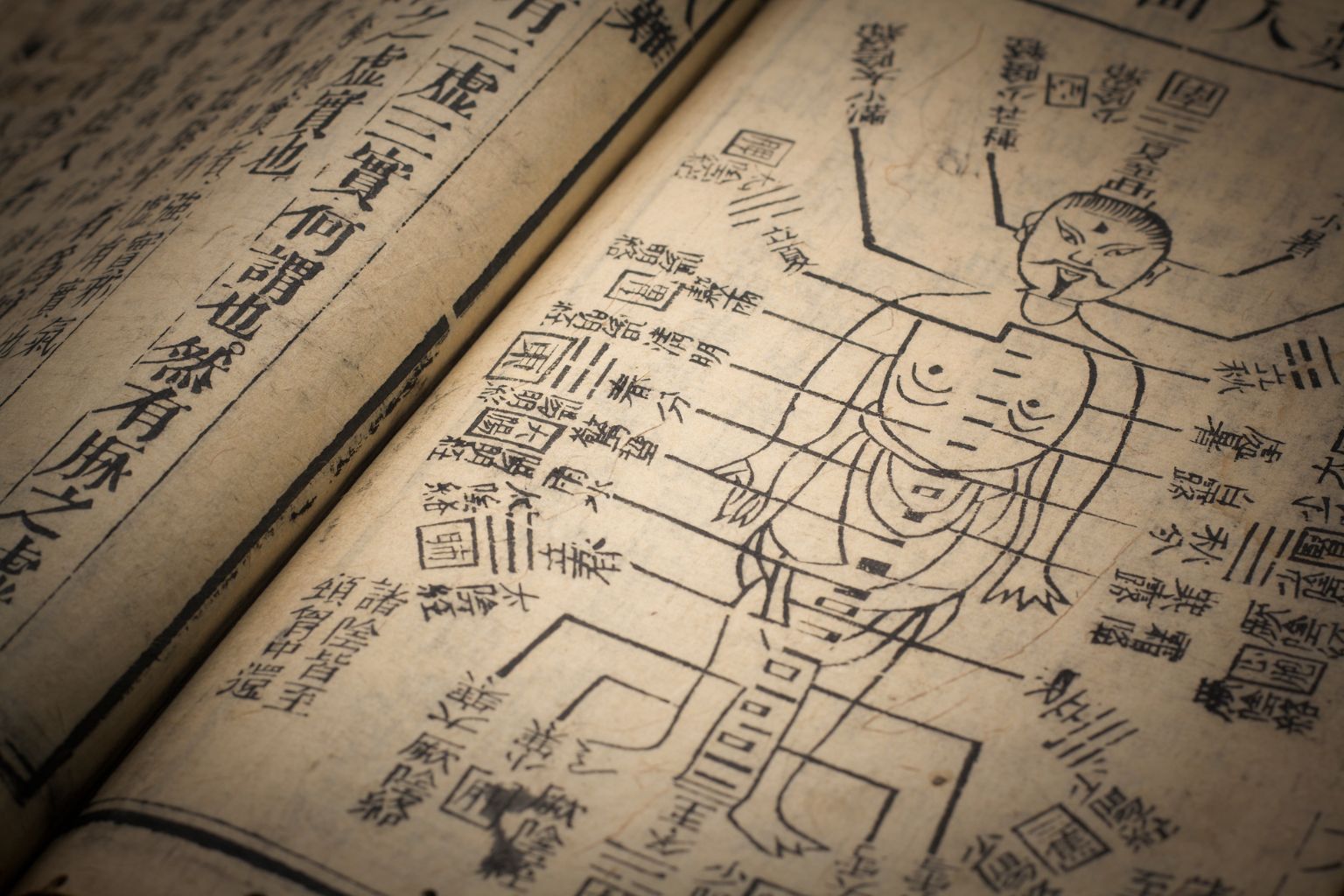
In TCM, “Qi” (pronounced “chi”) is understood as the universal life energy that flows through all living things. In the human body, Qi flows along invisible pathways known as meridians. As long as Qi can flow unimpeded and in sufficient quantity, a person is vital and healthy. However, if blockages or an energy deficiency arise, illness and discomfort can develop.
2. Yin & Yang
Yin and Yang symbolize two opposing yet inseparably interconnected forces —such as day and night, cold and heat, or rest and activity. Nothing is purely Yin or purely Yang. In TCM, Yin represents what is nourishing, resting, and cooling (e.g., the body’s metabolism during sleep), while Yang represents activity, warmth, and movement. Health means that these two forces are in a dynamic balance.
The 5 Elements (Wood, Fire, Earth, Metal, Water)
Nature—and thus also human beings—are divided into five phases or elements:
- Wood
- Fire
- Earth
- Metal
- Water
Each element represents a specific season and an emotion, and is closely linked to certain pairs of organs in the body. TCM uses this system to understand how organs influence one another and how an imbalance in one area can throw the entire body off balance.

The 5 Elements as an Interplay of Organs, Energy, and Inner Balance
TCM Diagnostics
To determine where Qi is blocked or whether there is an imbalance between Yin and Yang, TCM employs a holistic diagnostic approach that engages all the senses. Instead of technical devices, the TCM practitioner relies on four pillars:
- interviewing the patient about lifestyle habits,
- listening and smelling,
- pulse diagnosis, and
- tongue diagnosis: the shape, color, and coating of the tongue
However, the focus here is on the person as a whole; it is not merely the symptoms that are treated. Through the medical history interview, the practitioner seeks to assess the patient’s physical and mental state.
TCM therapeutic methods: the 5 pillars of TCM
The various therapeutic methods of
Traditional Chinese Medicine interlock like gears and together form the foundation of treatment: the so-called “5 pillars of TCM.” Instead of isolated individual measures, this holistic medicine relies on the power of combination. The methods are tailored to each patient to release blockages and to stimulate the body’s self-healing powers.
1. Acupuncture, acupressure, moxibustion (stimulation of acupoints)
This pillar uses the targeted stimulation of acupoints located along the meridians to restore the free flow of qi. In classical acupuncture, this is done using ultra-thin, sterile needles—a process that is usually repeated over several sessions. The gentler option for home use or sensitive patients is acupressure, in which the points are massaged using targeted finger pressure. Moxibustion, on the other hand, harnesses the power of heat: dried mugwort (moxa) is burned either in the form of cigars just above the skin or on the needles to gently melt away deep-seated cold and energy blockages.
2. Herbal Medicine (CAT)
CAT (short for Chinese Herbal Medicine Therapy) is the cornerstone of TCM worldwide. Chinese herbal formulas are usually composed of plant-based and mineral ingredients, and rarely include animal-derived components. The targeted effect of such a formula is based on four key characteristics:
- Taste
- Smell
- Meridian on which it acts
- Temperature effect
Traditionally, each taste triggers a specific physical reaction. Thermal effects also play an important role in TCM.
3. Movement and Coordination Exercises (Qigong and Taiji)
Qigong and Taiji are meditative forms of movement consisting of flowing sequences, conscious breathing, and coordination exercises. Unlike Western strength training, these practices focus on gently stretching the meridians in a specific sequence. Through guided breathing, awareness moves deep into one’s own body. This has been scientifically proven to lead to deep relaxation of the nervous system (brain and spinal cord), thereby harmonizing and regulating the functions of the internal organs.
4. Nutrition
In TCM, food is considered the gentlest form of medicine. Foods are not evaluated here based on their vitamin content, but rather on their energetic healing effects on the organs. Each of the five tastes stimulates a specific functional system. In addition to taste, the method of preparation determines the effect. To promote strong digestion, TCM also recommends seasonal foods, regular meals at fixed times, and eating in complete tranquility.
5. Massage (Tuina)
Tuina massage is one of the oldest manual treatment methods in the world. Using special pushing (Tui) and grasping (Na) techniques, the therapist applies targeted stimulation along the meridians. This not only relieves tension but also stimulates blood circulation and the flow of the life energy Qi throughout the body. A Tuina treatment is suitable for all ages and lasts between 15 minutes and a full hour, depending on the specific symptoms.

Traditional Chinese Medicine (TCM) combines various holistic approaches—such as acupuncture, herbal therapy, nutrition, and exercise—to bring the body and mind into balance.
Areas of Application for TCM
Traditional Chinese Medicine is an extremely versatile system. In the West, it has long since ceased to be viewed merely as an alternative and is now used very successfully as a complement to conventional medicine. TCM also places a strong emphasis on preventive health care. Furthermore, it is a popular tool to support lifestyle changes, such as dieting or quitting smoking.
TCM is used particularly frequently for chronic conditions and functional disorders. Typical areas of application include, among others:
1. Acute and chronic pain
For example, migraines, tension headaches, chronic back pain, or joint pain (osteoarthritis)
2. Respiratory and ENT conditions
Support for chronic bronchitis, asthma, frequent sinus infections (sinusitis), or tinnitus
3. Allergies and the immune system
Complementary therapy for hay fever, food intolerances, or general susceptibility to infections
4. Gastrointestinal tract
Harmonization for irritable bowel syndrome, chronic stomach pain, heartburn, bloating, or constipation
5. Women’s Health (Gynecology)
Relief from menstrual symptoms (PMS), irregular cycles, difficulty conceiving, or menopausal symptoms
6. Exhaustion and Mental
Health Support for chronic fatigue, sleep disorders, inner restlessness, and stress-related burnout symptoms.
Since TCM views the body as a whole, the underlying energetic imbalance is identified in each of these conditions to treat the cause—not just the symptom.
TCM in Everyday Life: How to Apply This Far Eastern Wisdom Today
The biggest misconception about TCM is that you must visit an acupuncture clinic to benefit from it. In reality, this Far Eastern wisdom offers simple principles that can be easily integrated into modern Western life to keep the Qi flowing:
1. A Warm Breakfast
It preserves “spleen qi,” eases digestion, and provides long-lasting energy without cooling the body’s energy
2. Use Herbs and Essences
Gentle spagyric plant sprays or local teas can be easily used throughout the day.
3. Mini-Qigong (breathing breaks)
Just three minutes of conscious, deep abdominal breathing can release initial stress-related blockages and get your life energy moving again.
4. Eat seasonally and regionally
Mother Nature provides us with thermally appropriate foods exactly when our bodies need them—for example, cooling watermelons in summer or warming root vegetables in winter.
5. Mindful enjoyment
Constant Sensory overload disrupts inner balance. Eating meals in a calm environment and taking short breaks without your smartphone are practical ways to practice TCM prevention.