


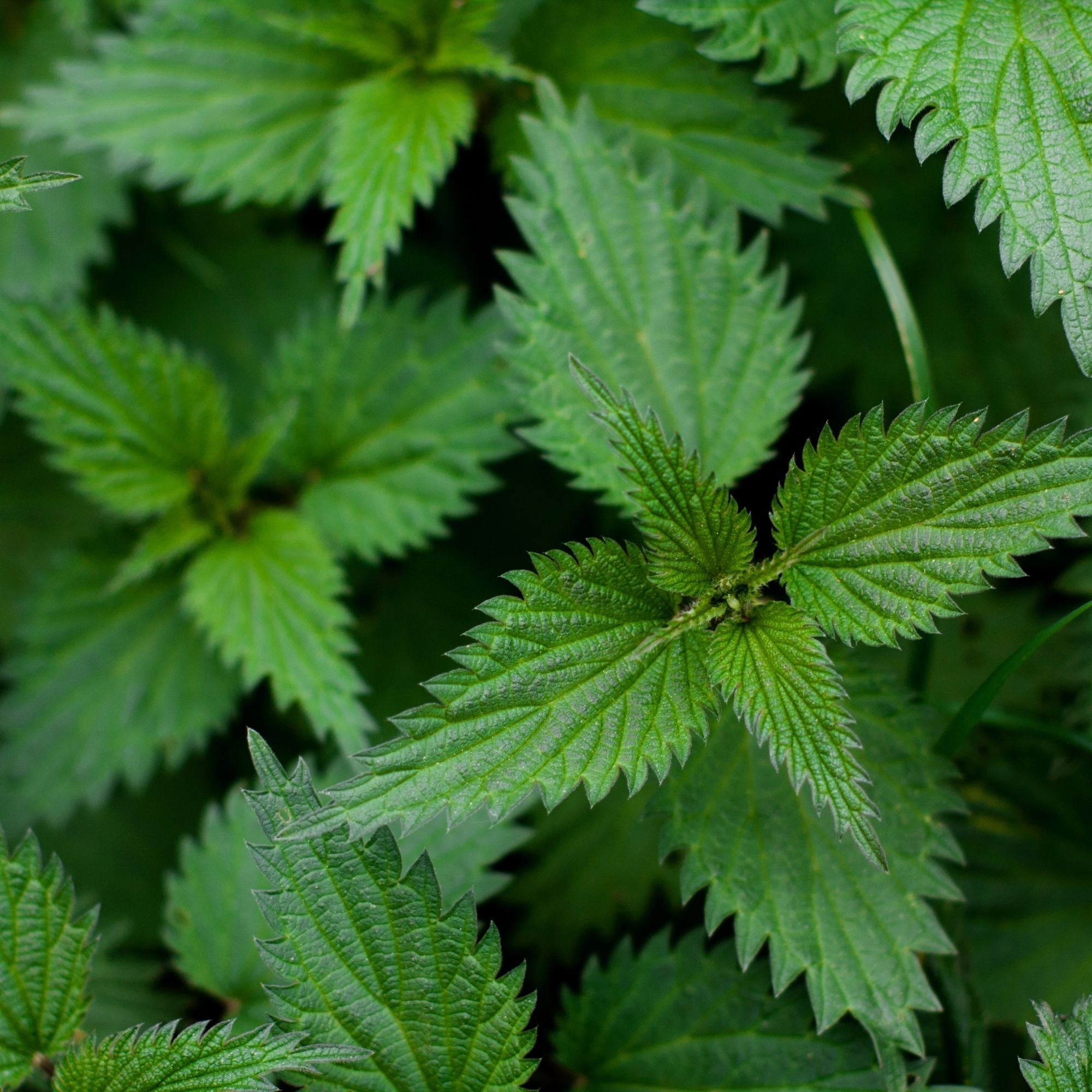
The Stinging Nettle: More Than Just a Stinging Wild Plant
Many people know the stinging nettle primarily for its unpleasant stinging hairs. Anyone who accidentally comes into contact with it while walking through meadows or along forest edges usually remembers the characteristic burning sensation on the skin. Yet it’s easy to forget that the plant has been one of Europe’s most important medicinal plants for centuries.
Interestingly, the stinging nettle owes its special status not to a single spectacular effect, but to a wide range of properties. It combines a high mineral content with a long tradition in naturopathy and is still used today in a wide variety of contexts.
The key insight here is that the stinging nettle is valued not for a single ingredient, but for the complex interplay of various plant compounds. It is precisely this versatility that continues to make it of interest in naturopathy and nutrition today.
Which Compounds Explain the Stinging Nettle’s Special Role
Stinging nettle is often reduced to its traditional use for the urinary tract or metabolism. In fact, however, its uniqueness begins with its constituents. It is one of the most nutrient-rich native wild plants and combines minerals, vitamins, and phytochemicals in a remarkable combination.
1. An Exceptional Richness of Nutrients
Stinging nettle contains, among other things, iron, potassium, magnesium, calcium, and various vitamins. As a result, it was valued in the past not only as a medicinal plant but also as a valuable food source. Especially in times when fresh food was not always available, it served as an important source of micronutrients.
2. High Concentrations of Minerals and Trace Elements
Many native wild plants contain significantly higher amounts of certain minerals than cultivated vegetables. The stinging nettle is a well-known example of this. Its composition explains why it is traditionally often mentioned in connection with nutrition, vitality, and general well-being.
3. Phytochemicals with Diverse Functions
In addition to vitamins and minerals, stinging nettle contains various phytochemicals. These originally serve as a protective mechanism for the plant against environmental influences. It is precisely these compounds that make many medicinal plants of interest to research and naturopathy, as they help determine the plant’s complex biological activity.
Why the stinging nettle has been used for centuries
The stinging nettle’s long history as a medicinal plant is not based on a single property. Rather, it has traditionally been used in various areas that are often interconnected. The focus is particularly on the urinary tract, metabolism, and general well-being.
1. The Connection to the Urinary Tract and Excretion
One of the best-known traditional uses concerns the urinary tract. Stinging nettle has been used for centuries in naturopathic approaches focused on fluid excretion. The emphasis here is less on treating individual symptoms and more on supporting natural excretory processes.
2. Its Role in Traditional Metabolic Concepts
In naturopathy, metabolism, nutrition, and excretion were recognized early on as closely interconnected. Stinging nettle continues to hold a firm place within this framework to this day. Its traditional use is based on the idea of viewing the body not in isolation, but as an interconnected system.
3. Its Importance for Skin, Hair, and General Well-Being
Historical herbals frequently mention stinging nettle in connection with the skin and hair. This stems from the idea that internal processes, such as nutrition or metabolism, can manifest externally over the long term. For this reason, the plant is still found today in numerous naturopathic applications related to general well-being.

Stinging nettle has been valued in naturopathy for centuries. Its traditional use in connection with the urinary tract, metabolism, and skin and hair, in particular, makes it one of the best-known native medicinal plants.
How to Incorporate Stinging Nettle into Your Daily Routine
The stinging nettle is not a miracle plant. Nevertheless, there are several ways to effectively incorporate its special properties into daily life.
1. As part of a varied diet
Young stinging nettle leaves can be used much like spinach. When heated, the stinging hairs lose their potency, so the plant can be easily incorporated into soups, vegetable dishes, or smoothies.
In this way, the stinging nettle can be used not only as a medicinal plant but also as a nutrient-rich wild plant.
2. Seasonal use as a wild plant
The stinging nettle serves as a reminder that many native plants are only available during certain seasons. Those who incorporate seasonal foods often automatically expand the variety of their diet.
This variety can help you consume a range of plant compounds and avoid monotonous eating habits.
3. Pay Attention to Quality and Origin
If you collect stinging nettles yourself, you should look for uncontaminated locations. Roadside areas, intensively farmed fields, or contaminated soil are not suitable for harvesting.
When purchasing ready-made products, it’s worth checking the origin and quality of the plant ingredients used.
4. Don’t view the body in isolation
An interesting concept from naturopathy is that individual ailments should often not be viewed in isolation from the rest of the body.
Traditionally, stinging nettle is also rarely used for just a single purpose. Instead, it is often considered in the context of broader considerations regarding nutrition, metabolism, and general well-being.
5. Understand naturopathy as a complement
Medicinal plants can be valuable companions in everyday life. However, they are no substitute for necessary medical diagnosis or treatment.
Medical advice should always be sought, especially in cases of persistent complaints, unclear symptoms, or existing medical conditions.

Stinging nettle can be integrated into daily life in a variety of ways—from a mindful diet to its use as a wild plant to naturopathic approaches for holistic well-being.