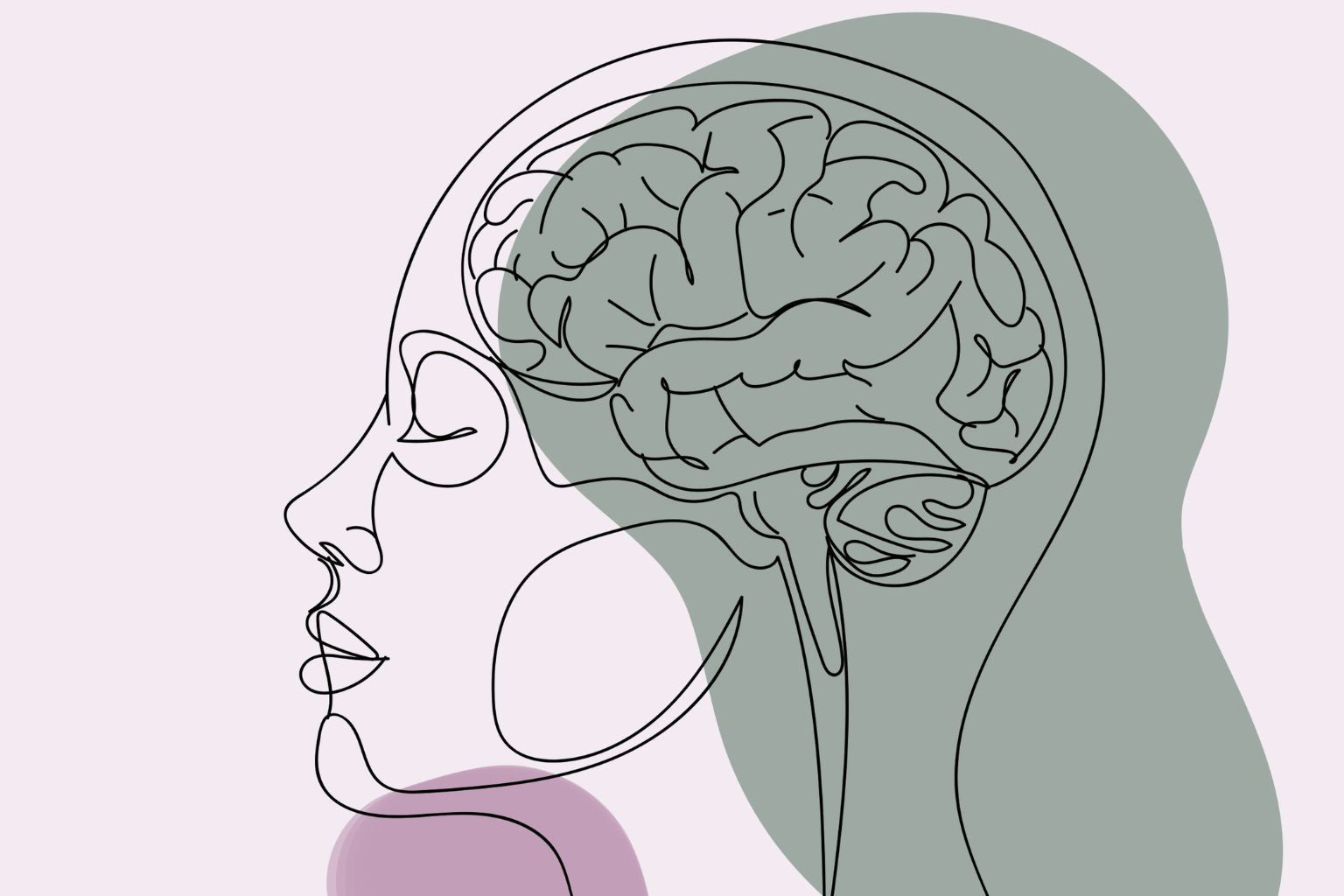



Why High Sensitivity Primarily Affects Sensory Processing
Some people leave a concert feeling energized, while others feel exhausted afterward and need some time to rest. Some immediately pick up on the atmosphere in a room, while others barely notice it. Such differences often have less to do with personality or resilience than many assume.
In highly sensitive people, the nervous system processes information with particular intensity. Sounds, smells, visual impressions, or emotional signals are not only perceived but often analyzed in greater detail and processed more deeply. This is precisely why highly sensitive people often experience their environment in a more nuanced way, but also find it more exhausting.
Interestingly, this sensitivity does not apply only to external stimuli. Thoughts, memories, and feelings are also frequently experienced more intensely. This creates a special connection between perception, emotions, and reflection that shapes the entire experience. High sensitivity is therefore understood today more as a personality trait than as a disorder.
What factors shape the experience of highly sensitive people
High sensitivity does not manifest the same way in everyone. Nevertheless, there are some key mechanisms that influence the experience of many affected individuals.
1. Stimuli are processed at a particularly deep level
The most important difference lies not in perception itself, but in the processing of information.
Many highly sensitive people unconsciously analyze impressions in greater detail. The brain evaluates more details, recognizes patterns more quickly, and links new information to existing experiences. This ability can lead to great creativity, empathy, and problem-solving skills. At the same time, this processing requires more energy, which can lead to exhaustion more quickly.
2. Emotional signals are perceived with particular intensity
Highly sensitive people often notice subtle changes in facial expressions, speech, or mood.
While others barely notice a conflict, highly sensitive people often pick up on even subtle tensions. This explains why many affected individuals are considered particularly empathetic. At the same time, this openness can mean that other people’s emotional distress has a stronger impact on one’s own well-being.
3. Sensory overload arises from the accumulation of many impressions
It is often assumed that individual stimuli are the problem. In fact, feeling overwhelmed usually arises from the sheer volume of information being processed simultaneously.
A noisy room, multiple conversations, time pressure, and emotional tension can collectively push the nervous system to its breaking point. The result is often difficulty concentrating, a need for solitude, or mental exhaustion.
4. Self-esteem and sensitivity influence each other
Many highly sensitive people realized early on that they react differently than those around them.
Those who repeatedly hear that they are too sensitive often develop self-doubt. This frequently creates an inner conflict: one’s own perception is called into question, even though it is indeed real. A healthy approach to high sensitivity therefore often begins with the understanding that sensitivity is not a weakness, but a natural trait.
Typical symptoms or signs
Not every sensitive person is automatically highly sensitive. Nevertheless, there are some characteristics that occur particularly frequently.
1. Sensory overload occurs more quickly
People with high sensitivity often feel exhausted more quickly in loud, hectic, or highly stimulating environments.
This is not a matter of a lack of resilience. Rather, the brain processes more information at the same time, which causes mental capacity to be exhausted more quickly.
2. A strong need for retreat
After intense social situations, many highly sensitive people consciously need time to themselves.
This retreat is not for the sake of isolation, but for regeneration. It gives the nervous system the opportunity to process the multitude of impressions it has absorbed.
3. Emotions are experienced with particular intensity
Joy, enthusiasm, sadness, or compassion can be felt very strongly.
This emotional depth is one of the distinctive characteristics of highly sensitive people. At the same time, it can lead to stressful situations having a longer-lasting effect than they do on others.
4. External stimuli have a greater impact on well-being
Loud noises, bright lights, strong smells, or time pressure are often perceived more intensely.
Many affected individuals therefore develop strategies to consciously reduce or better manage highly stimulating situations.
What can help in everyday life
High sensitivity cannot be changed—nor does it need to be. Often, the focus is instead on creating suitable conditions.
1. Recognize your own triggers early on
If you know which situations are particularly stressful, you can take more targeted preventive measures.
These include, for example, crowds, time pressure, noise, or emotional conflicts. Awareness of individual triggers is often the first step toward greater calm.
2. Schedule regular recovery periods
The nervous system needs time to process sensory input.
Short breaks, walks, reading, or consciously seeking quiet moments can help maintain inner balance and prevent feeling overwhelmed.
3. Set clear boundaries
Many highly sensitive people feel the needs of others particularly strongly.
This is precisely why it is important to take your own boundaries seriously. Saying no does not mean rejection, but is often a form of healthy self-care.
4. Create structures
Predictability reduces the strain caused by a constant barrage of new stimuli.
Fixed routines, clear daily schedules, and sufficient buffer time can help reduce stress and sensory overload.
5. Consciously leverage your own strengths
High sensitivity doesn’t just bring challenges.
Empathy, creativity, conscientiousness, and a keen sense of context are skills that can be valuable in many areas of life. Those who recognize these qualities often come to see their own sensitivity increasingly as a resource.

Clear boundaries, regular breaks, and mindful use of one’s own resources are among the most important strategies in the daily lives of highly sensitive people.
Natural support and medicinal plants for your immune system
Naturopathic methods are frequently used to promote relaxation, inner balance, and general well-being. They are not a substitute for medical or psychological treatment but can be used as a complementary approach. The following examples are based on the naturopathic approaches mentioned in the original article
.

Natural remedies such as taiga root, magnesium, or potassium phosphoricum are traditionally used to support inner balance, resilience, and general well-being.
- Siberian ginseng is traditionally used during periods of increased stress. Its relevance to this topic lies primarily in its use within naturopathic approaches focused on stress resistance and adaptability.
- Gold is associated with emotional stability and inner balance in certain naturopathic traditions
- Ferrum phosphoricum is traditionally used when regeneration and general resilience are the focus. Therefore, it is frequently found in naturopathic approaches for sensitive or stressed individuals.
- Kalium phosphoricum is frequently associated in naturopathy with the nervous system, mental resilience, and recovery.
- Magnesium plays an important role in numerous processes of the nervous system and is often used to support relaxation and general well-being.