
Just one more post—so why do we keep scrolling anyway?
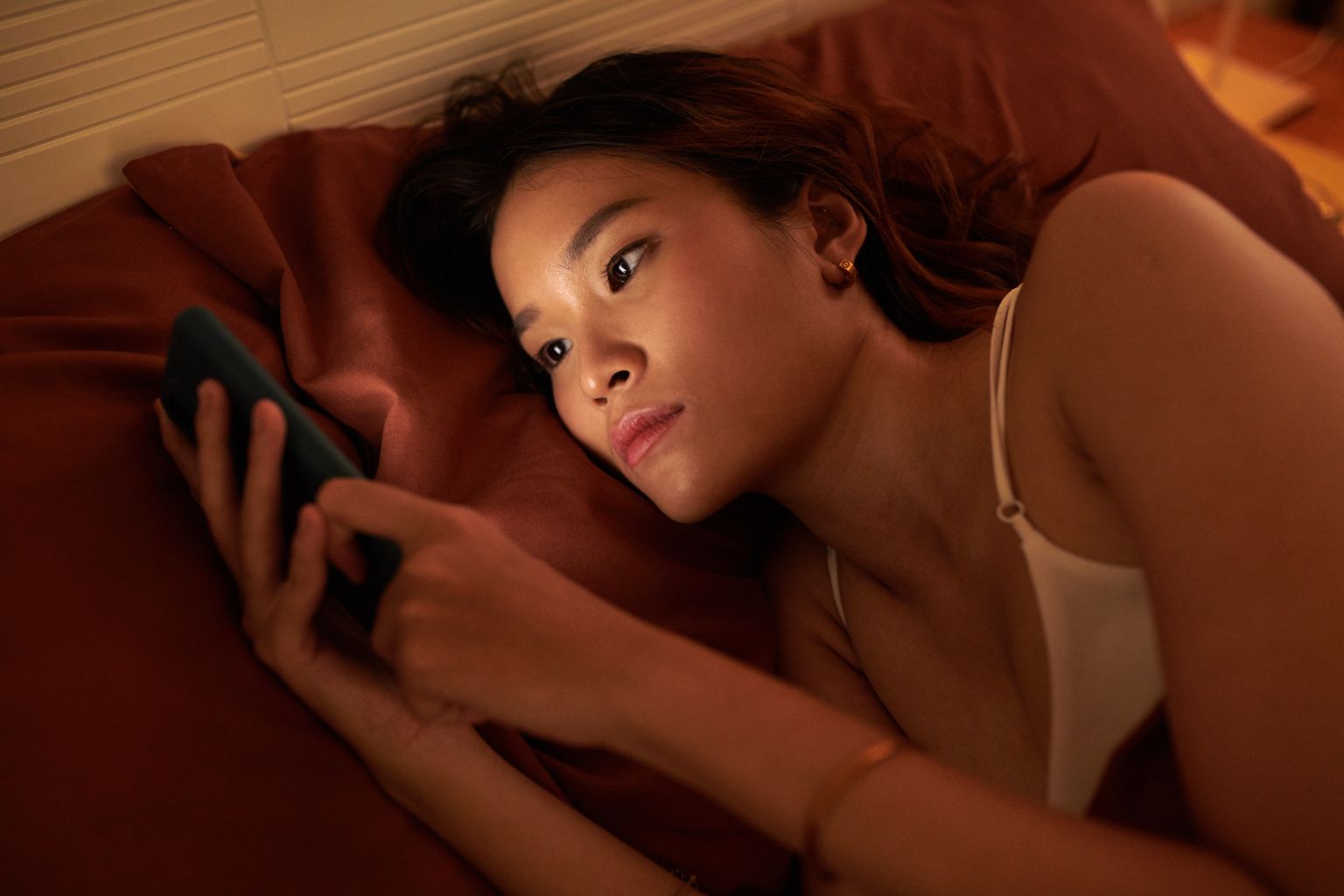
You just want to quickly see what’s been going on. Read one post, maybe two. After all, you want to stay informed. Then you open the next post. A video is already waiting below it. The comments are discussing a new development, so you look it up. In between, you refresh the feed again. At some point, you glance at the clock. Five minutes have turned into 40. Yet putting your smartphone down still feels strangely difficult. Because maybe something has changed again in the meantime.
This very behavior is called “doomscrolling”: We keep consuming negative, unsettling, or threatening content, even though we’ve long since realized it’s not good for us—and even though we actually wanted to stop. The strange thing about it is that we don’t necessarily keep scrolling because we want to see bad news. Often, the exact opposite is true. We just want to finally feel like we know enough.
1. When five minutes suddenly turns into an hour
Doomscrolling rarely starts consciously. No one sits down on the couch in the evening and thinks: “Now I want to stress myself out for an hour by reading about crises.” Usually, there’s a reasonable reason. A breaking news alert pops up on the screen. Something is happening in another country. The economic situation is changing. A political decision is causing uncertainty. Of course, you want to know what’s going on. So you read an article. Afterward, one question is answered—but two new ones have arisen. What does this mean now? What happens next? Is there any new information yet? So you keep scrolling. And this is exactly where things can change: The desire to stay informed turns into a search for the moment when the situation finally feels resolved. But with many news stories, that moment never comes. Crises continue to unfold. Assessments contradict one another. No one knows exactly what will happen tomorrow. Yet the smartphone keeps delivering yet another update. And another. And another.
2. What “doomscrolling” Actually Means
Not all intensive news consumption is automatically doomscrolling. When something significant happens, it’s perfectly understandable to read the news more frequently or to follow developments over a longer period of time. The difference lies less in the number of articles you read than in how you handle them. You actually wanted to stop, but you keep scrolling. You realize that the content is increasingly weighing on you, yet you open the next post anyway. Or you put your smartphone down for a moment—only to check again a few minutes later to see if there’s anything new. “Doomscrolling” therefore doesn’t simply describe an interest in bad news. Rather, it’s a cycle of seeking information, feeling uncertain, and the urge to keep looking. And this cycle plays out on digital platforms, which have one crucial difference from traditional media: they’re never finished.
Why are we so drawn to bad news?
Actually, “doomscrolling” sounds contradictory. If certain content makes us afraid, angry, or sad—why do we keep looking at it? Why don’t we look for something that calms us down instead? Because unpleasant information isn’t automatically uninteresting. Especially not when it contains something that might be important to us.
1. Our brains pay special attention to potential dangers
A positive news story can be nice. A potential threat, on the other hand, demands our attention. This tendency is often explained by what’s known as the “negativity bias”: Negative information can capture our attention particularly strongly and be weighted more heavily than comparable positive information. This is easy to observe in everyday life. Amid ten rather trivial news items, the following suddenly appears: “New escalation feared.” Which one do you click on? Probably not, at first, the story about a problem that was successfully solved somewhere. That doesn’t mean our brain considers every headline to be an immediate danger. The popular notion of a “Stone Age brain” that treats a push notification the same way it would a saber-toothed tiger falls far short of the mark. But potential dangers, conflicts, and uncertainties are particularly effective at grabbing our attention. And in the digital feed, the next piece of bad news is already waiting right behind the one you just saw.
2. Why We Believe One More Piece of Information Might Reassure Us
Perhaps this is the most interesting part of doomscrolling: We often don’t keep scrolling because we want to feel more afraid. We keep scrolling because we want to feel less afraid. An unclear situation creates uncertainty. So we look for information. At first, this makes sense. When you understand something better, you can make sense of it better. But at some point, this mechanism tips over. By now, you know what happened. Yet something is still missing: certainty about what will happen next. So you keep searching. Maybe there’s a new assessment by now. Maybe someone explains that things aren’t as bad as they seem. Maybe there’s finally a report that lets you say, “Okay. Now I know enough.” With ongoing crises, however, that report may never come. Instead, you find a new forecast, another alarming comment, or a video highlighting an aspect you didn’t know about before. You now have more information—but not necessarily more certainty. And that’s exactly what can lead you to scroll again. This is how the real paradox of doomscrolling arises: We search for information to reduce uncertainty—and in doing so, we constantly find new things to worry about.
Why is it so hard to stop using your smartphone?
By now, you understand what’s happening. You could actually close the app. But right below the last post, the next one is already waiting. A video starts playing automatically. A new post promises an update. And before you’ve even consciously decided to keep reading, your thumb has already scrolled. This is no coincidence. Digital feeds make it particularly easy to turn a conscious action into a habit.
1. A feed never closes for the day
A newspaper has a last page. A news broadcast ends. Even a book shows you pretty clearly how much is still ahead of you. A feed doesn’t do that. You can scroll, scroll, and scroll some more—and new content keeps appearing. This principle is called “infinite scroll.” As a result, something is missing that normally helps us stop: a natural endpoint. Imagine if, after ten posts, your screen said: “That’s it for today.” You’d now have to actively decide whether you want to see more news. In an endless feed, the opposite happens. It’s not continuing that requires a decision, but stopping. That sounds like a small difference. In everyday life, it’s quite significant. Because after each post, you don’t have to do anything to get the next one. A quick swipe of the thumb is all it takes—and the feed automatically delivers more content. So “I’ll read one more article” can very quickly turn into “I’ll see what’s next.”
2. Why We Never Know What’s Coming Next
On top of that: You don’t know what’s waiting after your next swipe. Maybe it’s the same post all over again. Maybe a completely trivial video. But maybe it’s exactly the update you’ve been waiting for for the past half hour. This unpredictability is what makes scrolling through so appealing. Not every new piece of content has to be interesting. It’s enough that the next one might be. That’s exactly why I wouldn’t accept the commonly used explanation that “social media works like a slot machine” at face value. While the comparison helps illustrate a principle—that unpredictable outcomes can reinforce behavior—a social media feed isn’t a slot machine, and doomscrolling can’t be reduced to a single reward mechanism. The popular explanation “Every time you scroll, you get a dopamine rush” is also too simplistic. What’s much more important for our daily lives is this: The next piece of content is unknown—and just a swipe away. If a topic is already on your mind, this promise might be enough to make you scroll just a little further. And then a little further still.
3. FOMO: What if I miss something important?
With doomscrolling, another thought comes into play: What if I stop now—and something important happens right then? This fear of missing out is often referred to as FOMO—Fear of Missing Out. With regular social media content, this might mean missing a message, a trend, or something from your circle of friends. With crisis news, however, FOMO takes on a different meaning. When something major is happening, it suddenly feels reasonable to stay constantly informed. You might think: I have to know if the situation changes. That’s true, in principle. But you rarely need an update every three minutes. It’s precisely this line that’s hard to recognize when doomscrolling. After all, the feeling that you have to stay informed always provides a good reason to take one more look at your smartphone. So several factors come into play: Uncertainty keeps your attention locked in, the feed is endless, and there might actually be important information waiting just one scroll away. No wonder, then, that a simple “Just put your phone away” often isn’t particularly helpful.
Why do we often feel worse—rather than better—after scrolling?
Doomscrolling often starts with an understandable goal: You want to know what’s happening. An hour later, you actually know more. Yet you might not feel better informed—instead, you feel exhausted, tense, or even more anxious than before. At first, this seems contradictory. After all, more information should provide more clarity. The problem is: More knowledge and more certainty aren’t the same thing.
1. More information doesn’t automatically mean more certainty
For some questions, searching for information works perfectly. You want to know when your train leaves. You look it up and get an answer. Done. When it comes to crises, wars, political developments, or economic uncertainty, it works differently. You can know a great deal about the current situation and still not know what will happen tomorrow. It’s precisely this gap that doomscrolling sometimes tries to fill. You’re no longer just reading to understand what happened. You’re looking for an answer to what will happen. And your feed can’t give you that. Instead, it provides scenarios. Expert opinions. Comments. Forecasts. Reactions. Videos. New details. Every bit of additional information can be useful—but it can also open up a new possibility that you’ll worry about.
This creates a paradox: the amount of information increases, while the sense of security doesn’t grow along with it. At some point, therefore, it’s no longer about whether you could learn something new. It’s about whether the next piece of information is even helpful to you right now.
2. When Staying Informed Turns into Constant Vigilance
Doomscrolling becomes particularly problematic when news no longer has a clear place in your day. You check it first thing in the morning right after waking up. Briefly over breakfast. Between two tasks. While waiting for the bus. In the evening on the couch. And once more in bed. As a result, your mind barely gets a moment when the current news cycle is actually over. A single negative news story doesn’t have to be the problem. What can be more stressful is the constant repetition: a never-ending stream of new images, new warnings, new assessments, and new reasons to check again. This can increase stress and anxiety and also disrupt sleep—especially if news consumption extends right up until you fall asleep. Above all, however, your relationship with the news changes. You’re no longer making a conscious decision: “Right now, I want to stay informed.” Instead, you keep checking: “Has anything happened?” And this is exactly where it’s worth doing more than just trying to consume less news. It’s more helpful to set limits on your news consumption again—limits that the endless feed itself no longer dictates.
How do you break out of the doomscrolling spiral?
The obvious solution would be: Put your phone away and simply read less news. But that often doesn’t work very well. Because if you merely resolve to scroll less, you have to decide anew every single time when enough is enough. And that’s exactly the decision that’s hard to make when the feed still has something new to offer. It’s therefore more helpful not to leave stopping this behavior up to your willpower alone.
1. Give your feed an artificial ending
If digital feeds don’t have a natural endpoint, you can create one yourself. Instead of checking your feed repeatedly throughout the day, you can, for example, set aside one or two specific time slots for it. Don’t say, “I’ll check my phone less today.” Instead, say, “I’ll read my feed after breakfast and in the early evening.” This might sound stricter at first, but it can actually have the opposite effect. You don’t have to constantly wonder if you might have missed something. You already know when you’ll check the news next.
The way you consume news also makes a difference. A news broadcast, a newsletter, or the homepage of a news portal at least offers some selection and structure. A social media feed, on the other hand, can lead you from one post directly to the next video, comment, and personal story. So if you notice that you regularly get lost in the feed, it can help to actively seek out news instead of waiting to see what the algorithm shows you next. The goal isn’t to know less about the world. It’s about regaining control over when you’ve learned enough.
2. Turn automatic scrolling back into a conscious choice
Sometimes you probably open an app without having consciously decided beforehand that you wanted to open it. You unlock your phone. Your finger taps the familiar icon. And it’s not until ten minutes later that you realize you actually wanted to do something completely different. That’s exactly where small obstacles can be surprisingly helpful. You can turn off push notifications for news. Apps can be removed from the first home screen. Your smartphone doesn’t have to be right next to your bed at night. None of these measures makes doomscrolling impossible. And that’s exactly the point. You don’t need a digital prison wall. Often, a brief moment between impulse and action is enough. If you have to search for the app first instead of tapping it automatically, you gain an extra second to ask yourself: Do I really want to know what’s happening right now—or am I just checking the feed out of habit? This distinction can be more important than any screen time metric. After all, two people can each spend an hour consuming the news and have completely different experiences. One person consciously read a longer feature article. The other spent 60 minutes refreshing the page over and over, even though they’d wanted to stop long ago. It’s not just screen time that counts—it’s also how you spend it.
3. Stay informed without being constantly online
Doomscrolling isn’t about consistently blocking out bad news. Especially when something significant is actually happening, the desire for information is understandable. The alternative to doomscrolling is therefore not ignorance. It’s about making choices. For example, you can focus on a few trustworthy news sources instead of following the same story across ten different accounts, videos, and comment sections. This not only reduces the amount of information but can also prevent facts, speculation, personal opinions, and dramatic individual examples from constantly blurring into one another. Another helpful question to ask is: Has enough actually changed since my last check that I need an update now? For some events, the answer is, of course, yes. But often the answer is: probably not. In that case, a crisis can continue to unfold for a few hours without you having to follow it on your screen. The world doesn’t stop turning when you put your smartphone away. And you don’t have to track every development in real time to stay informed.
When does doomscrolling become a real problem?
Spending half an hour too long on social media doesn’t necessarily mean you have a serious problem with doomscrolling. Even in extraordinary situations, your media habits can change temporarily. When a major crisis begins or something happens that affects you personally, you might want to check in more often to see how the situation is unfolding. It’s not so much a specific number of minutes that matters. The more interesting question is: Can you still decide for yourself when to stop?
1. When you’re no longer in control of when to stop
Maybe you regularly resolve to stop earlier—and yet find yourself back in your feed every evening. You put your smartphone down, only to pick it up again a few minutes later. Not necessarily because you’re looking for specific information, but because you want to know if anything has changed in the meantime. It’s precisely this distinction that matters. Reading the news is a conscious decision. With doomscrolling, this can eventually become automatic: You actually want to stop, but you keep going anyway. That’s when it’s worth taking a closer look at your own behavior—especially if your attempts to set clear boundaries keep failing.
2. When the news increasingly dictates your fear and daily life
Another warning sign is when the news doesn’t stay on the screen. You’ve put your smartphone away long ago, but you’re still thinking about what you just saw. At work, you find it hard to concentrate. In the evening, you want to sleep, but you check the latest developments one more time. You may also notice that your mood increasingly depends on what’s currently appearing in your feed. Then it’s no longer just a matter of having scrolled for too long. News consumption begins to have a stronger impact on your sleep, concentration, or well-being. This doesn’t automatically mean that a mental health condition is to blame. But if you’ve lost control over your media consumption or if intense fears and worries are increasingly dominating your daily life, seeking professional help may be a good idea. After all, the line can’t be drawn at a specific amount of screen time. Another question is often much more revealing: Do you open your feed because you want to know something—or because you feel like you have to check it? That’s exactly where staying informed can turn into doomscrolling.