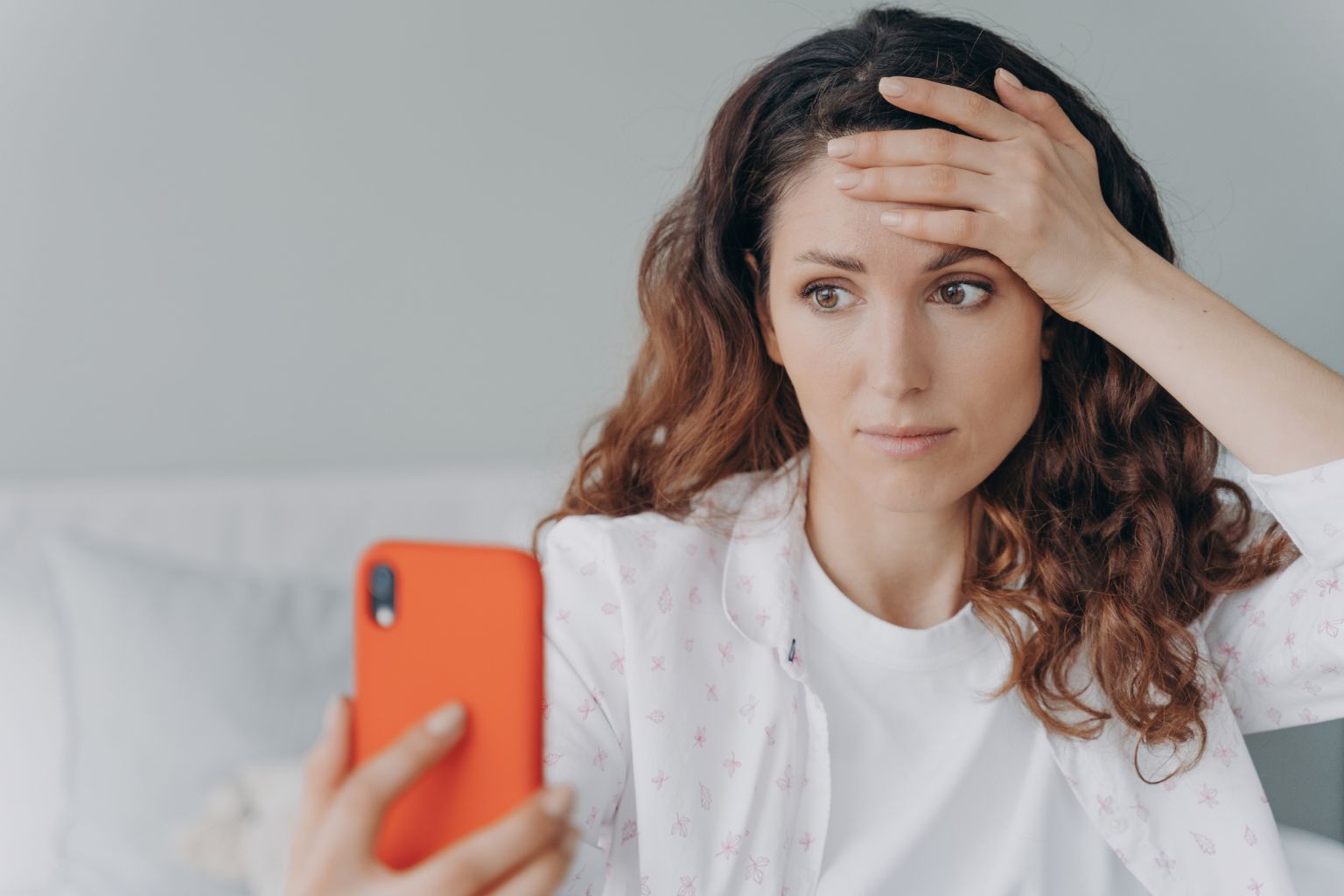



Why can harmless symptoms suddenly cause anxiety?
A twinge in the stomach, an unusual heartbeat, or a headache that wasn’t there yesterday: Physical changes sometimes just stand out. But when you’re anxious about getting sick, such sensations quickly take on special significance. The question “What is this?” quickly turns into “What if I’m seriously ill?”
1. When Every Physical Sensation Takes on Special Meaning
Our bodies don’t feel the same every day. Muscles tense up, digestion changes, and we feel a pulling or pressing sensation somewhere. Much of this goes away without us paying it much attention. With severe health anxiety, however, this is exactly what becomes difficult. A sensation is not merely noticed but immediately evaluated. Headaches are then not simply headaches—the possibility of a serious neurological condition may already be popping into one’s mind. An unusual heartbeat leads to worry that something might be wrong with the heart. This also shifts one’s focus.
Those who fear they might be ill may begin to look more closely: Is that pulling sensation still there? Does the left side feel different from the right? Was that spot already that big yesterday? The more closely the body is observed, the more can be found. Sensations that would previously have gone largely unnoticed suddenly come to the forefront. In the case of health anxiety, this heightened self-observation can become part of a cycle in which normal or nonspecific bodily sensations are increasingly interpreted as dangerous. This does not mean that those affected are inventing their sensations. The sensations may be real—what becomes problematic is the threatening meaning that is repeatedly attributed to them.
2. Why the fear of illness feels so real
From the outside, a fear sometimes seems easily dispelled: The exam came back normal, the doctor sees no cause for concern—so the fear should disappear. With health anxiety, it often isn’t that simple. Because between “Nothing was found” and “I’m definitely healthy,” there remains a small space for doubt. And that’s exactly where the fear can take hold: What if something was overlooked? What if the exam was too early? What if this new symptom means something else?
The difficult part is the search for complete certainty. Medical exams can clarify a lot, but no one can guarantee that you’ll never get sick at any point in the future. Those who need precisely this 100% certainty may therefore always find a new reason to keep searching. As a result, the fear of illness can return even after a reassuring examination. Not necessarily right away. Perhaps things go well for a few days—until a new sensation arises and the old uncertainty returns.
Fear of illness is therefore often not just about a specific disease. Behind it may also lie the agonizing question: “How can I know for sure that there’s really nothing wrong with me?” And it is precisely the attempt to find a definitive answer to this question time and again that can lead to Googling, self-examinations, or seeking reassurance becoming increasingly important.

Normal Worry vs. Health Anxiety
Why do Googling and doctor’s visits often provide only short-term relief?
Anyone who fears a serious illness wants one thing above all else: certainty. That’s why it’s natural to Google symptoms, check one’s body, or ask others for their opinion. This can be reassuring at first. The problem is that this sense of security often doesn’t last long. Repeated reassurance-seeking and body-checking are typical patterns in cases of severe health anxiety.
1. When searching for symptoms creates even more uncertainty
It might start with a simple search: “Headache for three days.” Just a few seconds later, numerous possible causes appear. Alongside common and harmless explanations, serious illnesses are almost always listed as well. Anyone who’s already anxious can easily get fixated on precisely these possibilities. Then comes the next search. And another one.
Can this illness occur without other symptoms? What do the headaches feel like in that case? Could a doctor overlook it?
The attempt to calm oneself down thus turns into an increasingly detailed preoccupation with illnesses. At the same time, knowledge about possible symptoms grows—and with it, the number of things to watch for in one’s own body. The internet can provide medical information. However, when dealing with health anxiety, searching can take on a different function: it’s meant to completely eliminate uncertainty. That’s exactly what usually fails to happen. Instead of a definitive answer, the next question often arises.
2. Why Reassurance May Be Needed Time and Again
The situation can be similar after a doctor’s visit. The examination reveals nothing abnormal, and for a moment, the tension eases. But later, a thought might arise: Did I really mention all my symptoms? Or: What if another test had been necessary? Then the search for reassurance begins anew—through another appointment, asking family members, or reading up on the subject again. This does not in any way mean that visiting a doctor when experiencing symptoms is wrong. New, persistent, or unusual physical symptoms should be medically evaluated. What can become problematic, however, is a pattern in which reassurance that has already been obtained must be sought again and again, without providing long-term peace of mind. This is precisely where an important difference lies: Medical evaluation is intended to meaningfully investigate a health-related issue. In the case of health anxiety, however, seeking reassurance can increasingly serve to reduce anxiety for the moment.
3. How This Leads to a Cycle of Health Anxiety
Over time, the individual steps can become intertwined: A physical sensation catches one’s attention. It is interpreted as a possible sign of a serious illness. Anxiety rises. This is followed by a search for reassurance—for example, through Googling, checking, or seeking reassurance. Things improve briefly. But the next time an unusual physical sensation arises, the cycle starts all over again. The tricky part is this: The short-term relief can actually contribute to the strategy being used again the next time. This does not change how one actually deals with uncertainty. So at some point, the question is no longer just:
“What does this symptom mean?” but increasingly: “What do I need to do so that I can finally be sure I’m not sick?”
And this is precisely where long-term help takes a different approach. Not by providing yet another source of reassurance, but by changing how one deals with physical sensations, distressing thoughts, and medical uncertainty. Cognitive behavioral therapy fundamentally addresses precisely these connections between thoughts, feelings, and behaviors.
What helps combat the constant fear of being sick?
People who suffer from health anxiety usually want one thing above all else: to finally know for sure that everything is okay. In the long run, however, the solution often isn’t to seek even more reassurance. It’s more helpful to change how you deal with your own thoughts, physical sensations, and the inevitable uncertainty surrounding your health.
1. Don’t constantly check your own body
If you’re afraid of a specific illness, it may seem logical at first to monitor your body very closely. Perhaps you regularly feel a certain spot. You check your pulse or compare both sides of your body. Shortly afterward, everything feels normal—and the tension eases. But there’s a catch to this relief: the next time doubt creeps in, the urge to check returns quickly.
That’s why it can be helpful not to perform such checks automatically. This doesn’t mean ignoring physical symptoms altogether. The point is to recognize when mindful attention has turned into a recurring ritual of checking, intended primarily to reassure you. Instead of checking immediately, you can, for example, see if you can let the impulse sit for a while. This might feel uncomfortable at first. But that’s exactly where an important lesson lies: Not every uncertainty needs to be resolved right away.
2. Change the urge for certainty step by step
The same applies to Googling or asking others. The crucial step isn’t necessarily: “Starting today, I’ll never Google a symptom again.” Such absolute rules can quickly turn into the next battle.
A more interesting question is: Why do I want to search right now? Do I actually need medical information? Or am I hoping that searching will help me get rid of my anxiety for the next few minutes?
If it’s mainly about finding reassurance, it can help to postpone the reaction at first. Don’t open the search engine right away. Don’t ask someone for the third time if a birthmark looks normal. Don’t immediately check a part of your body that you’ve already examined. This won’t make the uncertainty disappear right away. But that’s exactly the point: Dealing with health anxiety isn’t about achieving absolute certainty about your own body, but about learning to tolerate uncertainty better. This is also a fundamental principle of cognitive-behavioral therapy approaches: recognizing and questioning distressing thoughts, and changing previous patterns of behavior.
3. How Cognitive Behavioral Therapy Can Help
If health anxiety is severe, you don’t have to go through this process alone. For health-related anxieties, cognitive-behavioral therapy approaches are among the established treatment methods. In therapy, for example, we can explore what happens between a physical sensation and the resulting anxiety. “My heart is beating faster right now” might automatically become “Something is wrong with my heart.” Instead of simply replacing this thought with a reassuring “It’s probably nothing,” we take a closer look: How did I arrive at this conclusion? What other explanations are possible? And what can I do next to reduce my anxiety?
Behavior is particularly important here. Because if Googling, checking things, or seeking reassurance repeatedly provide short-term relief, it can be helpful to specifically change these patterns. Cognitive behavioral therapy fundamentally addresses this very interplay of thoughts, feelings, and behavior. The goal here isn’t to convince yourself that you can never get sick. It’s more realistic—and more helpful in the long run—to recognize that not every physical sensation needs to be explained immediately. Not every worrying thought needs an answer. And not every uncertainty has to disappear before you can get on with your daily life.
When does health anxiety require treatment?
Not every thought about a possible illness requires therapeutic help. What matters much more is how much space this worry takes up in your daily life. If a large part of your day revolves around your own body and possible diagnoses, it may make sense to seek professional support. The Schön Klinik also describes the transition from normal health care to pronounced health anxiety as a continuum.
1. When worry increasingly dominates your daily life
An important sign is when you start organizing your daily life around your anxiety. Perhaps you find it hard to concentrate at work because your thoughts keep returning to a possible illness. You cancel plans because you want to monitor your body. Or what should be an enjoyable evening is overshadowed by the fact that, deep down, you’re waiting to see if a certain sensation will return.
The other extreme is also possible: Some people avoid anything they associate with illness—medical programs, conversations about diagnoses, or even necessary medical tests. At the very latest when worry significantly impairs your quality of life, relationships, or daily routine, it should no longer be dismissed as simply “I just worry a lot.”
This isn’t about convincing yourself that physical symptoms are always psychologically caused. Medical concerns and fear of illness aren’t mutually exclusive. Rather, the most effective approach is one that takes physical findings into account while also taking the anxiety itself seriously. Specialized treatment approaches also begin by linking existing medical findings to a psychotherapeutic explanatory model.
2. Where to Find Professional Support
Your primary care physician’s office can be a good first point of contact. It can be particularly helpful to openly discuss that it’s not just individual symptoms that are weighing on you, but also the constant fear of possible illnesses. If you have severe health anxiety, psychotherapeutic support may be beneficial. Treatment focuses, among other things, on understanding your individual fears and the factors that keep them recurring, and on developing new ways to cope with them. You don’t have to wait until this fear dominates your entire daily life. A good time to seek help is as soon as you notice: “I may feel reassured for a short time now and then—but I never find lasting peace.” That, ultimately, is the very core of health anxiety. The goal doesn’t have to be achieving absolute certainty about your own health. What’s much more important is that the question “What if I’m sick?” eventually stops dictating how you spend your day.