

Back to blog

Your blog for natural health

Understanding Bach Flower Remedies: Use, Preparation, and the 7 Emotional Groups

  • 2 min read
Bachblüten verstehen: Anwendung, Herstellung und die 7 emotionalen Gruppen

What are Bach flowers?

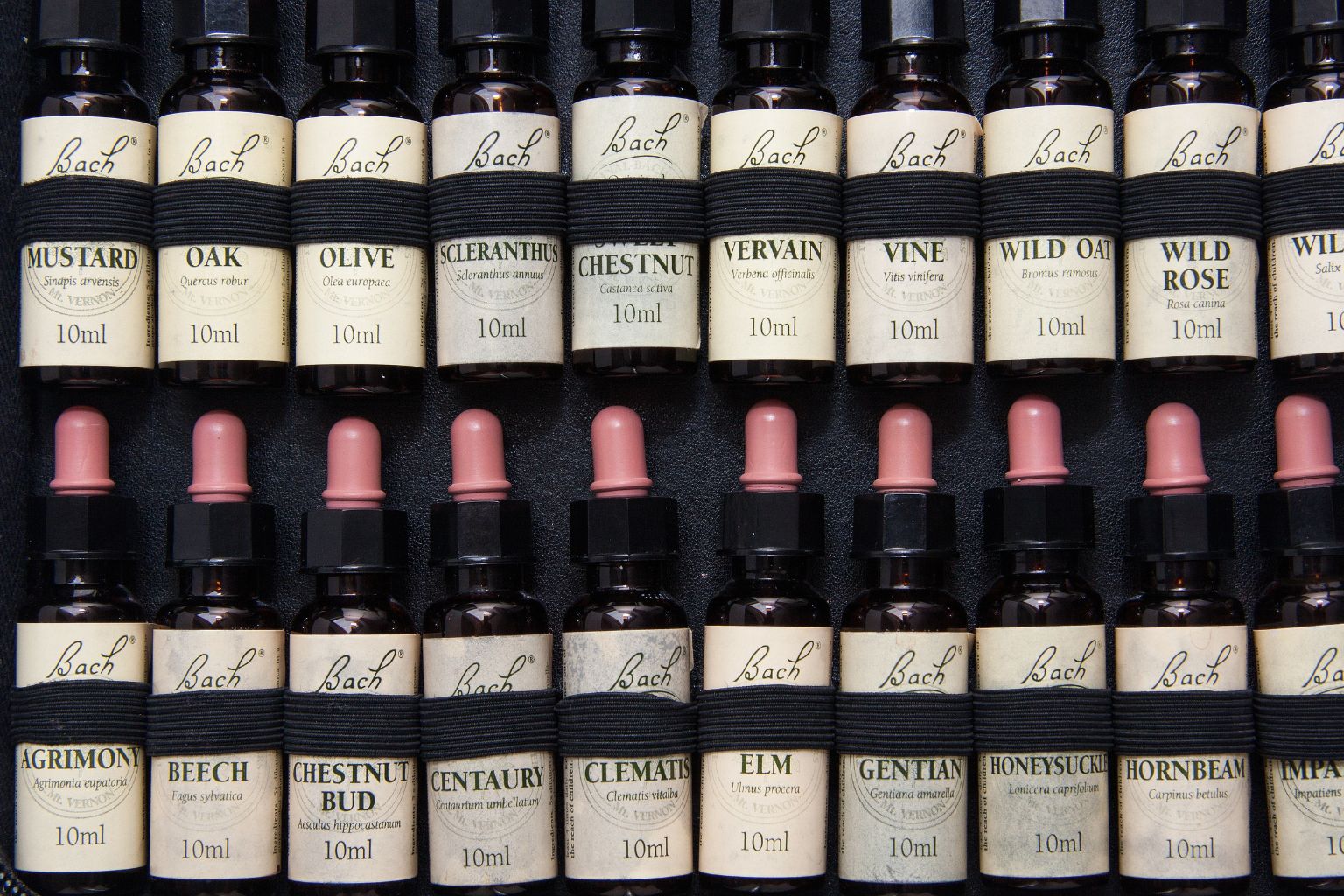
Bach flowers are 38 plant essences derived from wildflowers, shrubs, and trees, developed in the 1930s by the English physician Dr. Edward Bach.

They are traditionally used to gently support emotional distress such as stress, anxiety, insecurity, or inner restlessness, and to promote emotional balance.

Bach flowers are usually available as drops, but are also offered in the form of sprays, globules, or lozenges. Unlike conventional medications, they contain no pharmacological active ingredients in the usual sense.

Dr. Edward Bach and the Origin of Bach Flowers

Dr. Edward Bach was a physician, bacteriologist, and pathologist. During his medical practice, he studied the connection between emotional well-being and physical health in depth.

He was convinced that inner balance is an important foundation for general well-being. That is why he developed a system of 38 plant essences, each associated with specific emotional states.

His goal was a gentle and holistic method that considers the body and mind together.

How are Bach flowers supposed to work?

The Bach flower remedy is based on the assumption that certain plants are connected to specific emotional states. Traditionally, each of the 38 essences is said to address a specific emotional state—such as fear, insecurity, despondency, or inner restlessness.

The essences are intended to help gently restore emotional balance and promote positive feelings like trust, serenity, or inner strength.

Many people therefore use Bach flower remedies as a natural support during stressful life phases or emotionally challenging situations.

To date, the effects have not been conclusively proven scientifically. Nevertheless, Bach flower remedies have been valued in naturopathy for decades as a gentle and low-risk complementary treatment.

Production of Bach flower remedies

Bach flower remedies are traditionally produced using water, plants, and sunlight or heat. There are two classic methods:

1. The Sun Method

Fresh flowers are placed in spring water and left in the sun for several hours. According to traditional teachings, the plant’s properties are transferred to the water during this process.

2. The boiling method

Primarily woody plant parts or early-blooming flowers are gently boiled in water. The liquid is then filtered and processed further.

The resulting essence is subsequently heavily diluted and preserved.

Use & Administration of Bach Flowers

Bach flowers are usually selected individually and tailored to one’s personal emotional state. They are often taken as drops directly on the tongue or diluted in water.

Many people use Bach flowers for:

  • Stress and inner restlessness
  • Emotional strain
  • Sleep problems
  • Uncertainty
  • Changes in daily life

The so-called Rescue Remedy is particularly well known—a blend of five Bach flower essences traditionally used in acute stressful situations or when feeling nervous.

    The 7 emotional groups of Bach flowers

    Dr. Edward Bach divided the 38 Bach flower essences into seven emotional groups. These are intended to help better categorize certain emotional patterns.

    The classic groups include, among others:

    • Anxiety
    • Insecurity
    • Loneliness
    • Despair
    • Hypersensitivity
    • Lack of interest
    • Excessive concern for others

    The following overview shows the seven classic groups of Bach flower remedies and the essences associated with each.

    The 7 emotional groups of Bach flower therapy

    Latest Stories

    View all

    Handy und Stress – Warum uns das Smartphone kaum noch abschalten lässt
    • Leni Hettrich

    Cell Phones and Stress – Why Smartphones Make It Hard for Us to Unwind

    Why can a cell phone cause stress in the first place? A WhatsApp message. Two new emails. A push notification. In between, a quick check of the weather—and once the phone is already in your hand, a quick glance to...

    Read moreabout Cell Phones and Stress – Why Smartphones Make It Hard for Us to Unwind

    Doomscrolling: Warum können wir nicht aufhören?
    • Lisa-Marie Wörz

    Doomscrolling: Why Can't We Stop?

    Just one more post—so why do we keep scrolling anyway? You just want to quickly see what’s been going on. Read one post, maybe two. After all, you want to stay informed. Then you open the next post. A video...

    Read moreabout Doomscrolling: Why Can't We Stop?

    Digitaler Stress: Woran erkenne ich ihn?
    • Marina Formigoni Heinke

    Digital Stress: How Can I Recognize It?

    What is digital stress? Digital technologies make our daily lives easier, but at the same time they can create new sources of stress. Digital stress arises primarily when digital demands consistently require more energy than we have available to manage...

    Read moreabout Digital Stress: How Can I Recognize It?

    Nervensystem beruhigen: So kommst Du aus der ständigen Anspannung
    • Tobias Eisenkolb

    Calming Your Nervous System: How to Break Free from Constant Tension

    Why does an overloaded nervous system feel so unpleasant? It’s the end of the workday. This should actually be the time to wind down. Yet your shoulders remain tense, you can’t sit still, and your mind seems to be already...

    Read moreabout Calming Your Nervous System: How to Break Free from Constant Tension

    Angst und innere Unruhe: Warum der Körper nicht zur Ruhe kommt
    • Leni Hettrich

    Anxiety and Inner Restlessness: Why the Body Can't Find Peace

    Why does inner restlessness feel so unpleasant? You’re sitting on the couch, and nothing much is going on right now. Yet it feels as though your body can’t relax. You keep shifting positions, your thoughts jump from one topic to...

    Read moreabout Anxiety and Inner Restlessness: Why the Body Can't Find Peace