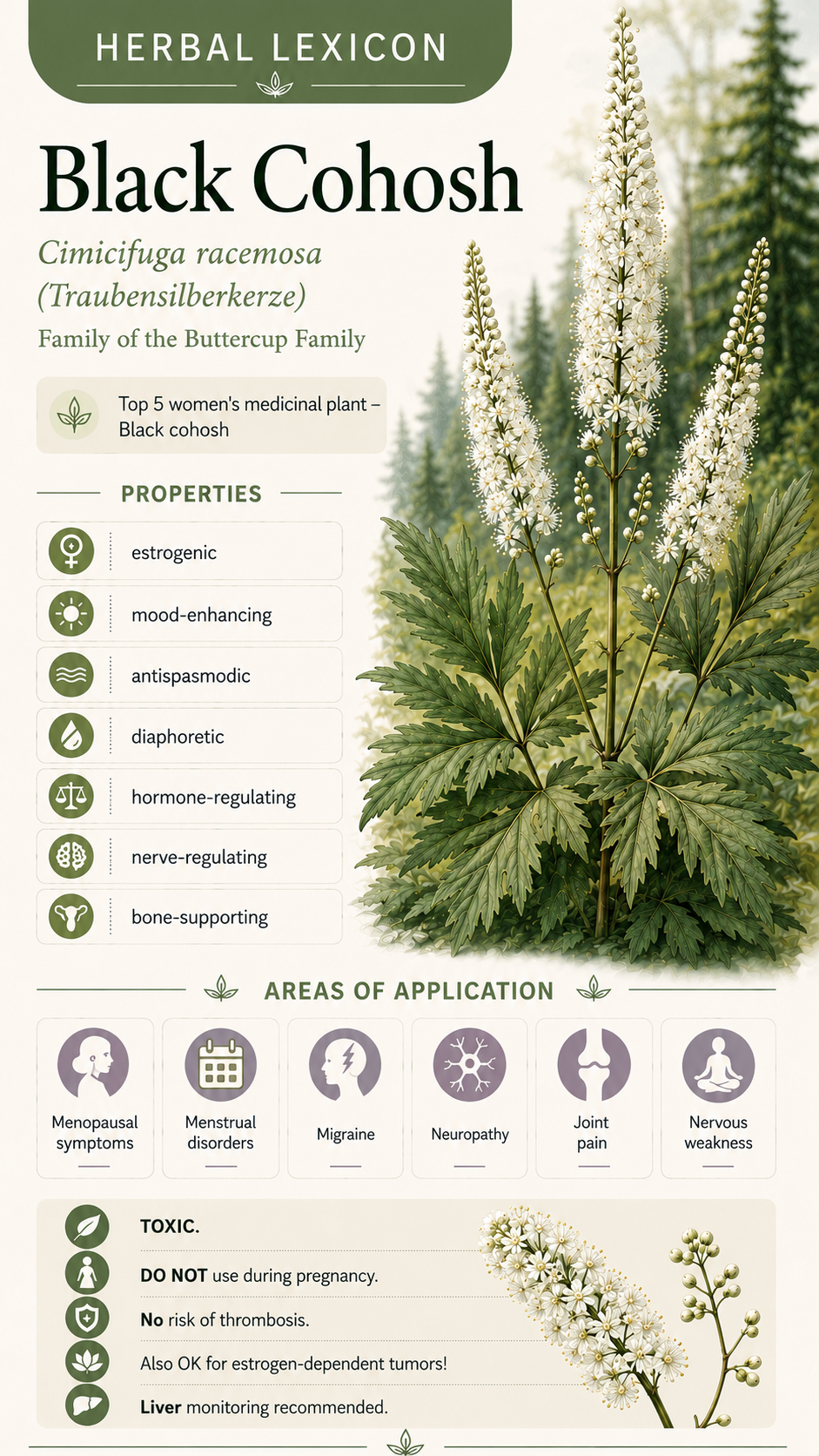

Top 5 medicinal plants for women from North America – has an estrogen-like effect, but without the risk of thrombosis or tumor promotion. Can also be used for estrogen-dependent tumors. Toxic. Monitor liver function.
Interesting facts about bugbane
- The plant's unpleasant odor repels leafhoppers—hence its name. The roots, which are used medicinally, come almost exclusively from wild sources, as attempts to cultivate the plant regularly fail.
- Black cohosh binds to beta-estrogen receptors (ERβ)—not to the alpha receptors (ERα), which can promote tumor growth in breast and uterine tissue. This is a key difference from synthetic estrogens.
- Native Americans (Cherokee, Algonquin) used bugbane to treat rheumatism and snake bites, and to induce labor—one of the oldest traditions of using medicinal plants in gynecology.
Effects & Properties
Triterpene glycosides (actin, cimiracemoside): They selectively bind to beta-estrogen receptors (ERβ), which are found in bone, the brain, and the cardiovascular system—NOT to the alpha receptors in the breast and uterus that promote tumor growth. Therefore, there is no increased risk of cancer.
CNS effect: St. John's wort affects serotonergic pathways in the brain (hypothalamus), thereby helping to alleviate hot flashes and mood swings.
No risk of thrombosis: Synthetic estrogens stimulate the liver to produce clotting factors—which increases the risk of thrombosis. Black cohosh does not have this effect.
Features: Estrogenic (ERβ-selective), mood-enhancing, antiperspirant, hormone-regulating, antispasmodic.
Applications
Lady's mantle for menopausal symptoms
During menopause, the hypothalamus in the brain loses its hormonal reference point—leading to hot flashes, sleep disturbances, and night sweats. Black cohosh compensates for the estrogen deficiency via beta receptors without simultaneously stimulating breast or uterine tissue. Clinical studies show a 47–73% reduction in the frequency of hot flashes after 12 weeks—comparable to low-dose hormone therapy, but without its risks.
Black cohosh for menstrual disorders
Hormonal cycle disorders—such as heavy or light bleeding, a shortened or prolonged cycle, or PMS—are often caused by an imbalance between estrogen and progesterone. Black cohosh regulates the hypothalamic-pituitary axis: The release of the regulating hormones (LH, FSH) normalizes, and the cycle stabilizes. PMS symptoms such as irritability, water retention, and breast tenderness decrease.
Stinkweed for hormone-related migraines
Hormonal migraines typically occur when estrogen levels drop sharply just before menstruation—the brain responds with increased sensitivity to pain. Black cohosh stabilizes hormone levels and helps mitigate these fluctuations. At the same time, it acts directly on pain sensitivity in the brain via serotonin receptors. Women whose migraine attacks are clearly linked to their menstrual cycle benefit particularly from this.
Black cohosh for menstrual-related joint pain
Estrogen directly protects joints and cartilage. As estrogen levels decline during menopause, diffuse joint and muscle pain increases. Black cohosh counteracts this protective effect via beta receptors in bone tissue: it improves blood supply to the cartilage and reduces inflammatory mediators in the joints. Symptoms gradually improve over several weeks.
Instructions for Use
Short-term treatment. Monitor liver function tests (GOT, GPT) during long-term treatment lasting more than 3 months. Available as a ready-to-use or spagyric preparation.
Pregnancy & Breastfeeding
DO NOT – stimulates the uterus and can cause a miscarriage. Exception: shortly before delivery to induce labor – only by experienced therapists!
Estrogen-dependent tumors
Suitable for use – the ERβ-selective effect does not stimulate alpha receptors that promote tumor growth. However, consultation with an oncologist is required.
Plant Profile
- Scientific name: Cimicifuga racemosa (L.) Nutt.
- Plant family: Buttercup family (Ranunculaceae)
- Other names: Black cohosh
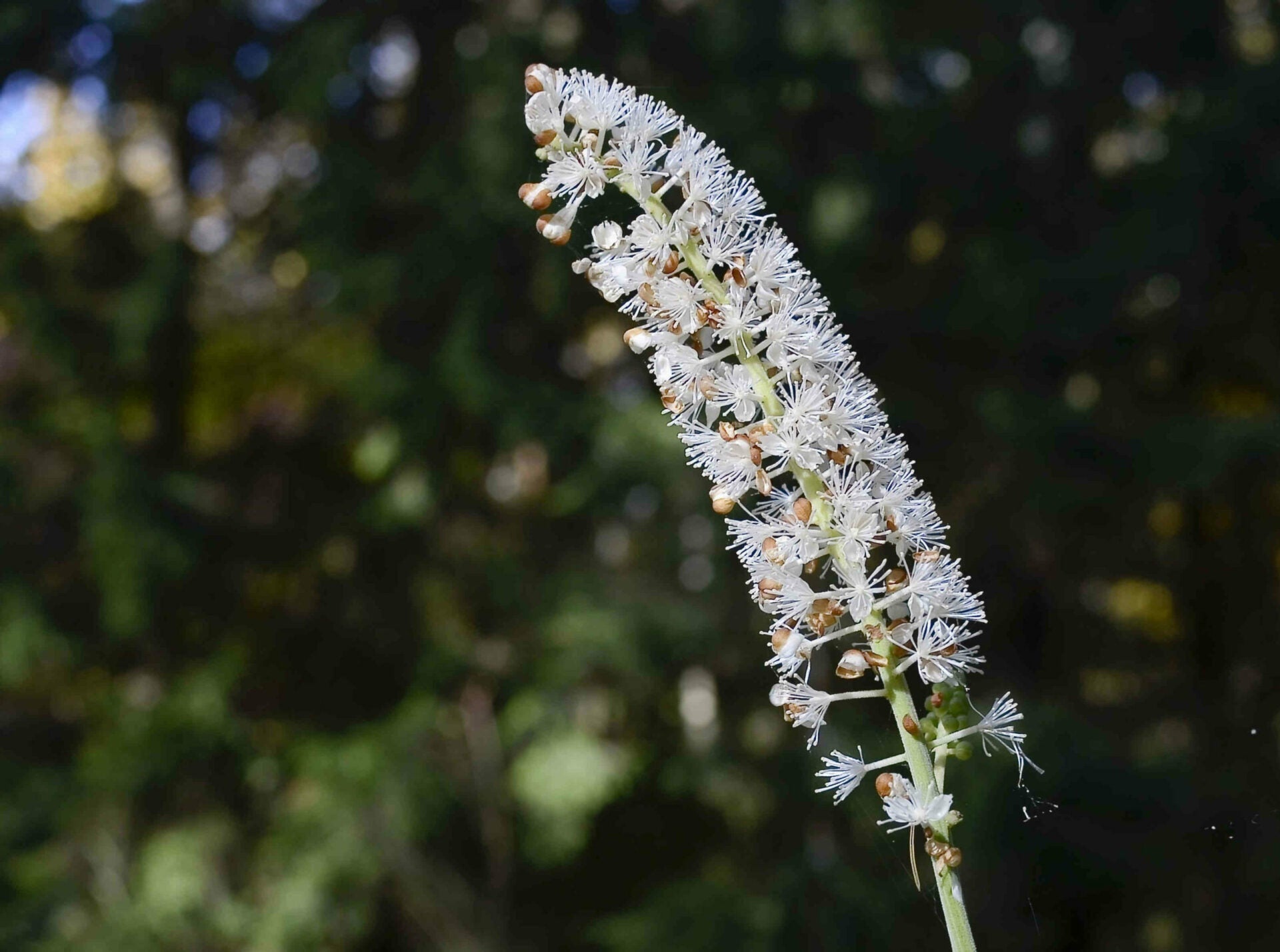
- Flowering period: June through August
- Origin: North America
- Toxicity: Toxic