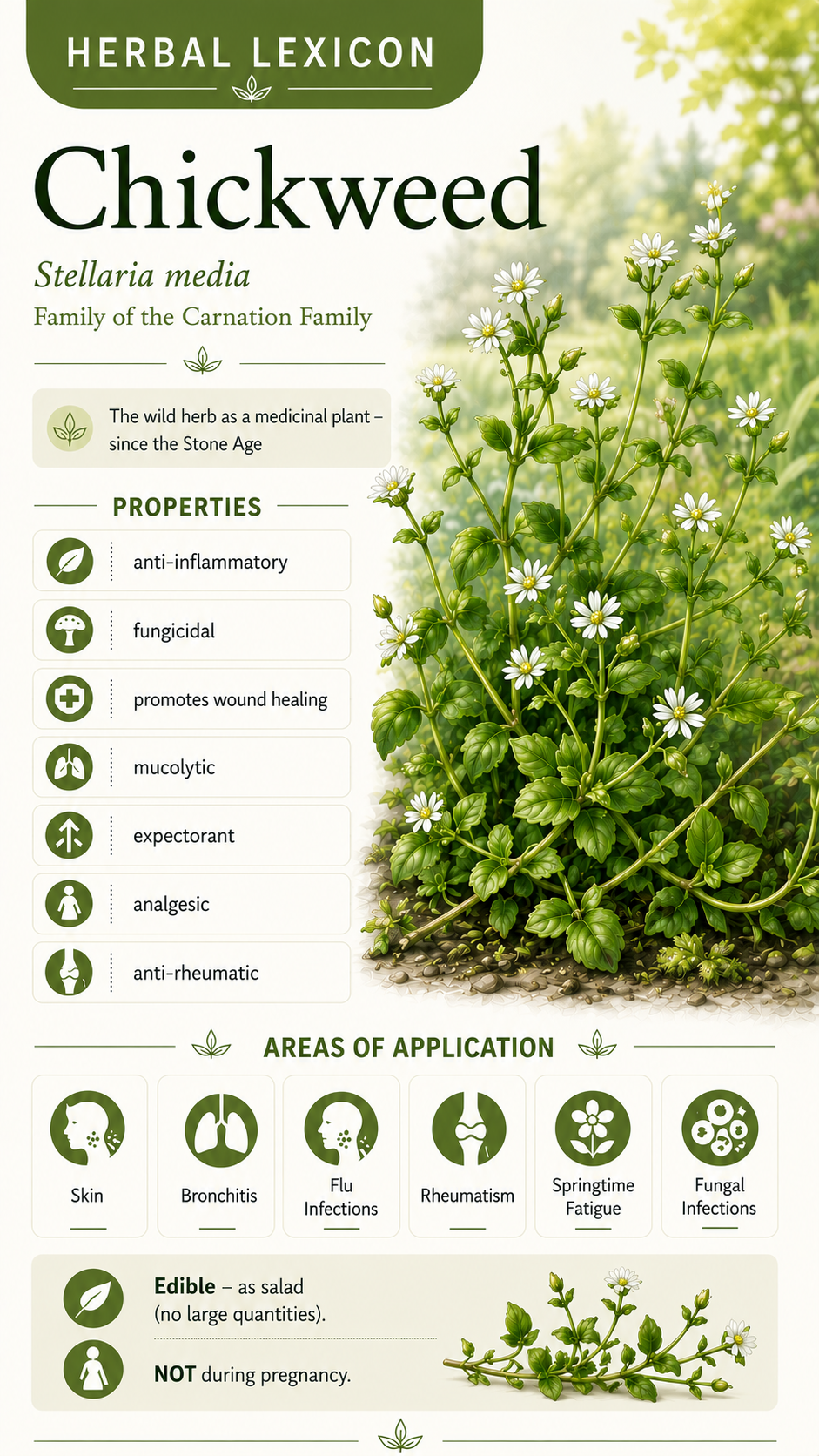

Found in gardens since the Stone Age and often mistaken for a weed, chickweed is a valuable medicinal plant with anti-inflammatory, expectorant, and even antifungal properties.
Interesting facts about chickweed
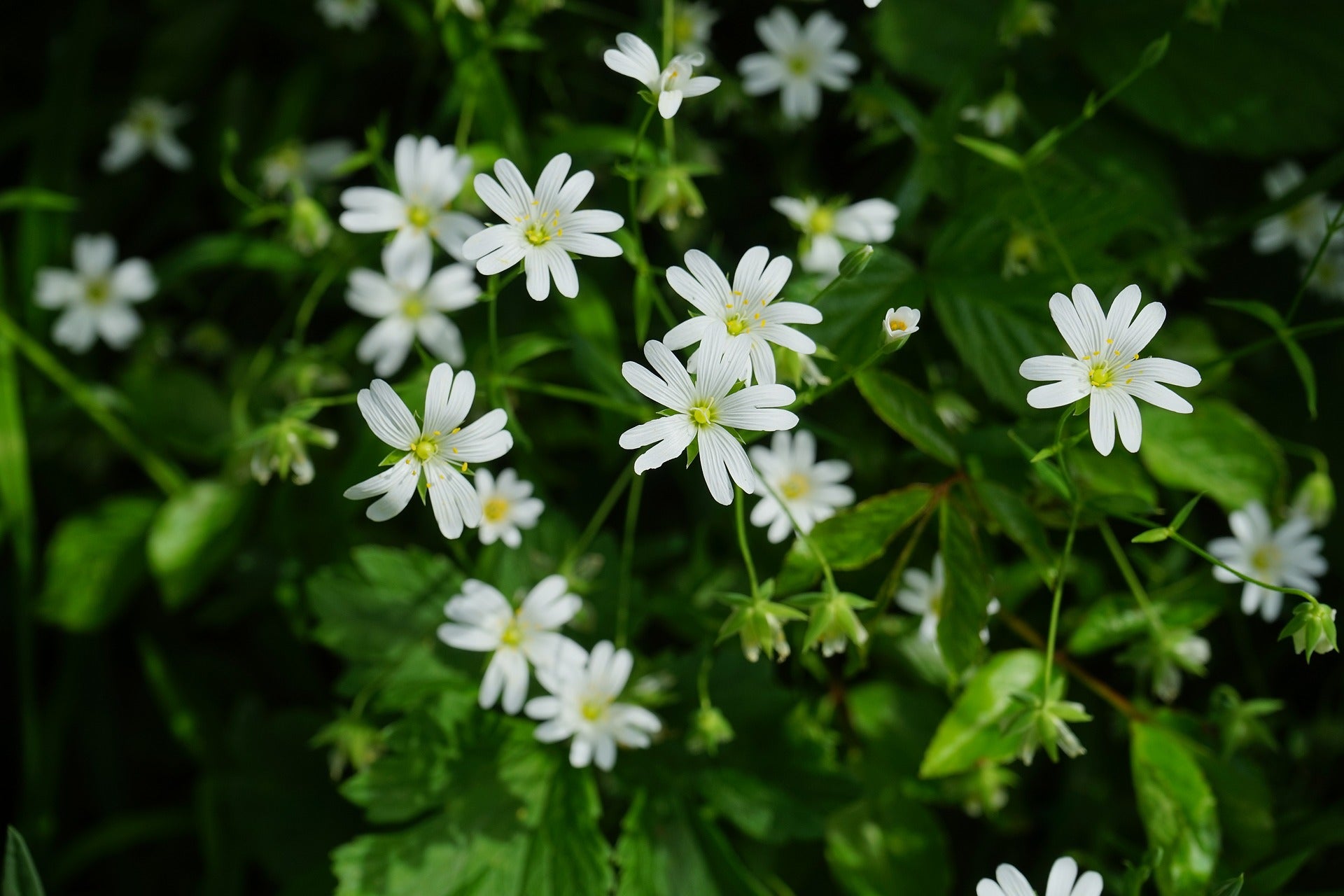
- Chickens love to eat chickweed—hence its nickname, "chicken gut." The botanical name *Stellaria* (meaning "little star") refers to its star-shaped white flowers.
- As a leafy green, it contains more vitamin C than lemons—plus iron and potassium. A true spring superfood.
- Recent studies have demonstrated fungicidal efficacy against mold—an area of application that was previously little known.
Effects & Properties
saponins: These soap-like plant compounds break down mucous membranes and thin bronchial mucus—they have a mucolytic effect. Caution: Avoid taking large amounts over a long period of time due to the saponins!
Flavonoids + Phenolic acids: Inhibit inflammatory mediators (COX enzymes), thereby reducing swelling, redness, and pain. They also have antifungal properties.
Vitamin C, iron, potassium: Essential micronutrients for immune function, blood formation, and nerve transmission—especially beneficial in the spring after winter.
Features: Anti-inflammatory, antifungal, wound-healing, expectorant, analgesic, antirheumatic.
Applications
Chickweed for inflammatory skin conditions
Eczema and contact dermatitis occur when inflammatory mediators in the skin trigger itching, redness, and swelling. The flavonoids in chickweed inhibit these very mediators directly in the tissue. When applied as a fresh plant compress or in wound-healing ointments, the plant cools and soothes the skin—inflammation subsides, and the tissue can regenerate.
Stellaria media for bronchitis
With bronchitis, the bronchial tubes produce too much thick mucus—the cilia can no longer keep up, and the cough becomes agonizing. The saponins in chickweed thin the mucus, making it easier to cough up. At the same time, the flavonoids soothe the inflamed mucous membrane. The recovery time is noticeably shorter.
Chickweed for joint inflammation
In cases of rheumatic joint inflammation, the body produces chemicals that cause swelling, pain, and heat in the joint. The anti-inflammatory flavonoids in chickweed counteract these chemicals—whether applied topically as an ointment or taken systemically as a tea. The joint cools down, and mobility returns.
Chickweed for spring fatigue
After winter, your stores of vitamin C, iron, and potassium are depleted—which manifests as low energy, listlessness, and a general feeling of physical heaviness. When added fresh to a salad, chickweed provides exactly these missing nutrients: vitamin C for the immune system, iron for blood formation and oxygen supply, and potassium for nerves and muscles.
Instructions for Use
As tea, a poultice made from fresh leaves, a wound-healing ointment, or a salad ingredient (in small amounts!). Do not consume large amounts over a long period of time—saponins can irritate the intestines if taken in excess.
Pregnancy & Breastfeeding
Do not take – saponins can irritate the lining of the uterus during pregnancy.
Plant Profile
- Scientific name: Common chickweed
- Plant family: Carnation family (Caryophyllaceae)
- Other names: Chicken intestine, Miere
- Flowering period: February through November
- Origin: Local, cosmopolitan
- Toxicity: Non-toxic