

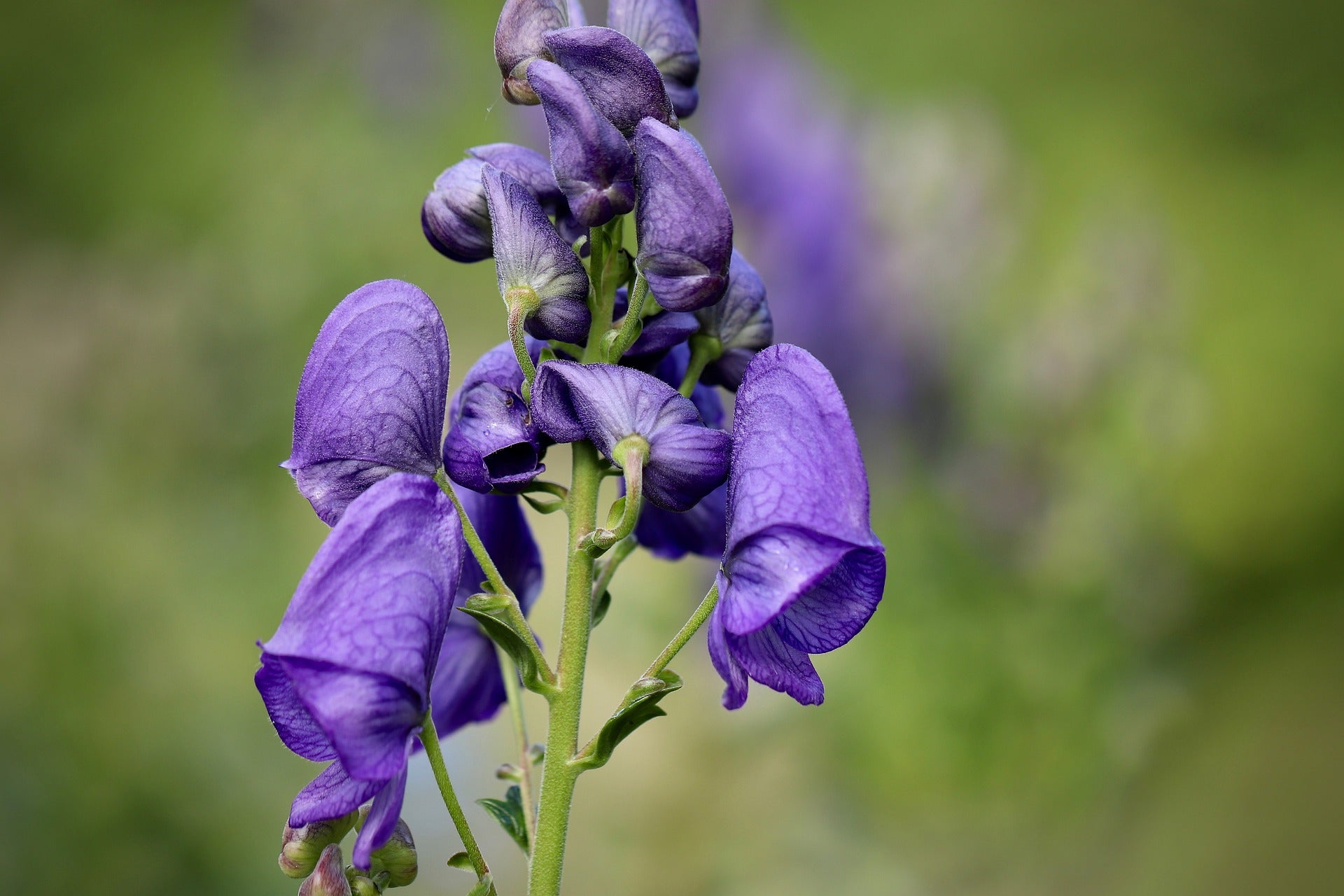
The most poisonous plant in Europe—and an important remedy for sudden, severe acute conditions. ONLY available in homeopathic or spagyric forms starting at D4!
Interesting facts about Sturmhut
- The most poisonous native plant – skin contact with the root is dangerous.
- Aristotle probably died of aconite poisoning.
- In the Middle Ages, growing it was punishable by death.
Effects & Properties
Aconitine: blocks sodium channels in nerve cells—nerve impulse transmission is slowed, pain is numbed, and body temperature drops. Administration method: suddenly, unexpectedly, violently – that is the indication.
Features: fever-reducing, pain-relieving, anxiety-relieving, cold-relieving, shock-relieving, anti-inflammatory.
Only homeopathic remedies starting at D4 or spagyric remedies
Most toxic native plant – D4+ or spagyric preparations only. For acute conditions only. Key symptoms: sudden, intense, unexpected.
Applications
Aconite for sudden infections
The classic Aconite cold sets in suddenly after exposure to cold winds—the person was outside, came in cold, and now has chills and a high fever. Aconite helps to dampen the excessive fever response and regulate body temperature. It is particularly effective in the first few hours after the onset of illness.
Aconite for fever
A sudden, high fever is the primary indication for Aconite. Aconitine acts centrally on temperature regulation: it dampens the excessive fever response, allowing the body to effectively fight the infection without being overwhelmed by a high fever.
Aconite for Rheumatism
When applied topically as a rub, aconite numbs the nerves and relieves pain. Systemically, aconite has anti-inflammatory and antipyretic effects. For acute rheumatic flare-ups that are sudden and severe, aconite is the treatment of choice.
Aconite for neuralgia
Sudden, severe nerve pain—such as trigeminal neuralgia, lumbago, or sciatica—characterized by a burning or tingling sensation responds well to monkshood. Aconitine blocks the sodium channels in the overstimulated nerve cells, reducing nerve excitation and alleviating the pain.
Aconite for anxiety and shock
A sudden panic attack or acute state of shock following a traumatic experience: The central nervous system is on high alert, and the anxiety is accompanied by a racing heart, chills, and trembling. Aconite calms the central nervous system, reduces stress levels, and alleviates the state of shock.
Instructions for Use
Only D4+ homeopathic remedy or spagyric remedy. For acute conditions only. External use: diluted rub.
Pregnancy & Breastfeeding
Contraindicated—neither for internal nor external use.
Risk of poisoning – Emergency!
In the garden: gloves! Skin contact with the root is poisonous. If you suspect poisoning, call the poison control center immediately (Germany: 030 19240, Austria: 01 406 43 43).
Plant Profile
- Scientific name: Monkshood
- Plant family: Buttercup family (Ranunculaceae)
- Other names: Monkshood, Wolfsbane
- Flowering period: June through September
- Origin: Native to (Europe)
- Toxicity: Extremely toxic
