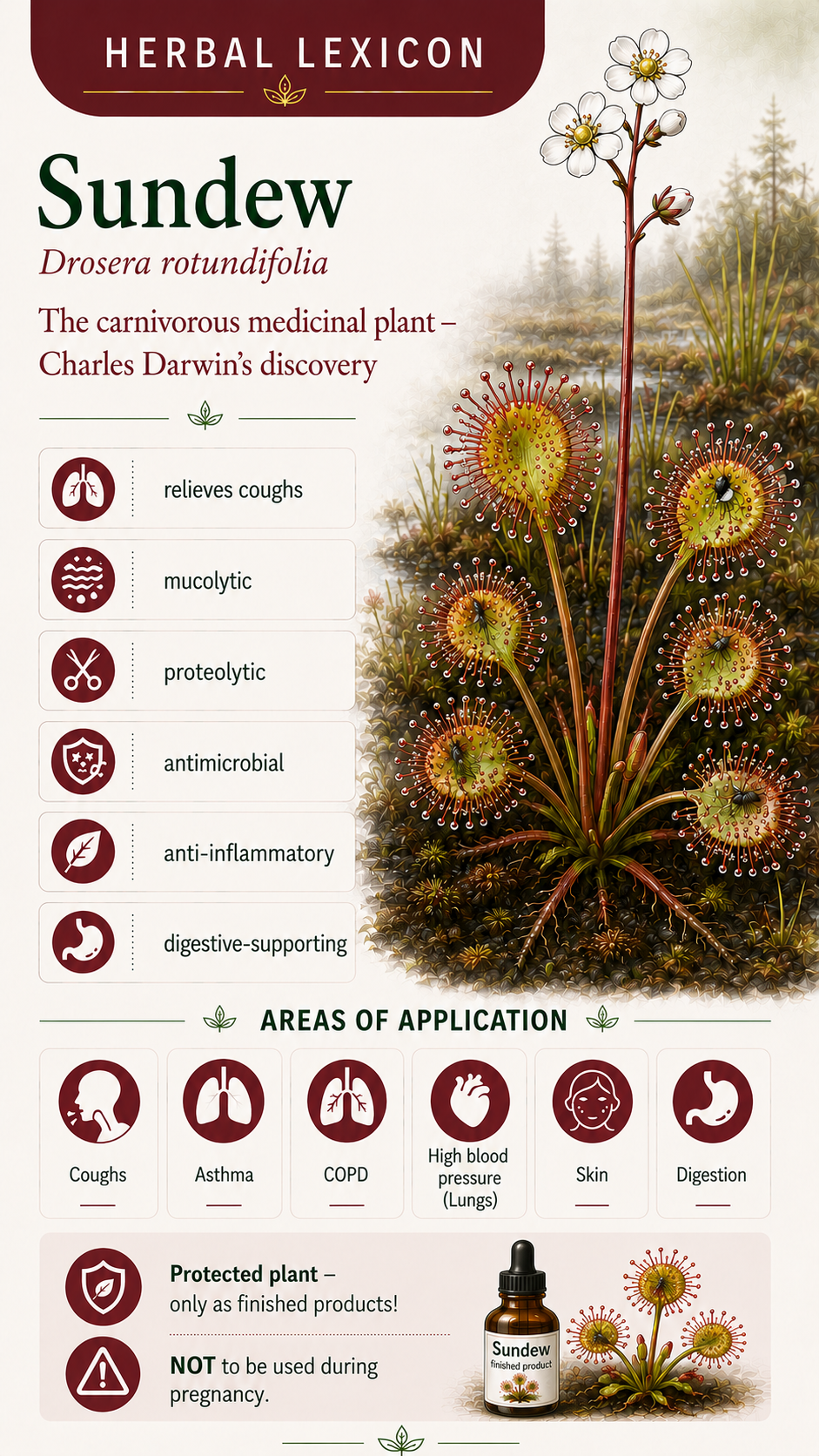


The carnivorous medicinal plant—discovered by Charles Darwin, native to raised bogs. Proteolytic enzymes break down mucus clogs in the bronchi. Protected species: available only as a finished pharmaceutical product!
Interesting facts about sundew
- Darwin was the first to describe its carnivorous nature in 1875.
- Used in Scotland as a purple dye.
- It even grows in Alaska and Greenland.
Effects & Properties
Naphthoquinone (Droseron, Plumbagin): antimicrobial against bacteria, viruses, and fungi. Proteolytic enzymes: The same enzymes that break down insect proteins also break down mucus clumps in the bronchi and lungs. This makes sundew unique among bronchial plants.
Features: cough-relieving, expectorant, proteolytic, antimicrobial, anti-inflammatory, digestive.
Applications
Sundew for a dry cough
Chronic dry cough is caused by hypersensitivity of the bronchial mucous membranes—even the slightest irritation triggers a cough reflex. The naphthoquinones in sundew soothe the hypersensitive mucous membrane with their anti-inflammatory properties, while the proteolytic enzymes break down thick mucus-protein clumps that irritate the mucous membrane. Gentle and long-lasting.
Sundew for Asthma
Asthma is multifactorial—Drosera addresses the condition on multiple levels: naphthoquinones reduce airway inflammation, while proteolytic enzymes break down excess mucus and dissolve chronic protein adhesions in the bronchial tissue. This is what makes Drosera unique: it not only targets acute symptoms but also addresses chronic tissue changes.
Sundew for High Blood Pressure (Lung Type)
Pulmonary hypertension occurs when blockages and adhesions in the lungs increase the resistance against which the heart must pump. Sundew breaks down these blockages through its proteolytic action—lung resistance decreases, the heart is relieved, and blood pressure returns to normal.
Drosera for COPD
COPD is a chronic obstructive pulmonary disease—Sonnentau can alleviate symptoms and slow the progression of the disease. Naphthoquinones reduce chronic bronchial inflammation, and the proteolytic enzymes break down the protein deposits in lung tissue that form in COPD as a result of the body’s constant attempts to heal itself.
Sundew for skin conditions
The antimicrobial naphthoquinones are also effective against a wide range of pathogens on the skin. Sundew is used to treat chronic skin infections and inflammatory skin conditions—both internally and externally.
Drosera for Digestive Problems
The plant-based proteases in sundew also aid in protein digestion in the gastrointestinal tract. In cases of poor digestion resulting in incomplete protein breakdown, sundew can improve digestive function.
Instructions for Use
Protected plant – Finished pharmaceutical products ONLY! As a short course of treatment, several times a day.
Pregnancy & Breastfeeding
Contraindicated.
Plant Profile
- Scientific name: Drosera rotundifolia
- Plant family: Sundew family (Droseraceae)
- Other names: Fly trap, insect-eater
- Origin: Native to (Europe), as far as Alaska and Greenland
- Toxicity: Non-toxic – a strictly protected plant!