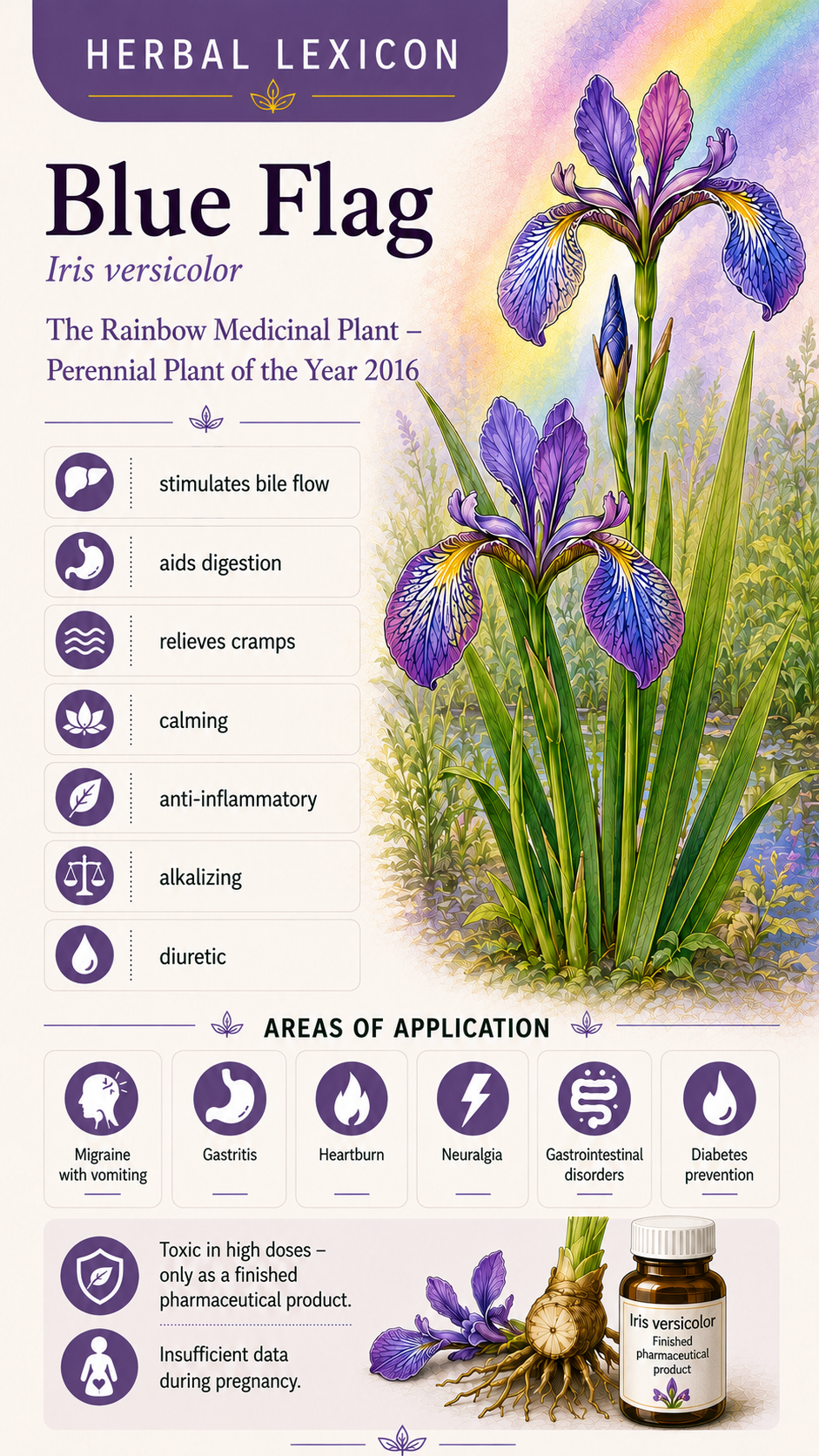


The Rainbow Goddess of Medicinal Plants—connects the nervous system and the digestive system. Ideal for sensitive, irritable patients whose stress affects their stomach.
Interesting facts about irises
- Iris = Goddess of the Rainbow (Greek) – Bridge between worlds.
- Perennial of the Year 2016.
- An important perfume plant in Europe during the 19th century.
Effects & Properties
Irin and mucilage: Protects mucous membranes, neutralizes stomach acid, soothes mucous membranes. Antispasmodic effect on blood vessels – relieves migraine-related vascular spasms. Stimulates the liver and gallbladder, normalizing the digestive environment. Toxic in high doses – use only as a ready-made preparation, homeopathic remedy, or spagyric remedy.
Features: bile-stimulating, digestive, antispasmodic, soothing, anti-inflammatory, acid-neutralizing.
Applications
Iris for Migraines
Classic Iris migraine is associated with sour vomiting and nausea—the nervous system and the digestive system react together to stress. Iris works in two ways: Its antispasmodic effect on blood vessels reduces the vascular spasms that contribute to migraines. At the same time, iridin and mucilage neutralize stomach acid, soothe the stomach lining, and stop acid vomiting.
Iris for Gastritis
In gastritis, the stomach lining becomes inflamed and hypersensitive. The mucilage in iris forms a protective layer over the irritated lining, shielding it from further irritation by stomach acid. Iridin neutralizes excess stomach acid and reduces inflammation, allowing the lining to heal.
Iris for diarrhea
Diarrhea caused by stomach irritation and pancreatic dysfunction responds well to Iris. Its bile-stimulating effect normalizes the digestive environment, allowing the pancreas to restore its enzyme production and the intestines to return to a healthy state. Digestion stabilizes and the diarrhea subsides.
Iris for neuralgia
Nerve pain characterized by a burning sensation—such as lumbago, trigeminal neuralgia, and sciatica—responds well to the antispasmodic effects of iris. The vascular spasms around the irritated nerves are relieved, blood circulation improves, and the nerve pain subsides.
Iris for gastrointestinal complaints
General gastrointestinal symptoms caused by liver and gallbladder dysfunction—such as sluggish digestion, bloating, and heartburn—benefit from the bile-stimulating effect. The liver and gallbladder system is stimulated, the entire digestive system is regulated, and symptoms subside.
Iris for heartburn
Heartburn caused by excess acid and a sensitive stomach lining is relieved by the dual action of iris: the mucilage nourishes the lining and forms a protective layer, while iridin normalizes acid production.
Iris for Diabetes Prevention
A subclinically inflamed or dysfunctional pancreas produces insufficient digestive enzymes and can contribute to insulin resistance over time. Iris stimulates pancreatic regeneration and normalizes enzyme production. It is of interest as a preventive measure for prediabetes and metabolic syndrome.
Instructions for Use
Ready-to-use preparations: several times a day. For acute cases (migraine): every hour. Only as a ready-to-use preparation, homeopathic remedy, or spagyric remedy.
Pregnancy & Breastfeeding
Insufficient data – use is not recommended.
Plant Profile
- Scientific name: Iris versicolor
- Plant family: Iris family (Iridaceae)
- Other names: Liver Lily, Iridescent Iris
- Flowering period: June through August
- Origin: North America
- Toxicity: Toxic in high doses