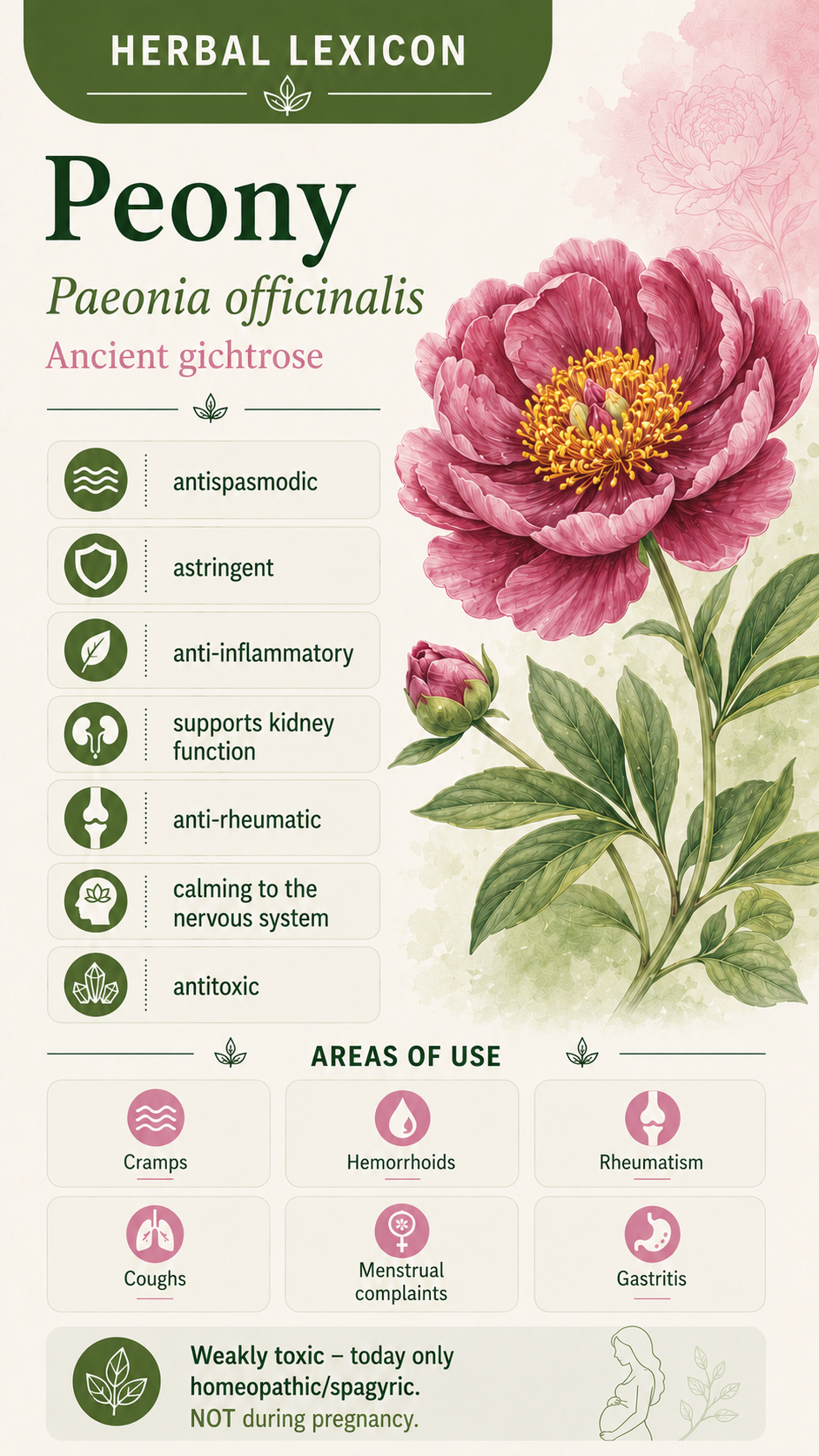

Medieval goutweed—now found almost exclusively in spagyric and homeopathic preparations, but effective for cramps, hemorrhoids, and menstrual cramps.
Interesting facts about peonies
- Benedictine rose: Monks brought it across the Alps.
- A symbol of wealth and healing in medieval art.
- St. Anthony's rose: blooms around July 13, St. Anthony's Day.
Effects & Properties
Peonidin (Anthocyanin): improves metabolism and relieves cramps. tannins: astringent – constricts dilated blood vessels and stops bleeding. anthocyanins: anti-inflammatory.
Features: antispasmodic, astringent, anti-inflammatory, diuretic, antirheumatic, sedative.
Only homeopathic or spagyric
Paeonia officinalis is used today almost exclusively in homeopathic or spagyric preparations. Slightly toxic—use for purely phytotherapeutic purposes only under expert supervision.
Applications
Peony for cramps
Cramps caused by uric acid diathesis—elevated uric acid levels in the tissues—result from impaired uric acid excretion. Peonidin improves metabolic function and uric acid excretion. At the same time, it relaxes the cramped muscles: the tendency to cramp decreases and the pain subsides.
Paeonia for Hemorrhoids
Hemorrhoids are caused by dilated blood vessels in the hemorrhoidal plexus—often due to portal vein congestion resulting from liver overload. Peony has a dual effect: its tannins constrict the dilated blood vessels (astringent) and stop active bleeding. The anthocyanins relieve the burden on liver metabolism, lower portal vein pressure, and cause the hemorrhoids to shrink. Very effective when applied externally as an ointment.
Peony for Coughs
The astringent effect of tannins also constricts the bronchial vessels—in cases of irritated, inflamed bronchi with increased mucus production, peony has a soothing effect. The urge to cough is reduced, and the bronchial mucous membranes are soothed.
Peony for Rheumatism
Rheumatic diseases are caused by the buildup of waste products and uric acid in the connective tissue and joints. Peony has anti-inflammatory and diuretic properties: waste products are excreted through the kidneys, relieving pressure on the connective tissue and reducing the tendency toward inflammation.
Peony for menstrual cramps
Peony combines three complementary effects for menstrual cramps: it relieves cramps in the uterine muscles (antispasmodic), normalizes heavy bleeding by constricting blood vessels (astringent), and has an anti-inflammatory effect in the lower abdomen. This combination makes it a classic ingredient in spagyric formulas for women.
Peony for Gastritis
In gastritis, the stomach lining is inflamed and liver function is often affected as well. Peony stimulates the liver through its anthocyanin content, relieves congestion in the portal vein system, and relaxes the stomach. This relieves the strain on the stomach lining, and the inflammation subsides.
Instructions for Use
Spagyric or homeopathic mixtures or ointments for external use. For short-term treatment only.
Pregnancy & Breastfeeding
Not on the inside. Safe for external use (ointment).
Plant Profile
- Scientific name: Paeonia officinalis
- Plant family: Buttercup family (Ranunculaceae)
- Other names: Gout Rose, Benedictine Rose, Anthony Rose
- Flowering period: May through June
- Origin: South of the Alps
- Toxicity: Mildly toxic