

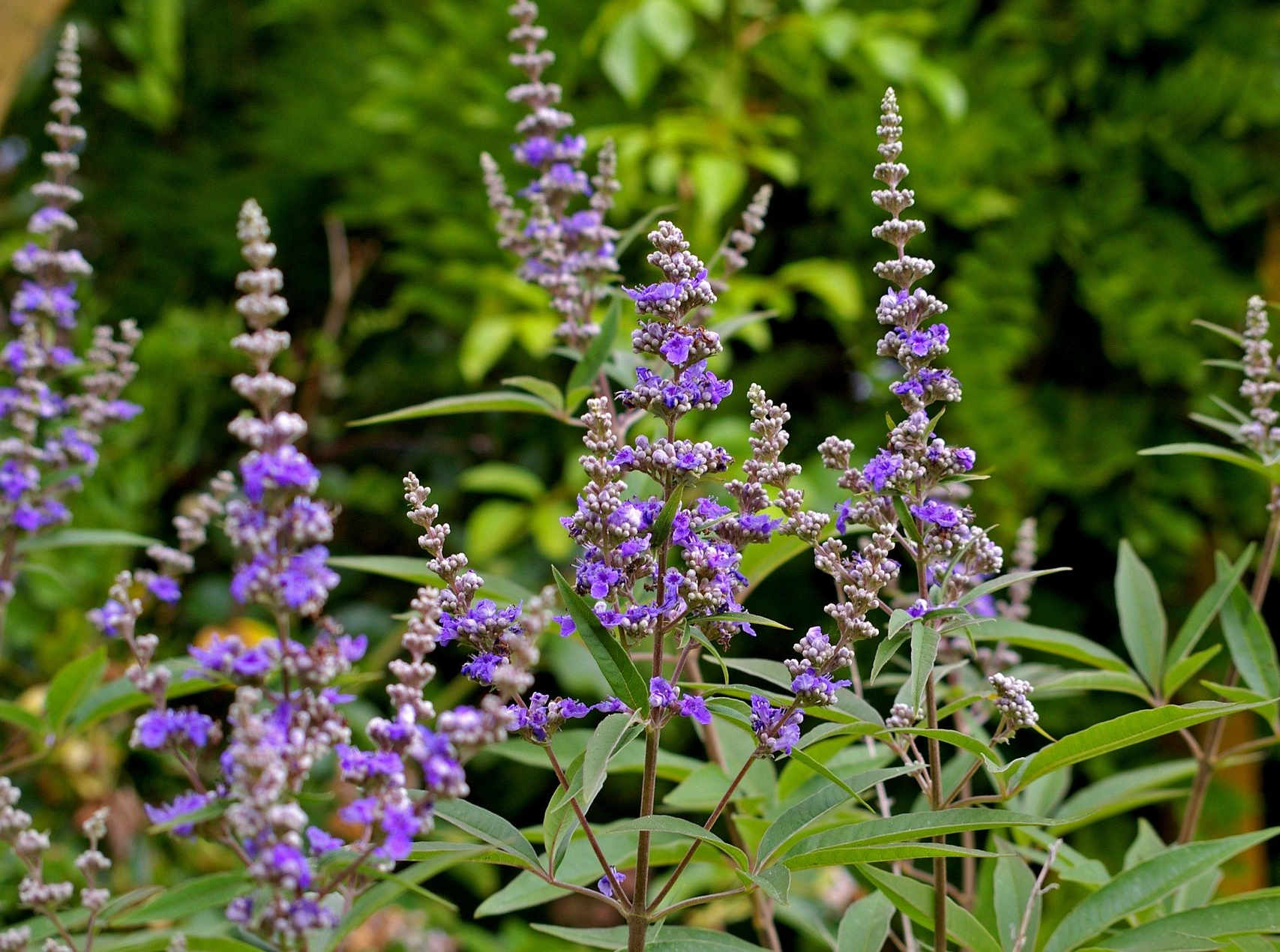
Today, chasteberry is primarily used to treat hormone-related conditions: PMS, menstrual cramps, menopausal symptoms, and fertility issues.
Interesting facts about monk's pepper
- Chasteberry is also known as chaste tree—in high doses, it actually suppresses sexual desire.
- In the Middle Ages, monks took it to curb sexual desires.
- Its red and black fruits resemble peppercorns.
Effects & Properties
Chasteberry reduces the prolactin levels and increases the release of FSH and LH from the pituitary gland. It balances the Estrogen-to-progesterone ratio and influences brain metabolism. Main active ingredients: iridoid glycosides, flavonoids, and essential oils. Hippocrates himself noted its effectiveness in treating women’s ailments.
Features: hormone-regulating, hormone-stimulating, menstrual-regulating, mentally strengthening, physically strengthening.
Applications
As one of the top five herbal remedies in naturopathy, chasteberry is effective in treating all hormone-related symptoms.
Chasteberry for PMS
Premenstrual syndrome is caused by an imbalance between estrogen and progesterone—often combined with elevated prolactin levels. Elevated prolactin can cause mood swings, water retention, headaches, and breast tenderness. Chasteberry lowers prolactin levels and regulates the estrogen-progesterone ratio: mood swings, headaches, water retention, and abdominal pain improve significantly.
Chaste tree for menstrual cramps
Menstrual cramps are often caused by hormonal imbalances—an excess of prostaglandins due to a lack of progesterone causes the uterus to contract more strongly. Chasteberry helps regulate the hormonal causes of menstrual cramps by normalizing the progesterone-to-estrogen ratio. The recommended daily dose is 40 mg of extract. This makes periods less painful.
Chasteberry for Menopausal Symptoms
During menopause, estrogen and progesterone levels drop sharply, leading to hot flashes, nervousness, and sleep disturbances. Chasteberry helps restore hormonal balance by regulating the release of LH and FSH. Hot flashes become less severe, and nervousness and sleep disturbances improve.
Chasteberry for those trying to conceive
If a hormonal imbalance is preventing pregnancy—often a relative progesterone deficiency or elevated prolactin levels—the hormone-regulating effects of chasteberry can help. It strengthens the uterus, regulates the menstrual cycle, and prepares the body for conception. Its use should be supervised by a healthcare professional.
Chasteberry for breast tenderness
Menstrual breast tenderness, which can even lead to pain (mastodynia), is caused by elevated prolactin levels during the second half of the menstrual cycle. Chasteberry specifically lowers prolactin levels, thereby restoring hormonal balance. Breast tenderness is reduced.
Chasteberry for hormonal acne
Hormone-related acne is caused by relative estrogen dominance or elevated prolactin levels, which overstimulate the sebaceous glands. Chasteberry helps balance these hormonal factors and improves the appearance of the skin over the long term—reducing sebaceous gland overactivity.
Instructions for Use
Take daily for menstrual cramps and when trying to conceive 40 mg extract; up to 80 mg during menopause. Follow the instructions in the package insert.
Pregnancy & Breastfeeding
Do not take during pregnancy or while breastfeeding—prolactin inhibition reduces milk production.
Contraindications
Do not take this product if you have endometriosis or breast cancer. It is recommended that you consult your gynecologist.
Plant Profile
- Scientific name: Vitex agnus-castus
- Plant family: Lamiaceae
- Other names: Chaste tree, chaste tree, Abraham's bush
- Flowering season: July through September
- Origin: Mediterranean region, Southern Europe, Western Asia
- Toxicity: Non-toxic
