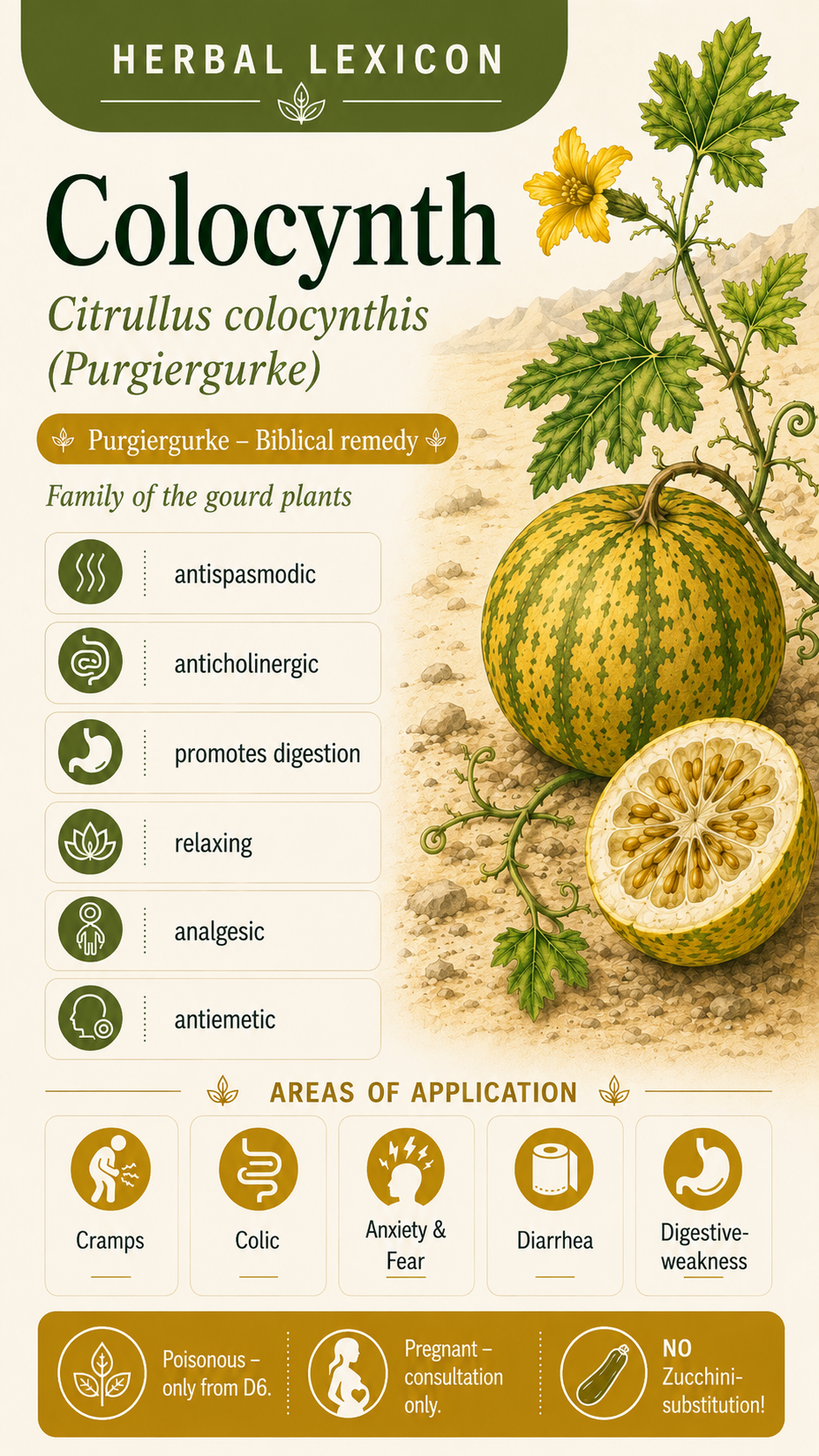

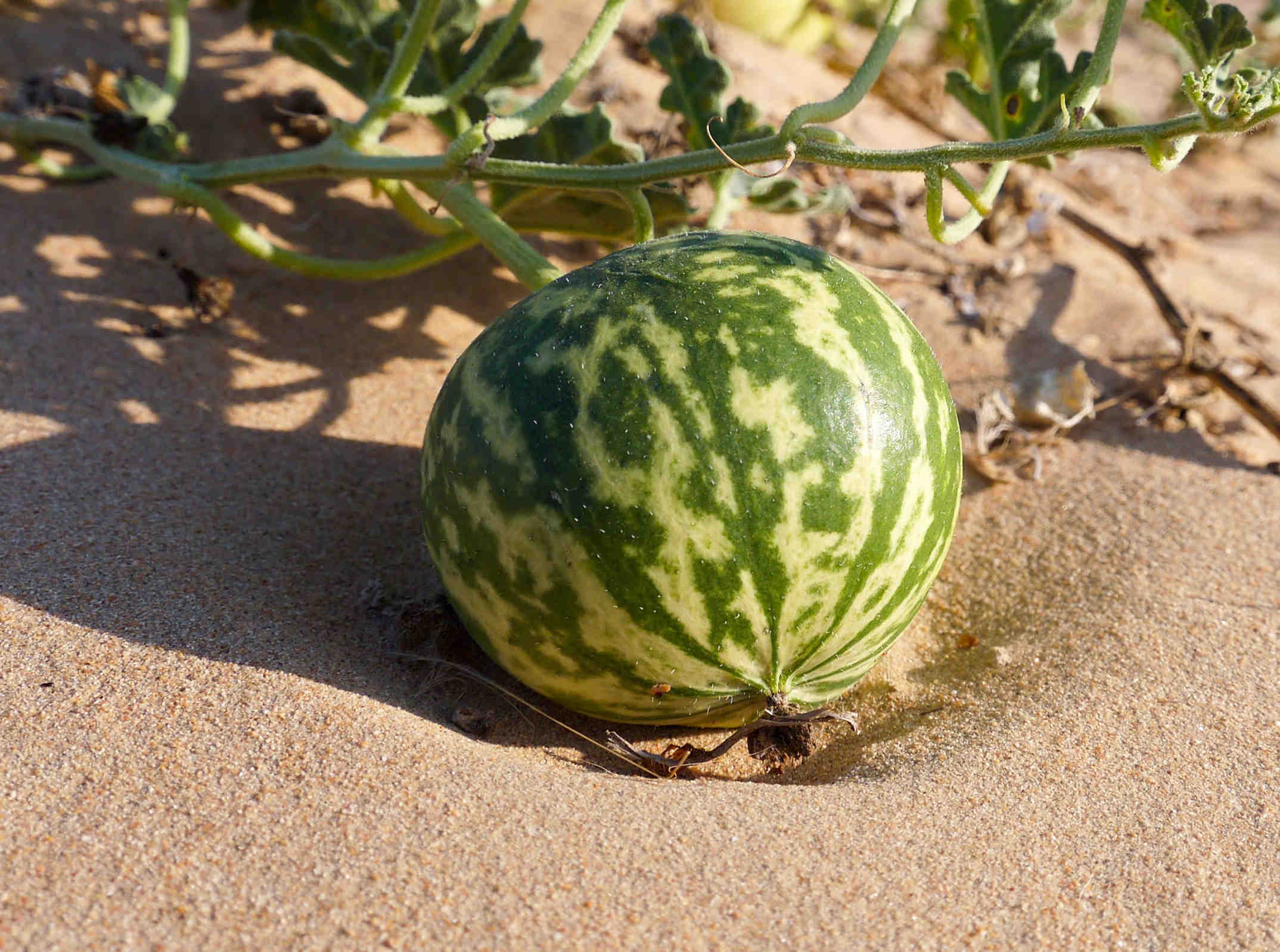
The purgative cucumber, mentioned in the Bible—poisonous, yet indispensable as a homeopathic remedy for cramps and colic of all kinds.
Interesting facts about the bottle gourd
- Medieval laxative – also for inducing vomiting.
- A meter-long taproot for arid regions.
- Risk of confusion with zucchini—the fruits are highly poisonous!
Effects & Properties
Cucurbitacins (up to 0.3% in the pulp): stimulate digestive glands and relax the muscles of internal organs and the skeletal system. Key point: Cramps caused by tension – physically and mentally. Use only homeopathic or spagyric preparations starting at D6.
Features: antispasmodic, anti-colic, aids digestion, relaxing, pain-relieving.
Applications
Citrullus colocynthis for cramps
Cramps in internal organs—gallbladder colic, intestinal colic, renal colic—are caused by excessive contraction of smooth muscle. The cucurbitacins in coloquinte specifically relax these muscular structures: the excessive contraction is slowed, the spasm resolves, and the pain subsides. At the same time, skeletal muscles are relaxed—back spasms and tension also respond to treatment.
Cucumber for Stress & Shock
In homeopathic pathology, cramps are caused not only by physical factors but also by mental tension following intense anger or fright. The stress response puts the muscles under tension, which manifests in the body as cramps. Koloquinte works in both directions: it calms the sympathetic nervous system and relieves the physical symptoms of mental tension.
Citrullus colocynthis as a laxative
The bitter compounds in coloquinte stimulate the gallbladder and pancreas to increase secretion. The increased amount of bile in the intestines activates intestinal peristalsis and promotes gentle bowel cleansing. As a laxative, coloquinte acts gently—it directly addresses the underlying cause (insufficient bile production).
Cucumber for diarrhea
Spasmodic diarrhea occurs when the intestines are overstimulated in an uncontrolled manner due to stress, anxiety, or infection. The antispasmodic effect of cucurbitacins soothes the overstimulated intestinal muscles. At the same time, the bitter compounds stimulate the digestive glands, allowing food to be fully digested again. The diarrhea subsides.
Citrullus colocynthis for digestive weakness
Digestive weakness accompanied by a tendency toward cramping occurs when the sympathetic nervous system chronically keeps the digestive tract under tension while simultaneously inhibiting the digestive glands. Koloquinte alleviates the tendency toward cramping while simultaneously stimulating the digestive glands—addressing both causes of digestive weakness at the same time.
Instructions for Use
From D6 homeopathic or spagyric. As a short-term treatment or during periods of high stress.
Pregnancy & Breastfeeding
Only for D6 and above, and in consultation with a therapist—higher doses may cause an abortive effect!
Important: Homeopathic/spagyric only + risk of confusion
Toxic. Fruits that resemble zucchini – Never use without secure identification! Important: An extremely bitter taste is a warning sign.
Plant Profile
- Scientific name: Citrullus colocynthis
- Plant family: Cucurbitaceae
- Other names: Bitter gourd, purgative cucumber
- Flowering period: May through September
- Origin: North Africa and Southwest Asia
- Toxicity: Toxic – only homeopathic/spagyric from D6 onward