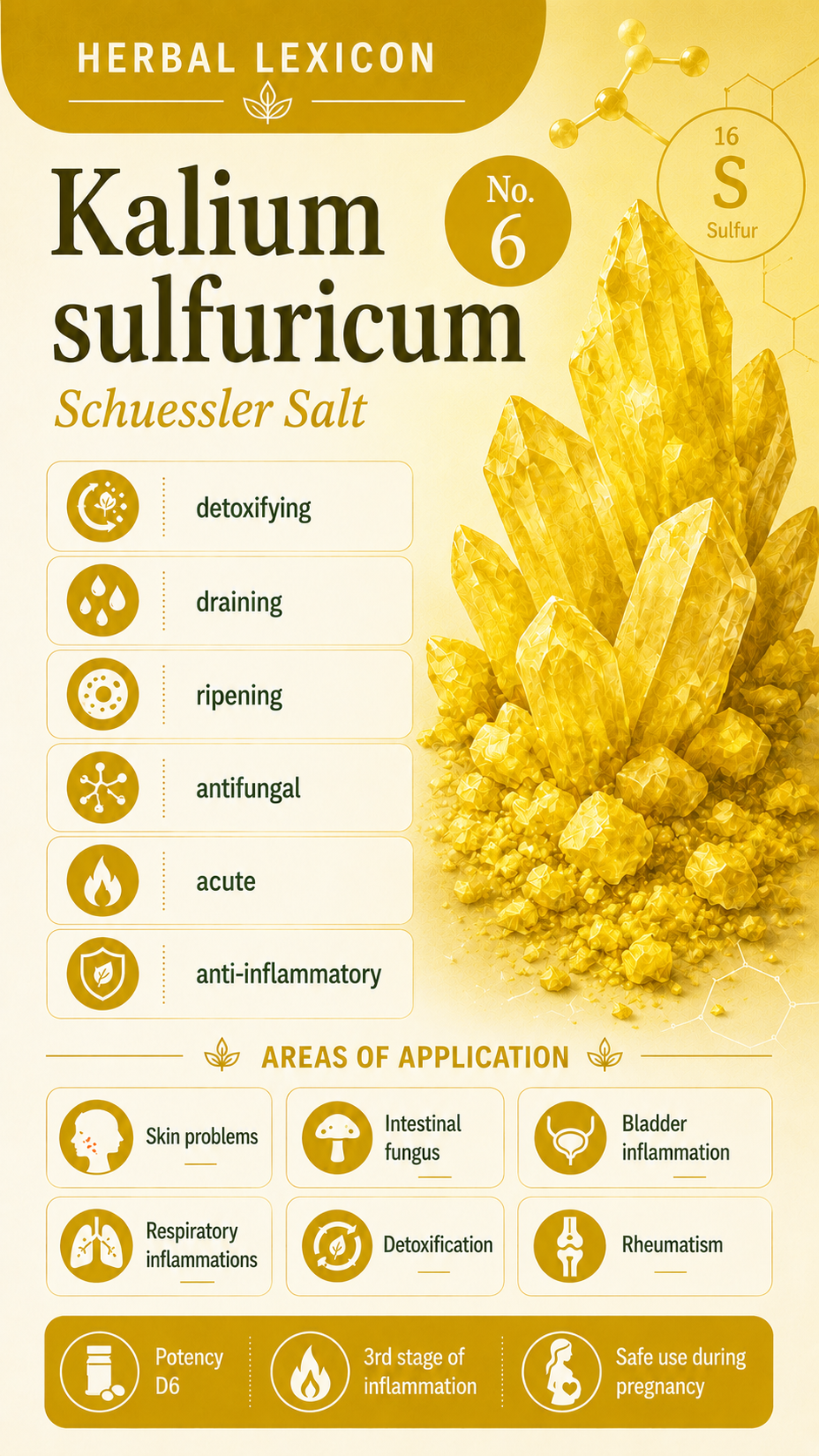

Potassium sulfuricum completes the inflammatory triad: following Ferrum phosphoricum (Stage 1) and Potassium chloratum (Stage 2) comes Stage 3—the maturation of pus and its discharge.
Interesting facts about potassium sulfate
- Used in the manufacture of synthetic rubber.
- A component of some fire extinguishing agents.
- Johann Rudolf Glauber was already producing it in the 17th century.
Effects & Properties
In the third stage of inflammation The body breaks down dead cells, immune complexes, and pathogen debris into pus and expels them. If this process is disrupted, the inflammation becomes chronic. The sulfur content activates the mitochondria and cleanses the cells from the inside out.
Features: detoxifying, purgative, suppurative, fungicidal, acute-inducing.
Storage Locations & Deficiency Symptoms
Skin and mucous membranes, liver, pancreas. Symptoms of deficiency:
- Pus-filled rashes, psoriasis, pigmented spots
- Intestinal yeast (Candida), sugar cravings
- Chronic inflammation of the ears, tonsils, and mucous membranes
- Rheumatism, liver disease
Applications
Potassium Sulfate for Detoxification
Chronic toxin buildup occurs when cells are unable to fully eliminate their metabolic waste products—leading to the accumulation of toxins. The sulfur content of Kalium sulfuricum directly activates the mitochondria and stimulates cellular detoxification. Potassium accelerates the removal of released toxins from the cells.
Potassium sulfate for skin problems
Pus-filled rashes and chronic skin conditions develop when the body excretes toxins through the skin—a sign that the primary excretory organs are overloaded. Kalium sulfuricum stimulates excretion through the mucous membranes and skin. An initial worsening of symptoms is possible and a good sign—it is followed by complete healing.
Potassium Sulfate for Intestinal Yeast Infections
Candida and other intestinal fungi thrive in an imbalanced intestinal environment with mucous membranes clogged with toxins. Kalium sulfuricum detoxifies the intestinal mucous membranes, restores a healthy environment, and allows the natural intestinal flora to recover. The imbalance is corrected—Candida loses its advantage.
Potassium sulfate for bladder infections
Chronic, recurrent bladder infections occur when infections do not heal completely and become entrenched in the tissue. Kalium sulfuricum exacerbates these chronic infections—bringing them into the third stage—and thereby enables complete, thorough healing. The exacerbation is followed by complete healing.
Potassium Sulfate for Respiratory Infections
Chronic sinusitis, bronchitis, or tonsillitis that keeps flaring up often gets stuck in the second or third stage of inflammation. Kalium sulfuricum brings the third stage to a close: the accumulated cellular debris is broken down into pus and expelled. The inflammation heals completely.
Instructions for Use
Detoxification: as a short course of treatment. To treat inflammation: several times a day for several days to several weeks.
Pregnancy & Breastfeeding
Safe to use—no problem during pregnancy and breastfeeding.
Profile
- Content: Potassium sulfate
- Description: Detox Salt
- Distribution: Skin, mucous membranes, liver, pancreas
- Schüssler No.: 6
- Typical potency: D6