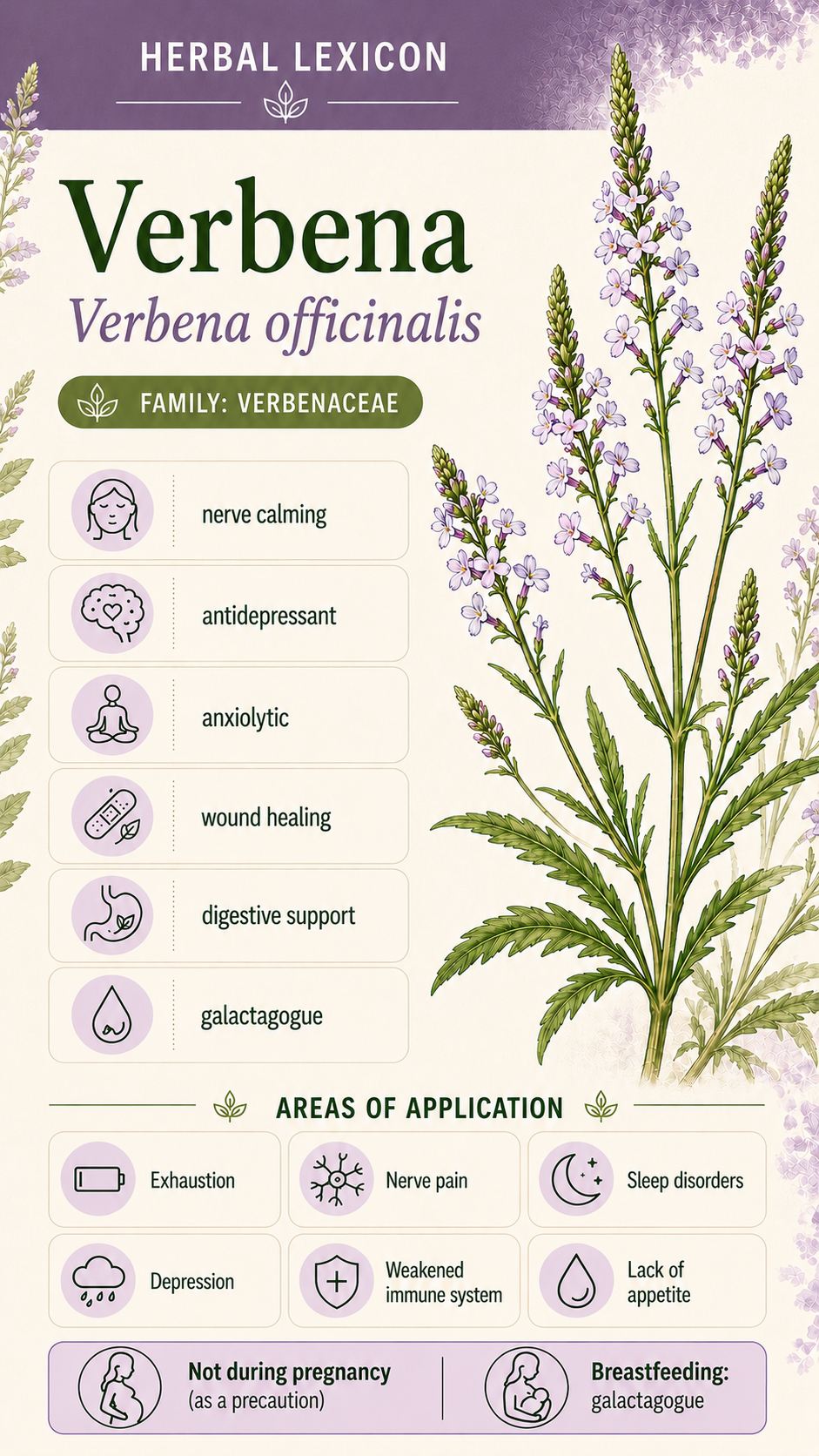

Once a sacred ritual plant in ancient times—today a phytotherapeutic agent with proven GABA effects.
Interesting facts about verbena
From ancient rituals to modern GABA research.
- It was considered THE medicinal plant for wounds caused by iron weapons—hence the name.
- Blacksmiths burned it to improve the quality of the steel.
- Greek envoys rubbed it on themselves—it was said to help them find the right words.
Effects & Properties
The iridoid glycosides Verbenin, hastatoside, and verbascoside have been shown to bind to GABA receptors in the brain. GABA is the most important inhibitory neurotransmitter—increased GABA activity leads to relaxation, reduced anxiety, and an antidepressant mood-lifting effect. Flavonoids also strengthen the immune system.
Features: calming, antidepressant, anxiolytic, wound-healing, digestive, lactogenic.
Applications
Verbena for exhaustion
Chronic fatigue develops when the nervous system is overloaded for a long period of time and reserves are depleted. Thanks to its GABA-active iridoid glycosides, verbena has a mildly antidepressant and invigorating effect—it restores strength and resilience for daily life without causing drowsiness. The body regains its balance.
Verbena officinalis for nervous disorders
In cases of stress-related nervous disorders—such as overstimulation, anxiety, and inner restlessness—GABA receptors are under-stimulated. Verbena binds to these receptors and increases inhibitory activity in the nervous system: overstimulation decreases, motivation increases, and anxiety subsides. It is ideal for persistent stress-related symptoms when conventional relaxation aids have too sedating an effect.
Vervain for Anemia
Anemia is not only caused by iron deficiency, but often by poor absorption of dietary iron in the intestines. As a bitter herb, verbena optimizes the production of digestive juices and thus the absorption of iron and vitamin B12 from food and supplements. Blood formation improves, and fatigue and pallor decrease.
Verbena officinalis for Immune Deficiency
The flavonoids in verbena have antibiotic and immune-boosting properties—they stimulate the non-specific immune system and increase resistance to infections. Taken as a short course of treatment during the transitional seasons, verbena helps protect against the frequent colds that occur in the fall and spring months.
Verbena for Insomnia
Insomnia caused by racing thoughts and anxiety occurs when the mind cannot switch off. The GABA-active compounds in verbena bind to the same receptors that benzodiazepines use—only more weakly and without the risk of dependence. The mind stops racing, anxiety subsides, and sleep sets in.
Verbena officinalis for depressive moods
Studies confirm the positive effect of Verbena officinalis on GABA receptors—increased GABA activity has an antidepressant effect and helps lift the mood. Depressive moods subside, and a sense of well-being gradually returns. It is particularly effective for stress-induced mood swings.
Vervein to induce labor
Shortly before giving birth, verbena can be used if contractions are not strong enough—it stimulates the uterine muscles. Use only after consulting a doctor, naturopath, or midwife.
Instructions for Use
Pregnancy & Breastfeeding
Not during pregnancy – Induces labor, risk of premature birth. The only exception: shortly before the due date, in consultation with a doctor or midwife. Recommended during breastfeeding – promotes milk production.
Plant Profile
- Scientific name: Verbena officinalis
- Plant family: Verbenaceae
- Other names: Wishweed, Legendweed, Doveweed
- Flowering period: May through October
- Origin: Native to (Central Europe)
- Toxicity: Non-toxic