

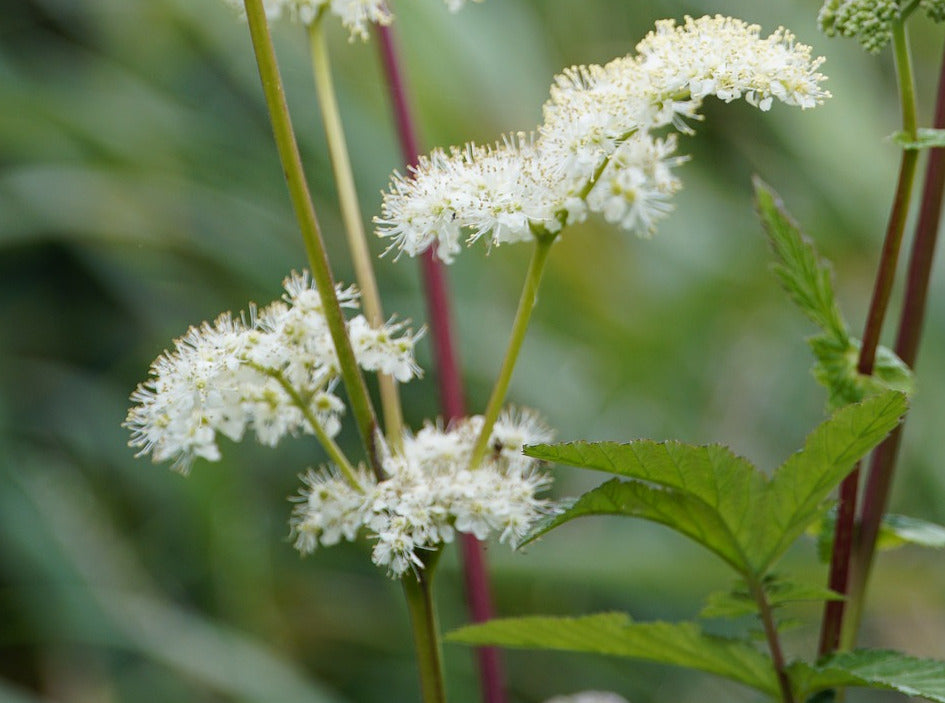
The plant behind the name "Aspirin" – meadowsweet has anti-inflammatory, fever-reducing, and anticoagulant properties.
Interesting facts about meadowsweet
- The origin of the name "Aspirin": "A" = acetyl, "spir" = spiraea (Spiraea = the old botanical name).
- Beekeepers rubbed it on new beehives—the scent is supposed to attract the bees.
- In France, it’s served as a sorbet to accompany rich dishes—its intense aroma pairs well with hearty cuisine.
Effects & Properties
Salicylic aldehyde and methyl salicylate have effects similar to those of willow bark: they are antithrombotic, anti-inflammatory, and antipyretic. Tannins protect the mucous membranes. In addition, meadowsweet cardioprotective – It inhibits platelet aggregation and is effective in preventing heart attacks.
Features: anti-inflammatory, antithrombotic, anticoagulant, antipyretic, diuretic, diaphoretic.
Applications
Meadowsweet for tonsillitis
In cases of tonsillitis, the tonsils are swollen, have poor blood circulation, and are painful. The salicylic compounds in meadowsweet improve blood flow to the inflamed tissue, inhibit the inflammatory response, and have analgesic and antipyretic effects. This accelerates the healing process and makes swallowing easier again.
Meadowsweet for mucosal inflammation
Inflamed mucous membranes—whether in the mouth, throat, stomach, or intestines—are irritated, swollen, and hypersensitive. The tannins in meadowsweet form a protective protein layer on the irritated mucous membrane, shielding it from further irritation. The salicylic compounds have decongestant and anti-inflammatory effects. The mucous membrane can regenerate.
Meadowsweet for Rheumatism
Rheumatic diseases are characterized by chronic inflammation in the joints and connective tissue. The salicylic compounds in meadowsweet directly interfere with the inflammatory cascade and inhibit prostaglandin synthesis in a manner similar to aspirin. At the same time, meadowsweet improves blood flow to the inflamed tissue. Pain and stiffness are reduced, and mobility improves.
Meadowsweet for colds and flu-like illnesses
For colds and flu-like infections accompanied by fever and inflammation of the mucous membranes, meadowsweet is a gentle alternative to chemical fever reducers. It lowers fever without overly suppressing the body’s natural defense mechanisms—the immune system remains active and effective. The mucous membranes are protected by the tannins, and the inflammation subsides.
Instructions for Use
As a tea or in combination with other herbs. Cardioprotective—also suitable for preventing heart attacks.
Pregnancy & Breastfeeding
Do not take – Salicylates inhibit blood clotting and can lead to complications during pregnancy.
Asthma & Aspirin Allergy
Warning: The salicylic compounds may cause reactions similar to those of aspirin. Do not take if you have a known allergy to aspirin or asthma.
Plant Profile
- Scientific name: Meadowsweet
- Plant family: Rosaceae
- Other names: Goat's beard, spirea, meadow queen
- Flowering period: June through August
- Origin: Native to (Europe)
- Toxicity: Non-toxic
