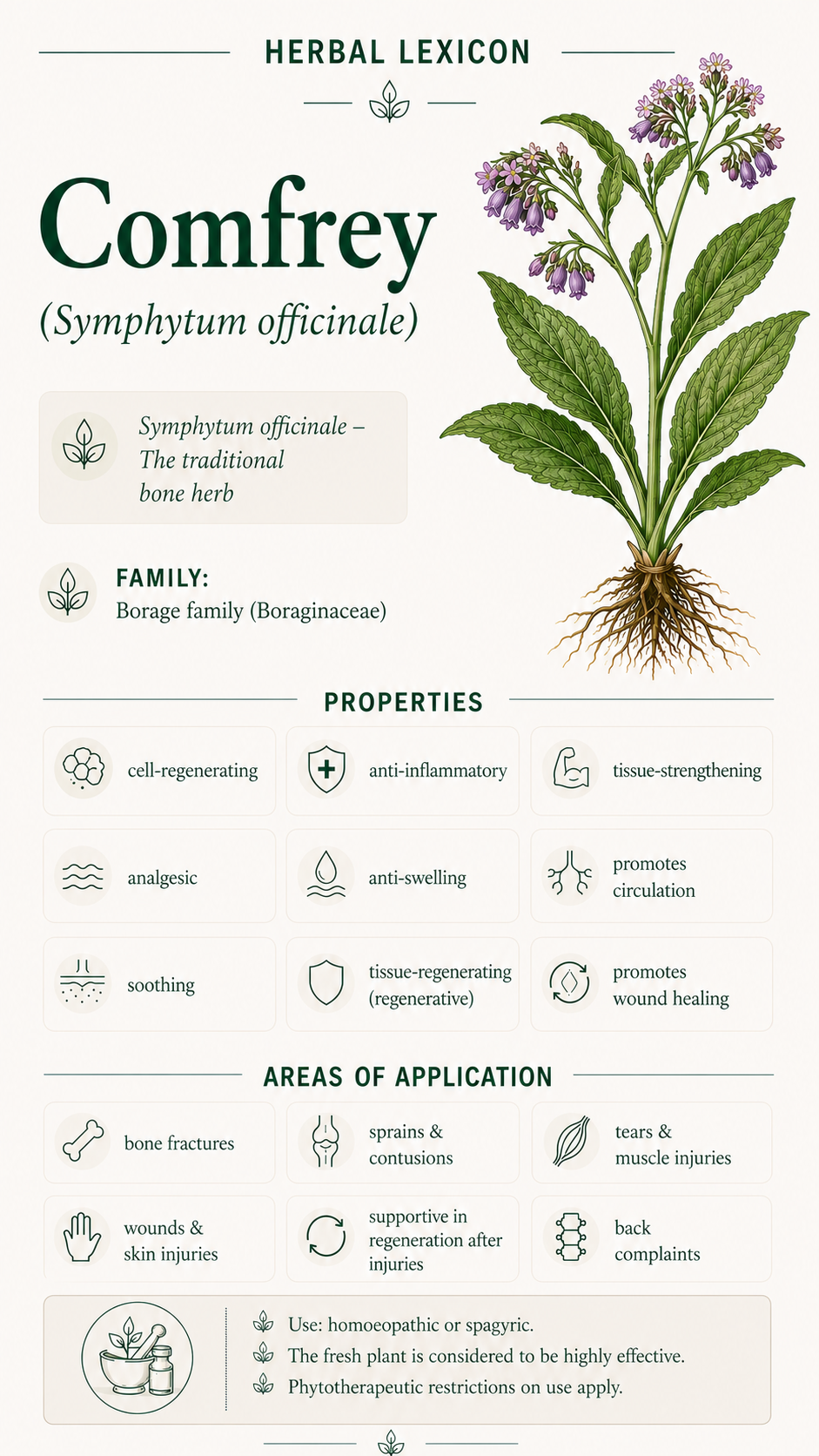

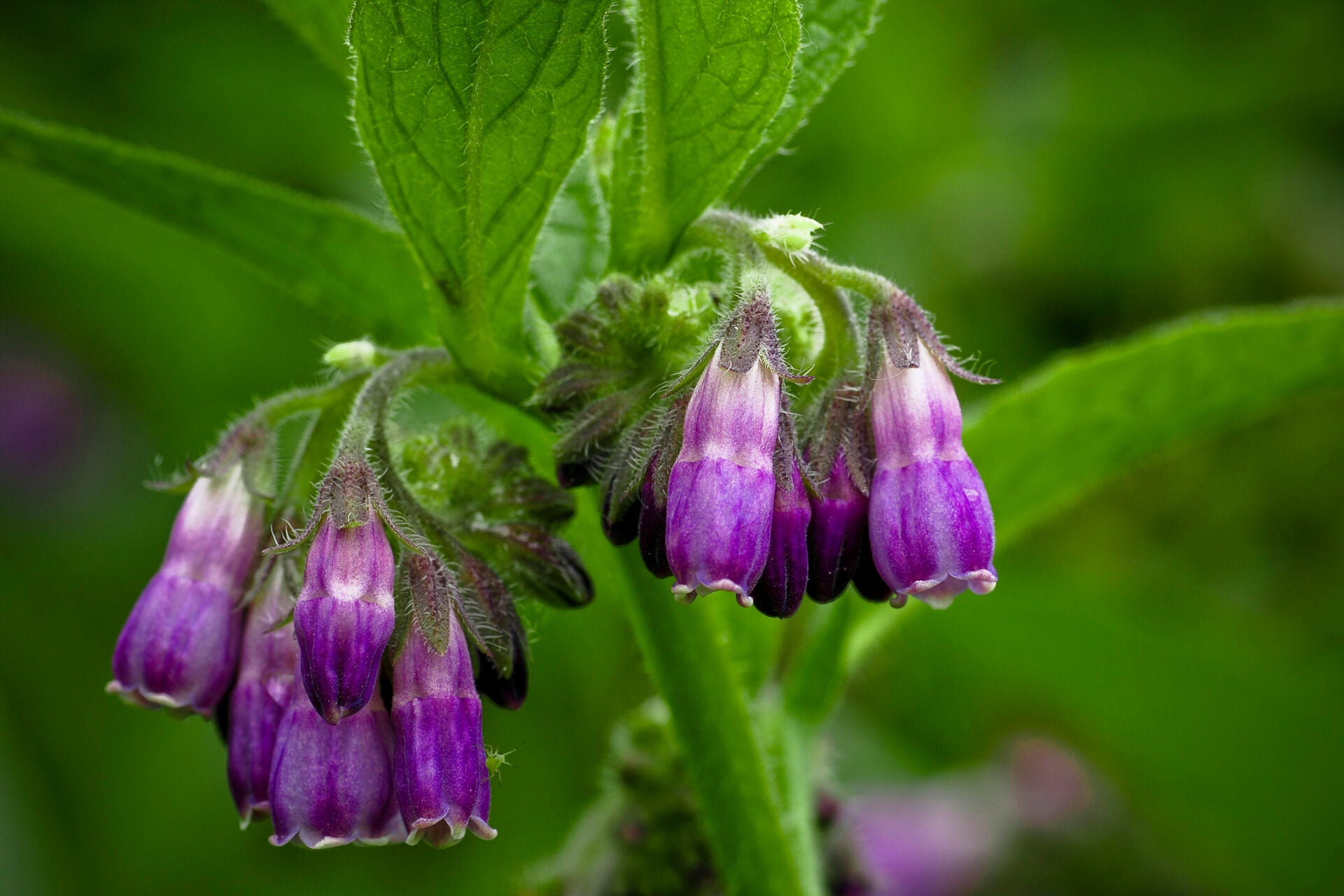
Common comfrey is a time-tested medicinal plant that has been valued for centuries for its ability to support the healing of bones, joints, and tissues.
Fascinating Facts About Common Comfrey
- The botanical name Symphytum comes from the Greek word "symphytos," meaning "grown together."
- It grows primarily along riverbanks and in moist meadows throughout Europe and Asia, often in dense, clustered stands.
- It was already firmly established in old farm gardens as a medicinal herb for treating broken bones—the German name “Beinwell” is derived from the old saying “die Wunde wallt” (the wound heals).
- The fleshy roots turn reddish-brown on the outside and bright yellow on the inside, and can grow up to two meters long.
Effects & Properties
Allantoin: promotes cell regeneration (granulation) and accelerates the regeneration of skin, bone, and connective tissue. Rosmarinic acid: has anti-inflammatory, pain-relieving, and antioxidant properties. Mucilages: form a protective layer over irritated skin and mucous membranes, moisturize, and relieve itching. Glycopeptides: contribute to the anti-inflammatory and tissue-protective effects.
Features: pain-relieving, anti-inflammatory, antioxidant, moisturizing, promotes healing, protects mucous membranes, promotes granulation tissue formation.
Areas of Application
Common Comfrey for Bruises and Sprains
Blunt injuries such as bruises and sprains are accompanied by swelling, pain, and limited mobility. Comfrey is applied topically as an ointment or poultice; its allantoin content supports cell regeneration in the affected tissue, while rosmarinic acid reduces inflammation and noticeably alleviates pain.
Symphytum officinale to aid in the healing of bone fractures
The recovery period following a bone fracture can be difficult. Comfrey is traditionally applied topically to the area of the fracture to support callus formation—the formation of new bone tissue at the fracture site—and thus the bone’s healing process. It should always be used as a supplement, never as a substitute for medical care and immobilization.
Comfrey for Joint Pain
Painful or inflamed joints—such as those caused by osteoarthritis or overuse—respond well to the anti-inflammatory and pain-relieving effects of comfrey. Regular topical application as an ointment can help improve mobility, reduce swelling, and noticeably relieve symptoms.
Common Comfrey for Tendon and Ligament Injuries
Strains and sprains of tendons and ligaments—such as those resulting from physical exertion during sports—benefit from allantoin’s tissue-regenerating effect. Comfrey supports the regeneration of damaged tissue and is therefore traditionally used topically in sports medicine as well.
Common Comfrey for Skin Regeneration
The plant's mucilage and allantoin help the skin regenerate after minor injuries or when it is dry and irritated. Its moisturizing effect promotes healthy-looking skin and can relieve itching caused by stressed skin.
Comfrey for Scar Tissue
Once the wound has healed, comfrey can be applied to existing scar tissue to support the healing process. The active ingredients it contains promote blood circulation and skin elasticity in the scarred area, which can help improve the skin’s texture.
Instructions for Use
Due to the natural content of pyrrolizidine alkaloids in the root, common comfrey is used exclusively for external applications, such as ointments, creams, or poultices applied to intact skin, typically several times a day for a limited period. Internal use of the raw herb is not recommended; in spagyric medicine and homeopathy, only the appropriately processed, diluted form is used.
Pregnancy & Breastfeeding
During pregnancy and while breastfeeding, comfrey should only be used after consulting a doctor or midwife due to the pyrrolizidine alkaloids it contains.
Plant Profile
- Botanical name: Symphytum officinale
- Plant family: Borage family (Boraginaceae)
- Other names: Common comfrey, wallwort
- Flowering season: May through July
- Origin: Native to (Europe, Asia)
- Toxicity: Contains pyrrolizidine alkaloids – for external use only