


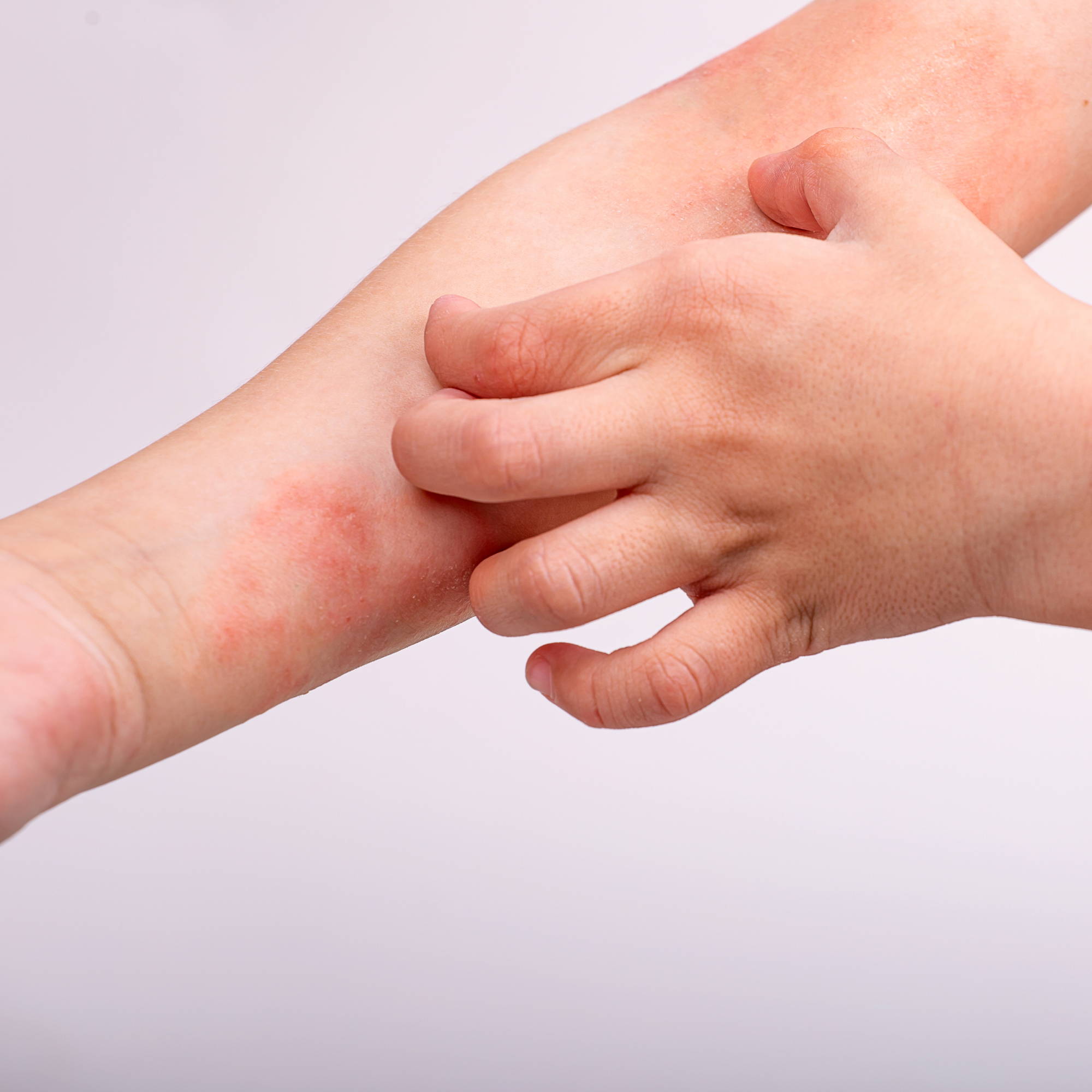
Why Skin Becomes Especially Vulnerable in Winter
Many people notice dry skin in winter. For people with atopic dermatitis, however, the cold season often means much more than just a feeling of tightness. Symptoms frequently worsen, eczema flare-ups occur more often, and the itching becomes more intense.
The key reason lies in the skin barrier. This natural protective layer normally prevents excessive moisture loss while also shielding the skin from environmental irritants. In people with atopic dermatitis, this barrier is already compromised. When dry winter air, cold wind, and heated indoor environments come into contact with the skin, this delicate balance is thrown even further off kilter.
Interestingly, it is therefore often not the cold itself that causes the symptoms. Rather, winter conditions exacerbate a process that is already present in atopic dermatitis: excessive moisture loss and increased sensitivity to external stimuli.
Causes and Connections
In winter, several factors affect the skin simultaneously. It is only their combined effect that explains why atopic dermatitis is often more noticeable during this season.
1. The skin loses more moisture than it can retain
Cold air contains significantly less moisture than warm air. At the same time, humidity drops even further in heated rooms.
As a result, more water evaporates from the skin’s surface. Healthy skin can partially compensate for this loss. However, people with atopic dermatitis have a weakened skin barrier, which causes their skin to dry out more quickly. This results in a feeling of tightness, dryness, and increased susceptibility to irritation.
2. Temperature changes constantly challenge the skin
One factor that is often underestimated is the constant shift between cold outdoor air and warm indoor environments.
The tiny blood vessels continuously react to these changes, constricting and then dilating again. While these adaptive processes are generally normal, they can place additional strain on sensitive skin and exacerbate redness or irritation.
3. Natural oil production decreases in winter
Many people are unaware that the skin produces less sebum at low temperatures.
However, this lipid film is an important component of the skin barrier. Without it, moisture is retained less effectively. At the same time, potential irritants can penetrate the upper layers of the skin more easily. This creates a cycle of dryness, irritation, and further moisture loss.
4. Stress affects more than just your mental health
Atopic dermatitis is not influenced solely by external factors. Internal stressors also play a role.
Stress can make the skin more sensitive and intensify the subjective sensation of itching. The darker months of the year, work-related stress, or sleep problems, in particular, can contribute to symptoms being perceived more intensely.
Typical symptoms or signs
Symptoms do not manifest the same way in all affected individuals. Nevertheless, certain changes occur particularly frequently.
1. Dry skin is the starting point for many symptoms
For many people, the condition begins with increased dryness.
The skin feels rough, tight, and loses its suppleness. This dryness is often more than just a cosmetic issue, as it lays the groundwork for further symptoms.
2. Itching exacerbates the vicious cycle
Itching is one of the most distressing symptoms of atopic dermatitis.
Scratching provides short-term relief but simultaneously damages the skin’s surface. This allows additional irritants to penetrate the skin, which in turn triggers more itching. It is precisely this cycle that makes the condition so challenging for many people affected by it.
3. Eczema occurs more frequently
In winter, many people report worsening eczema on their hands, face, neck, or the creases of their arms.
These skin changes occur because the weakened skin barrier reacts more sensitively to irritants. The affected areas may appear red, scaly, or inflamed.
4. Cracks and sensitive skin areas develop more easily
If the skin becomes very dry, small cracks may form.
These areas are particularly sensitive to water, soap, or cold. At the same time, the risk of further irritation increases, which is why consistent skincare is especially important during this time.
What helps in everyday life?
Even though winter conditions can’t be avoided, various measures can help relieve the skin.
1. Consistently support the skin barrier
Regular skincare helps retain moisture in the skin and support its natural protective barrier.
Moisturizing skincare products are often used to protect the skin from further moisture loss.
2. Use mild cleansers
Washing too often or using harsh cleansers can further dry out the skin.
Mild, pH-neutral products help cleanse the skin without unnecessarily compromising its protective barrier.
3. Actively manage indoor air quality
Dry, heated air is one of the most significant stressors in winter.
Regular ventilation and adequate humidity can help limit moisture loss from the skin.
4. Choose skin-friendly clothing
Not all winter clothing is suitable for sensitive skin.
Soft materials are often better tolerated than scratchy fabrics. This helps reduce additional irritation and mechanical stress.
5. Make sure to get enough rest
Sleep and rest influence numerous processes in the body, including skin regeneration.
Allowing for sufficient rest periods and reducing stress often supports not only general well-being but also helps manage skin symptoms.

Consistent skincare, gentle cleansing, balanced indoor air quality, and sufficient rest can help relieve the skin during winter and reduce atopic dermatitis symptoms.
Natural Support and Medicinal Plants
Naturopathic methods have long been used as a complementary approach for sensitive and dry skin. They are not a substitute for medical treatment but are often used to support skin care and overall well-being.

Selected medicinal plants and natural substances traditionally used in naturopathy to support the management of atopic dermatitis.
- Nasturtium is traditionally used in naturopathic approaches that focus on the skin and the body’s own defense mechanisms.
- Heartseeds are frequently used in naturopathic treatments for sensitive skin and skin prone to irritation.
- Pansies have a long tradition of use in skin care and are often associated with the care of stressed skin.
- Hemp seeds are valued for their content of essential fatty acids and often play a role in approaches to skin care and nutrition.
- Stinging nettle is traditionally used in treatments that support metabolic and excretory processes and is therefore often a component of naturopathic skin care regimens.
- Annual mugwort has long been used in various traditional medical systems, where it is often associated with general well-being.