

Why are blood donations urgently needed?
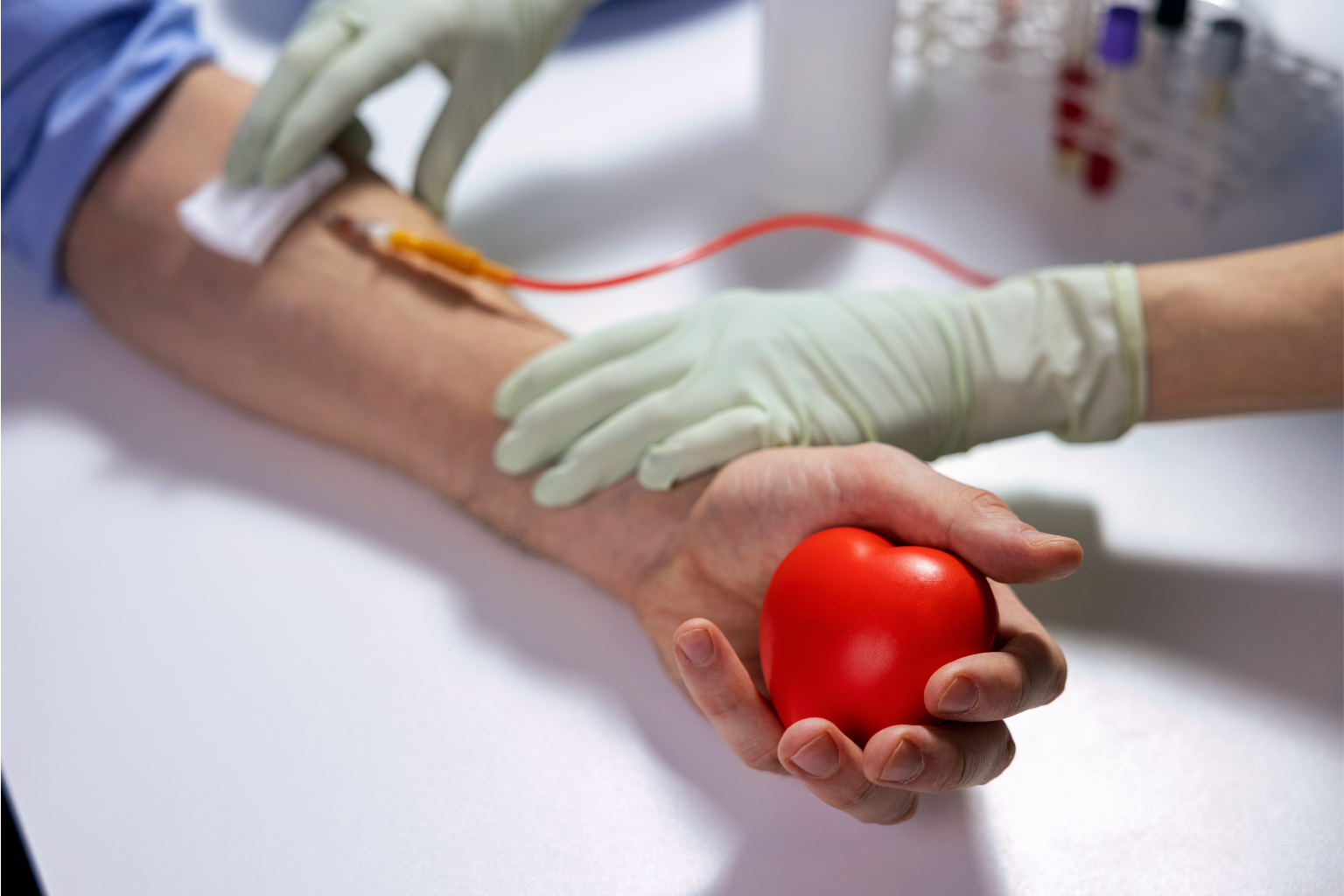
Blood donations are a vital part of medical care and are needed daily for many patients. Blood products are often lifesaving, especially during surgeries, accidents, or serious illnesses.
1. High daily demand
Hospitals require numerous units of blood every day to ensure patient care.
2. More surgeries and treatments
Since many procedures were postponed in recent years, the demand for blood donations is currently rising significantly again.
3. Too few regular donors
Only a small portion of the population donates blood regularly, which can lead to recurring shortages.
4. Blood cannot be manufactured artificially
Blood products cannot yet be produced artificially and therefore rely on voluntary donations. Even a single blood donation can help save the lives of several people.
Blood components explained simply
When blood is donated, it is separated into different components, each of which performs distinct functions in the body. This allows a single donation to help multiple people.
1. Blood plasma
Blood plasma makes up the largest portion of blood and consists mainly of water. It transports important substances throughout the body and supports the immune system as well as blood clotting.
Functions of blood plasma:
- transports hormones, nutrients, and antibodies
- supports blood clotting
- helps defend against pathogens
- stabilizes blood pressure
2. Blood Platelets (Thrombocytes)
Blood platelets are important for wound healing and ensure that bleeding can be stopped.
Functions of platelets:
- support blood clotting
- seal small wounds
- help with wound healing
3. Red blood cells (erythrocytes)
Red blood cells transport oxygen throughout the body and supply organs and tissues with energy.
Functions of red blood cells:
- transport oxygen
- supply the body with energy
- support organ function
The individual blood components are used in medicine in a targeted manner depending on the illness or injury.
What are the benefits of donating blood?
Donating blood not only helps others—it also offers several benefits for your own body.
1. Saving lives
A single blood donation can help multiple people and be vital in emergencies.
2. Free health check
Before each donation, important vital signs such as blood pressure, pulse, and iron levels are checked. In addition, the blood is tested for certain diseases.
3. Supporting the healthcare system
Regular blood donations help ensure a steady supply for hospitals and emergency situations.
4. Awareness of your own health
Many people pay closer attention to their diet, hydration, and overall well-being around the time of a blood donation.
5. Doing Good Together
Blood donation is a simple way to make an important contribution to others with little effort.
How often can you donate blood?
How often you can donate blood depends, among other things, on your gender and general health.
1. Women
Women can generally donate blood up to 4 times a year.
2. Men
Men can usually donate up to 6 times a Year Donate blood.
3. Important breaks between donations
There should be at least 8 weeks between two blood donations to allow the body sufficient time to recover.
4. Iron levels are checked
Before each donation, your iron levels are checked to ensure they are high enough. If the level is too low, you cannot donate for health reasons.
The body needs time to fully replenish the lost blood components.
Checklist for blood donation
There are a few things to keep in mind before and after donating blood to ensure your body tolerates the donation well.
- You are between 18 and 64 years old
- Your weight is between 50 and 160 kg
- You feel healthy and fit
- Drink plenty of fluids before donating
- Eat something before donating—preferably low-fat
- Do not drink alcohol for 12 hours beforehand
- Do not engage in intense physical activity before donating
- Avoid physical exertion after donating
- Do not smoke after donating
- Take it easy for the rest of the day

This list gives you an overview of what you should keep in mind regarding blood donation.