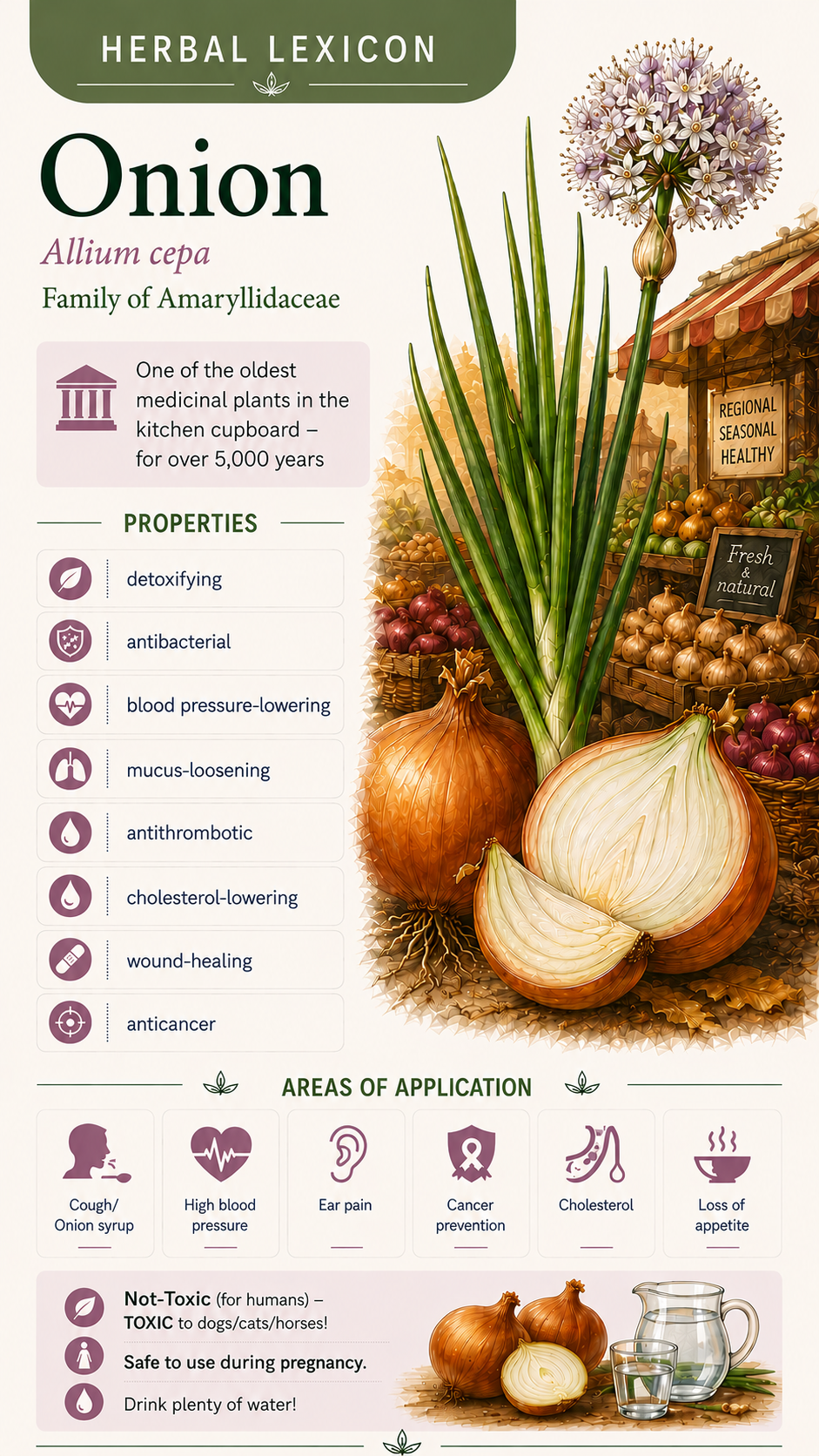

A crop with a 5,000-year history – used as currency in ancient Egypt. Sulfur compounds: detoxifying, antibacterial. TOXIC to animals! Safe for humans – even during pregnancy. Drink plenty of water!
Interesting facts about onions
- In ancient Egypt, onions were so valuable that they were used as payment for workers building the pyramids.
- The tearing that occurs when cutting vegetables is caused by propanthial-S-oxide (PSO), which is released enzymatically from isoalliin and reacts with the tear film in the eyes to form sulfuric acid.
- Onion marinade tenderizes tough meat: The protease alliinase breaks down meat proteins—the same enzymatic system that produces the therapeutically active sulfur compounds.
Effects & Properties
Isoallin and thiosulfinates (sulfur compounds): activate the cellular glutathione system (glutathione S-transferase and glutathione peroxidase)—the most important Phase II detoxification enzymes. Neutralize carcinogenic substances and induce apoptosis in abnormal cells. Antibacterial by directly damaging the membranes of bacterial cells (H2S release). Quercetin (flavonoid): antioxidant, antithrombotic (inhibits ADP-induced platelet aggregation), anti-inflammatory (COX-2 inhibition). Insulin-like peptides: help stabilize blood sugar levels. Drink plenty of water for optimal detoxification!
Features: detoxifying, antibacterial, blood pressure-lowering, expectorant, antithrombotic, cholesterol-lowering, anticancer, wound-healing.
Applications
Onions for a cough
A productive cough is caused by excessive mucus production in the bronchi: goblet cells produce a viscous secretion that is not adequately cleared—triggering the cough reflex. Onion syrup combines three mechanisms of action: The sulfur compounds (thiosulfinates) have a mucolytic effect by breaking down disulfide bonds in the mucin glycoprotein—the mucus becomes more fluid and easier to cough up. Isoalliin breakdown products have an antibacterial effect against common bronchial bacteria. Honey, as a carrier, soothes the irritated mucous membrane through the release of antimicrobial H₂O₂.
Allium cepa for high blood pressure
Hypertension results from chronically elevated peripheral vascular resistance: smooth muscle cells in the blood vessels contract continuously, causing the lumen of the arterioles to narrow. Quercetin from onions activates endothelial nitric oxide synthase (eNOS): NO causes direct vasodilation of the arterioles. At the same time, the sulfur compounds moderately inhibit angiotensin-converting enzyme (ACE)—ACE inhibition reduces angiotensin II-induced vasoconstriction. Several studies demonstrate blood pressure reductions of 5–10 mmHg.
Onions for earaches
Otitis media is often caused by bacteria (such as Streptococcus pneumoniae and Haemophilus influenzae) ascending through the Eustachian tube: inflammatory mediators cause swelling and pain in the middle ear. The traditional onion pouch acts locally: the essential sulfur compounds diffuse through the tissue and have an antibacterial effect against common pathogens that cause ear infections. The heat from the poultice promotes blood flow to the tissue, which activates the local immune response.
Allium cepa for cancer prevention
Colorectal carcinoma develops as a result of accumulating mutations in colon epithelial cells, a process facilitated by carcinogenic substances in the intestinal lumen. Onion sulfur compounds activate the cellular glutathione S-transferase system: electrophilic carcinogens are conjugated and excreted before they can form DNA adducts. Quercetin inhibits proliferation-promoting signaling pathways (PI3K/Akt, MAPK/ERK) in colon cells and activates apoptosis pathways (p53 upregulation, caspase-3 activation). Epidemiological studies show that high onion consumption correlates with lower rates of colorectal cancer.
Allium cepa for high cholesterol
Quercetin and sulfur compounds influence cholesterol metabolism in several ways: Quercetin inhibits HMG-CoA reductase (a key enzyme in hepatic cholesterol synthesis) and increases the expression of hepatic LDL receptors. Sulfur compounds activate glutathione peroxidase, which prevents LDL oxidation—oxidized LDL (oxLDL) is particularly atherogenic. Less oxLDL means slower progression of atherosclerosis.
Instructions for Use
Consume daily as part of your diet. Use as a naturopathic remedy for a short course of treatment. IMPORTANT: Drink plenty of water when using this product therapeutically—detoxification byproducts must be flushed out of the body.
Pregnancy & Breastfeeding
Without a second thought.
Pets
POISONOUS to dogs, cats, and horses! Sulfur compounds destroy red blood cells in animals → hemolytic anemia. Keep away from animals.
Plant Profile
- Scientific name: Allium cepa L.
- Plant family: Amaryllis family (Amaryllidaceae)
- Other names: onion
- Flowering period: June through August (in the second year)
- Origin: Central Asia, cosmopolitan and sophisticated
- Toxicity: Non-toxic (to humans); toxic to dogs, cats, and horses!