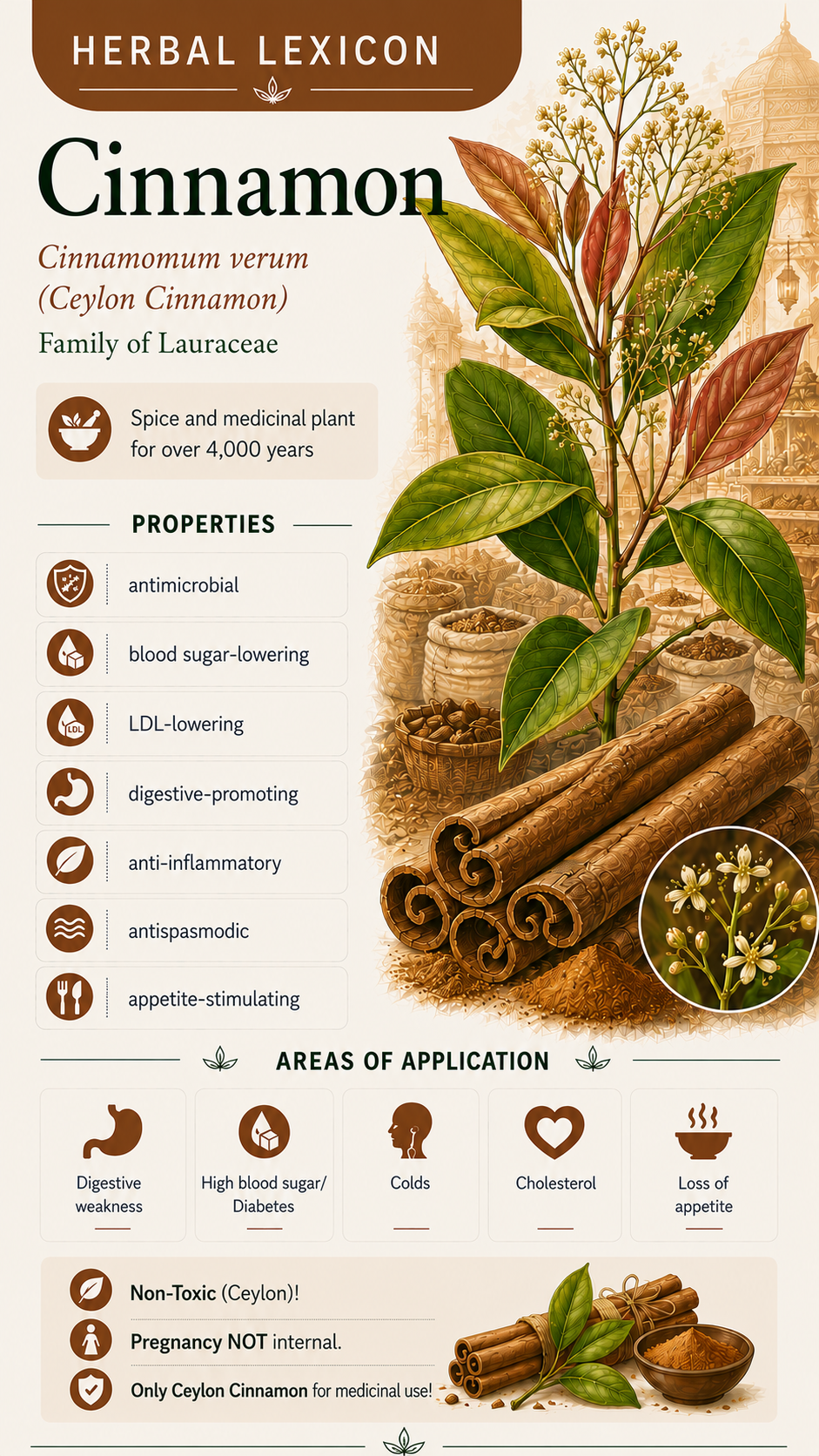

A spice that’s 4,000 years old – Vasco da Gama brought it to Europe in 1502. Ceylon vs. Cassia: Cassia contains much more coumarin! Do NOT take internally during pregnancy. Do NOT use if you have stomach ulcers. Use only Ceylon cinnamon!
Interesting facts about cinnamon
- The botanical name Cinnamomum is a Latinization of the ancient Hebrew word *kinamom*—cinnamon is mentioned in the Old Testament and was more valuable than gold in the ancient Near East.
- Ceylon cinnamon contains less than 0.02% coumarin; cassia cinnamon contains up to 2% coumarin—100 times more. Coumarin is toxic to the liver when taken over a long period of time.
- The blood-sugar-lowering effect of cinnamon was first clinically demonstrated in 2003: Khan et al. showed a significant reduction in HbA1c levels in people with type 2 diabetes.
Effects & Properties
Cinnamaldehyde (approximately 70% of the essential oil): antimicrobial by destabilizing the membranes of bacteria and fungi; anti-inflammatory by inhibiting COX-2; spasmolytic by blocking calcium channels. Polyphenols (Type A proanthocyanidins): improve insulin sensitivity by upregulating GLUT4 transporters and activating insulin receptor tyrosine kinase. Cumarins: in Ceylon < 0.02%; up to 2% in Cassia – antithrombotic at low doses, hepatotoxic at high doses. Eugenol: analgesic, antiseptic.
Features: antimicrobial, blood sugar-lowering, LDL cholesterol-lowering, aids digestion, anti-inflammatory, antispasmodic, appetite-stimulating.
Applications
Cinnamon for Indigestion
Functional digestive weakness results from insufficient stimulation of the digestive glands: gastric acid secretion, bile acid release, and pancreatic enzyme production are too low—leading to bloating caused by bacterial fermentation and a feeling of fullness. Cinnamaldehyde stimulates gastrointestinal secretion through direct gland activation: peristalsis accelerates, and gastric emptying normalizes. Eugenol has a spasmolytic effect on the smooth intestinal muscles—cramps subside, and bloating subsides.
Cinnamomum verum for Blood Sugar Control and Diabetes Prevention
Insulin resistance arises from chronic overexpression of inflammatory signaling pathways (NF-κB, JNK) in muscle and fat cells, which block the insulin receptor signaling pathway. GLUT4 transporters are no longer sufficiently recruited to the cell surface—glucose cannot be taken up despite the presence of insulin. The A-type proanthocyanidins in cinnamon reactivate the insulin receptor signaling pathway through tyrosine kinase activation and GLUT4 upregulation: The cells become more sensitive to insulin again, and blood sugar and HbA1c levels decrease.
Cinnamon for Infections and Colds
Cinnamaldehyde exerts an antimicrobial effect through a dual mechanism: it destabilizes the fatty acid structure of the bacterial cell membrane and inhibits the pathogen’s protein biosynthesis. Against viruses, it inhibits viral RNA-dependent RNA polymerase. In respiratory infections, COX-2 inhibition reduces mucosal swelling, while cinnamaldehyde exerts a direct antimicrobial effect. When administered as an inhalant, the active ingredients are delivered directly to the inflamed bronchial mucosa.
Cinnamomum verum for high cholesterol
The cholesterol-lowering effect occurs through several mechanisms: Improved insulin sensitivity reduces insulin-stimulated hepatic VLDL synthesis. Cinnamon polyphenols also inhibit HMG-CoA reductase (a key enzyme in cholesterol synthesis)—similar to statins, but to a lesser extent. Several studies show LDL reductions of 10–30% with regular cinnamon intake while HDL remains stable.
Instructions for Use
Use only Ceylon cinnamon for regular medicinal use! Tea, ready-to-use preparations, inhalation, and as a spice daily.
Pregnancy & Breastfeeding
DO NOT take internally during pregnancy—cinnamaldehyde may have uterine-stimulating effects. Safe to use as a cooking spice. Safe during breastfeeding.
Gastrointestinal ulcers
DO NOT use if you have an active stomach ulcer—cinnamaldehyde irritates the damaged mucous membrane.
Plant Profile
- Scientific name: Cinnamomum verum J.Presl
- Plant family: Lauraceae
- Other names: Ceylon cinnamon, true cinnamon
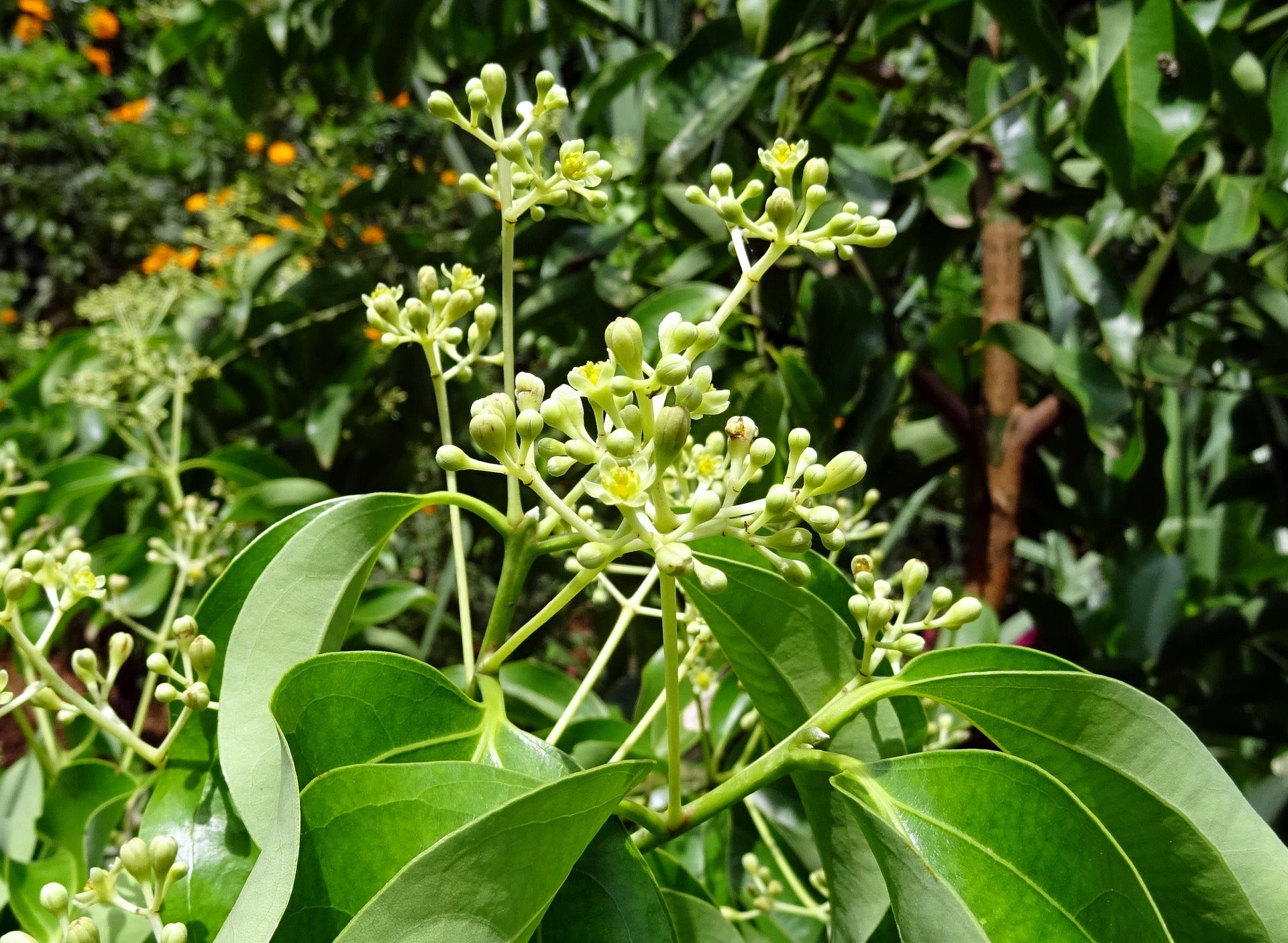
- Flowering period: Summer
- Origin: Ceylon (Sri Lanka)
- Toxicity: Non-toxic (Cassia: risk of coumarin poisoning in large quantities)