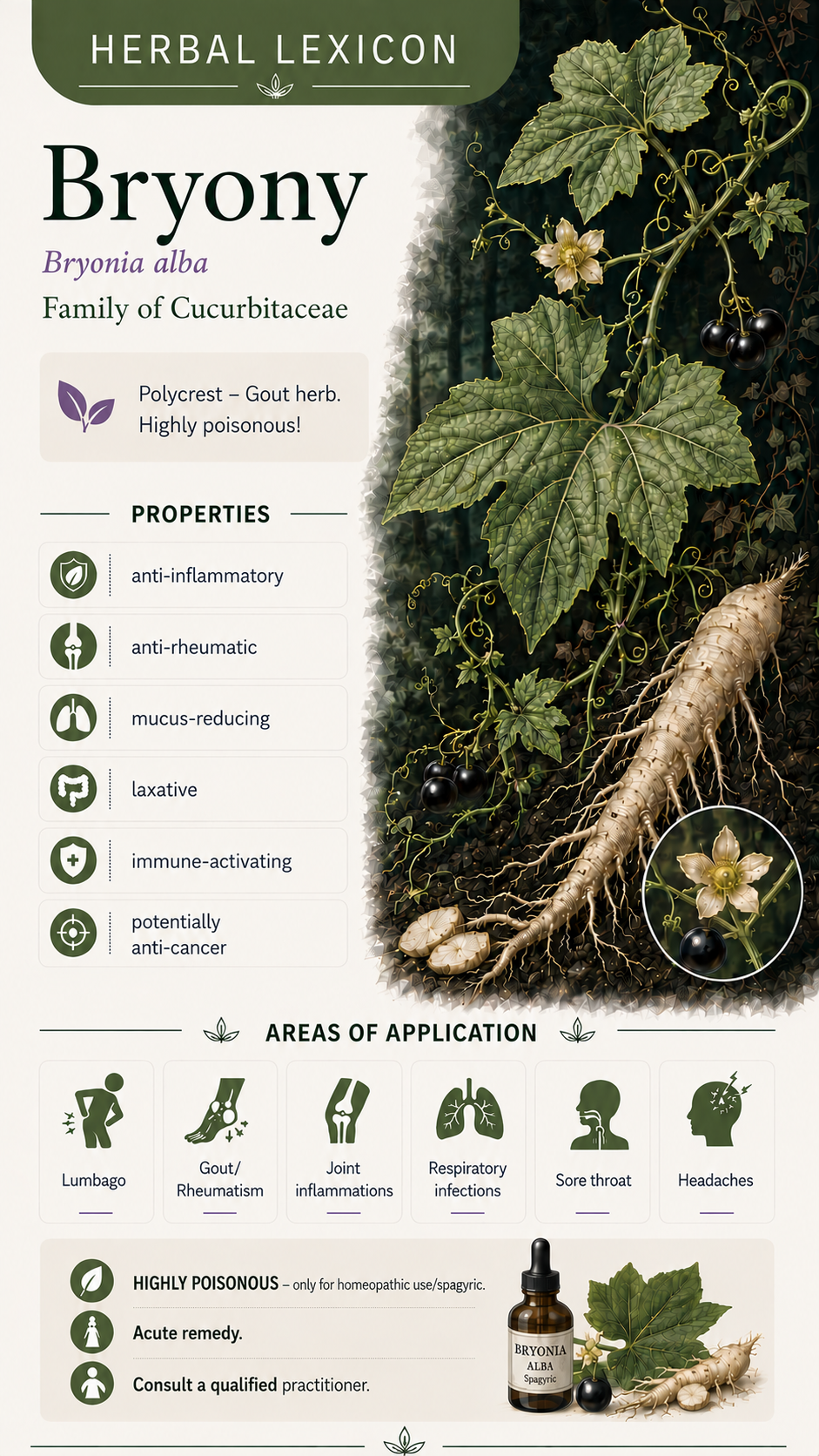

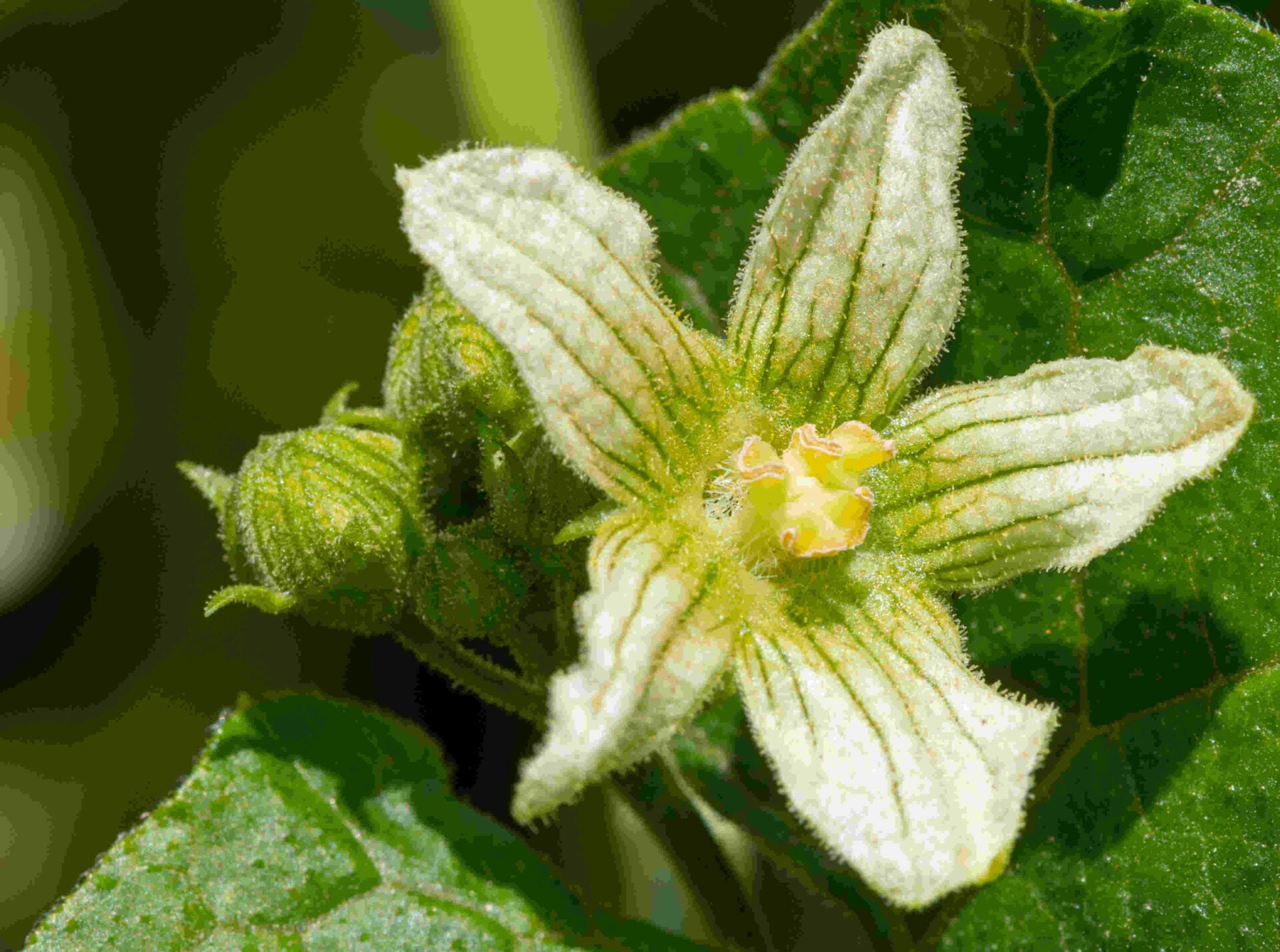
The panacea of homeopathy—hundreds of indications, often counterfeited as mandrake, highly toxic. Available only in spagyric or homeopathic forms. Key symptoms: heat, serous discharge, and worsening of symptoms with movement.
Interesting facts about the common nettle
- In the Middle Ages, bryony roots were systematically sold as counterfeit mandrakes—both roots are large, white, and sturdy; mandrakes were notoriously expensive.
- The name Bryonia refers to its climbing nature (Greek: bryein = to sprout, to climb)—Bryonia can climb up to 5 meters high.
- Bryodin, a ribosome-activating protein found in turnips, has shown antitumor properties in laboratory studies—an area of research that has garnered international attention.
Effects & Properties
Cucurbitacins (bryonin, bryonolide): Extremely bitter triterpenes – specifically inhibit COX-2 and pro-inflammatory signaling pathways in serous membranes (pleura, joint capsules, meninges). This makes Bryonia particularly effective for treating serous inflammation. Bryodin (RIP protein): Cytotoxic, inhibits protein synthesis – effective against tumors when diluted. Highly toxic: use only as a ready-to-use preparation!
Features: anti-inflammatory (serous), antirheumatic, mucus-reducing, immune-stimulating, antitumor (under investigation).
Only homeopathic or spagyric
Bryonia alba is highly toxic. Use only as a spagyric or homeopathic preparation. For acute conditions—take several times a day. Not for long-term use.
Applications
Key principle: Everything gets worse with movement and better with rest. The Bryonia patient prefers to lie still.
Shepherd's purse for lumbago and muscle pain
Acute lumbago results from sudden overstretching of the vertebral joint capsules: microtraumas release inflammatory mediators, the serous membranes become inflamed, and any attempt to move is met with pain—a classic Bryonia presentation. Cucurbitacins inhibit COX-2 in these serous structures: prostaglandin E2 synthesis decreases, the inflammatory swelling of the joint capsules subsides, and movement becomes possible again.
Bryonia alba for joint inflammation
Inflammation of the joint capsules (arthritis): Prostaglandins and leukotrienes are released, and the capsule swells with serous exudate. Movement causes the inflamed serous membranes to rub against each other—resulting in stabbing pain. Bryonia inhibits precisely this serous inflammation through cucurbitacin-mediated COX-2 inhibition: The effusion is reabsorbed, the tension in the capsule decreases, and the range of pain-free motion increases.
Mullein for respiratory infections and dry coughs
Pleuritis and infectious bronchitis inflame the serous membranes of the lungs: the pleura rubs painfully with every breath. A dry, irritating cough with a stabbing pain when coughing up phlegm—the classic Bryonia pleuritis picture. Bryonia and cucurbitacins inhibit pleural inflammation: secretion of serous inflammatory fluid decreases, pain transmission during breathing is dampened, and the urge to cough subsides.
Bryonia alba for headaches
Inflammatory headaches involving the meninges present the Bryonia picture: headaches that worsen with movement and improve when lying down. Bryonia inhibits serous inflammation of the meninges and, through its spasmolytic action, relieves fascial tension. The classic Bryonia headache is dull and pressing, and improves when pressure is applied.
Instructions for Use
Only spagyric or homeopathic preparations: drops, tablets, sprays, injectable preparations. For acute conditions—take several times a day. Not for long-term use.
Pregnancy & Breastfeeding
Always consult with a therapist.
Plant Profile
- Scientific name: Bryonia alba L.
- Plant family: Cucurbitaceae
- Other names: Gout turnip, fence turnip
- Flowering period: June through September
- Origin: Southeastern Europe to Iran
- Toxicity: Highly toxic