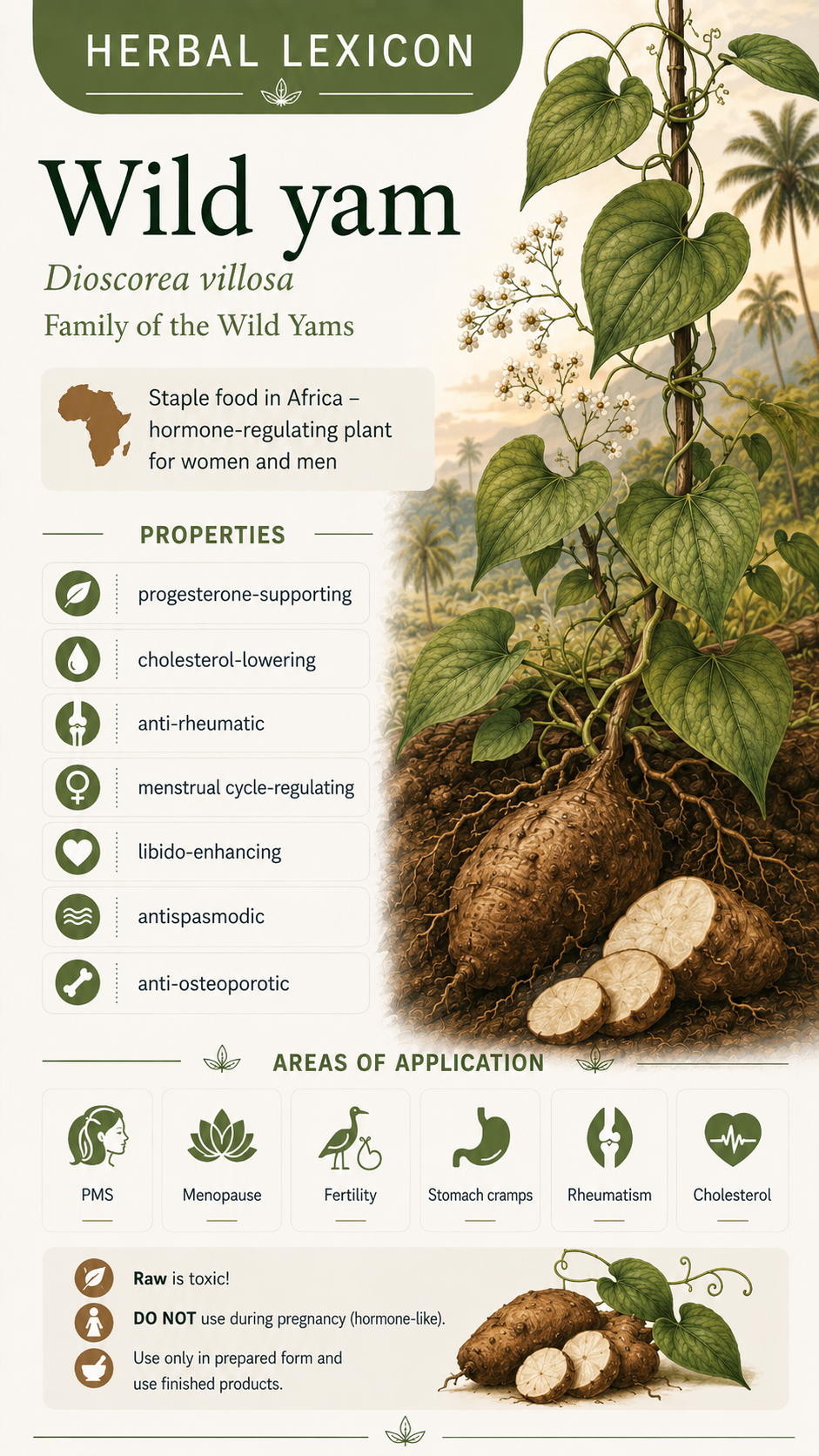

Africa's staple food, with tubers weighing up to 20 kg – diosgenin acts like progesterone without the risk of thrombosis. Toxic when raw (dioscorin)! Only safe when processed or cooked. NOT during pregnancy.
Interesting facts about yams
- The yam can weigh up to 20 kg and grow up to 70 cm long; Nigeria produces 67% of the world's yam crop.
- Diosgenin derived from yams was the industrial precursor for the first synthetic birth control pill—in 1951, Carl Djerassi synthesized norethindrone from yam diosgenin.
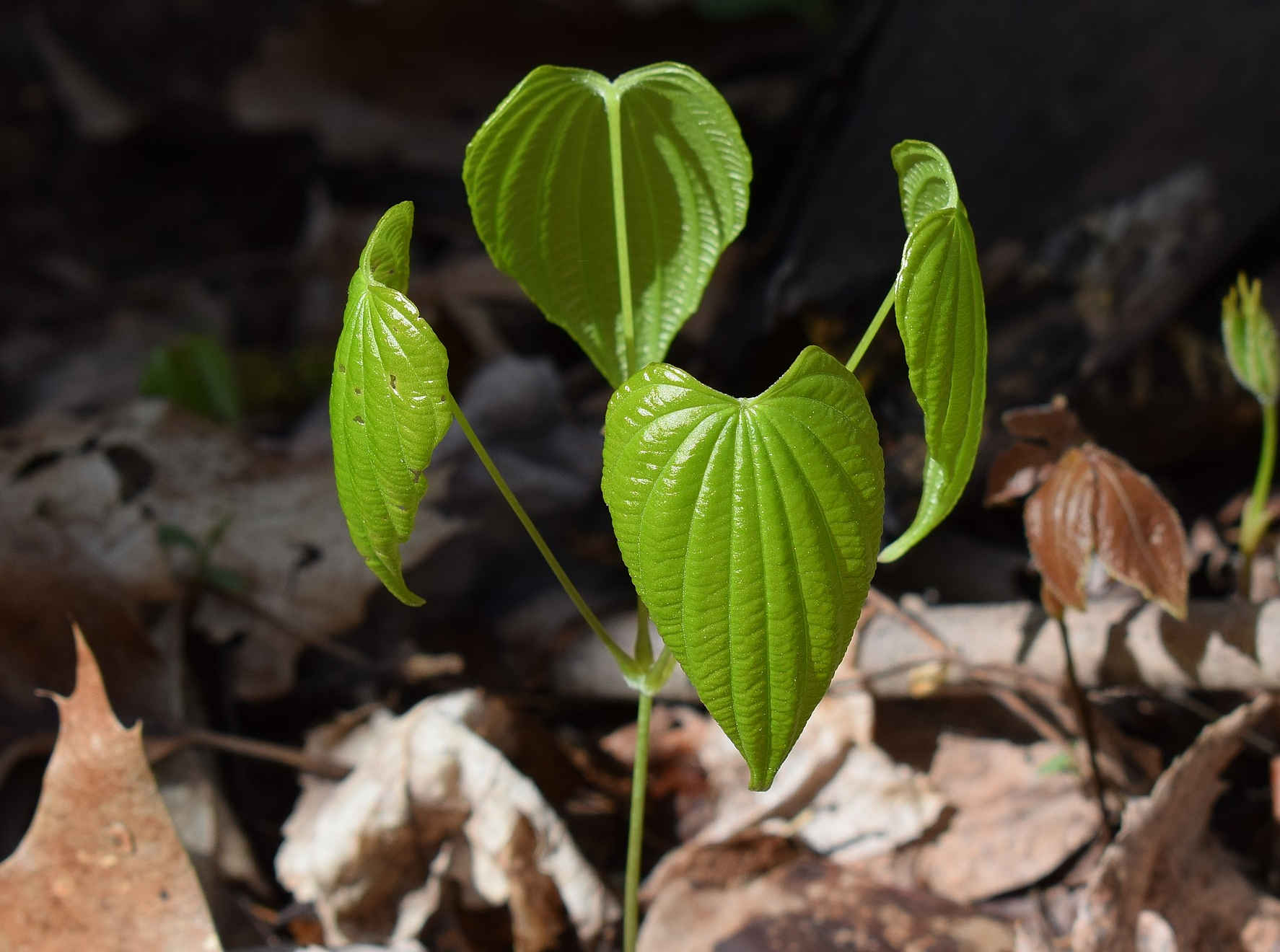
- As a climbing plant, the yam grows several meters tall and produces beak-shaped leaves up to 47 cm long—it is not a shrub, but a vine.
Effects & Properties
Diosgenin (steroidal saponin): Structurally similar to progesterone – binds to progesterone receptors (PR) and exerts a progesterone-like effect without stimulating the synthesis of hepatic coagulation factors. No increased risk of thrombosis! Additionally stimulates the body’s own production of progesterone in the corpus luteum. Dioscin: lowers cholesterol by inhibiting intestinal cholesterol reabsorption and activating LDL receptors. Dioscorin: Alkaloid – toxic in the raw plant, destroyed by cooking or processing. NEVER EAT RAW!
Features: progesterone-like, anti-rheumatic, cholesterol-lowering, menstrual cycle-regulating, libido-enhancing, anti-osteoporotic, antispasmodic, anti-edematous.
Applications
Yams for PMS
PMS is primarily caused by relative progesterone insufficiency during the luteal phase: after ovulation, progesterone levels should rise. In cases of relative insufficiency, estrogen predominates—leading to water retention (due to estrogen’s effect on aldosterone), breast tenderness, mood swings, and abdominal cramps. Diosgenin compensates for this progesterone deficiency by binding to PR receptors: symptoms of excess estrogen are alleviated, the hormonal cycle stabilizes, and menstrual cramps decrease.
Dioscorea villosa for menopausal symptoms
During perimenopause, estrogen and progesterone levels decline—with progesterone often dropping earlier and more sharply. Hot flashes result from hypothalamic dysregulation (lack of steroid hormone feedback), while sleep disturbances result from reduced GABAergic influence of progesterone. Diosgenin stabilizes hormonal balance through PR activation: hypothalamic thermoregulation is restored, GABAergic sleep effects are reestablished, and mood stabilizes.
Yams for infertility
Female fertility depends on a properly functioning progesterone axis: The corpus luteum must produce sufficient progesterone to support implantation. In cases of luteal phase insufficiency, the endometrium is not optimally prepared. Diosgenin stimulates the corpus luteum to increase progesterone production and improves the receptivity of the endometrium. In men: Diosgenin promotes blood flow to the testicles and improves sperm quality.
Dioscorea villosa for rheumatism and high cholesterol
Diosgenin inhibits NF-κB signaling pathways in macrophages and synoviocytes and reduces pro-inflammatory cytokines (IL-1β, TNF-α) in inflamed joint tissue. The cholesterol-lowering effect is mediated by dioscin: it inhibits micelle formation in the intestine, reduces intestinal cholesterol absorption, and activates hepatic LDL receptors. Both effects reduce cardiovascular risk and the burden of rheumatic inflammation.
Instructions for Use
As drops or tablets, taken as a short course of treatment. As food: always cook it—never eat it raw!
Toxic when raw!
Raw yams contain the alkaloid dioscorin—which is toxic! It is destroyed by cooking or processing.
Pregnancy & Breastfeeding
DO NOT take – has hormonal effects (progesterone levels cannot be controlled).
Plant Profile
- Scientific name: Dioscorea villosa
- Plant family: Yam family (Dioscoreaceae)
- Other names: Breadroot, wild yam
- Flowering period: June through August
- Origin: North and Central America
- Toxicity: Toxic when raw (dioscorin); non-toxic when cooked or processed