

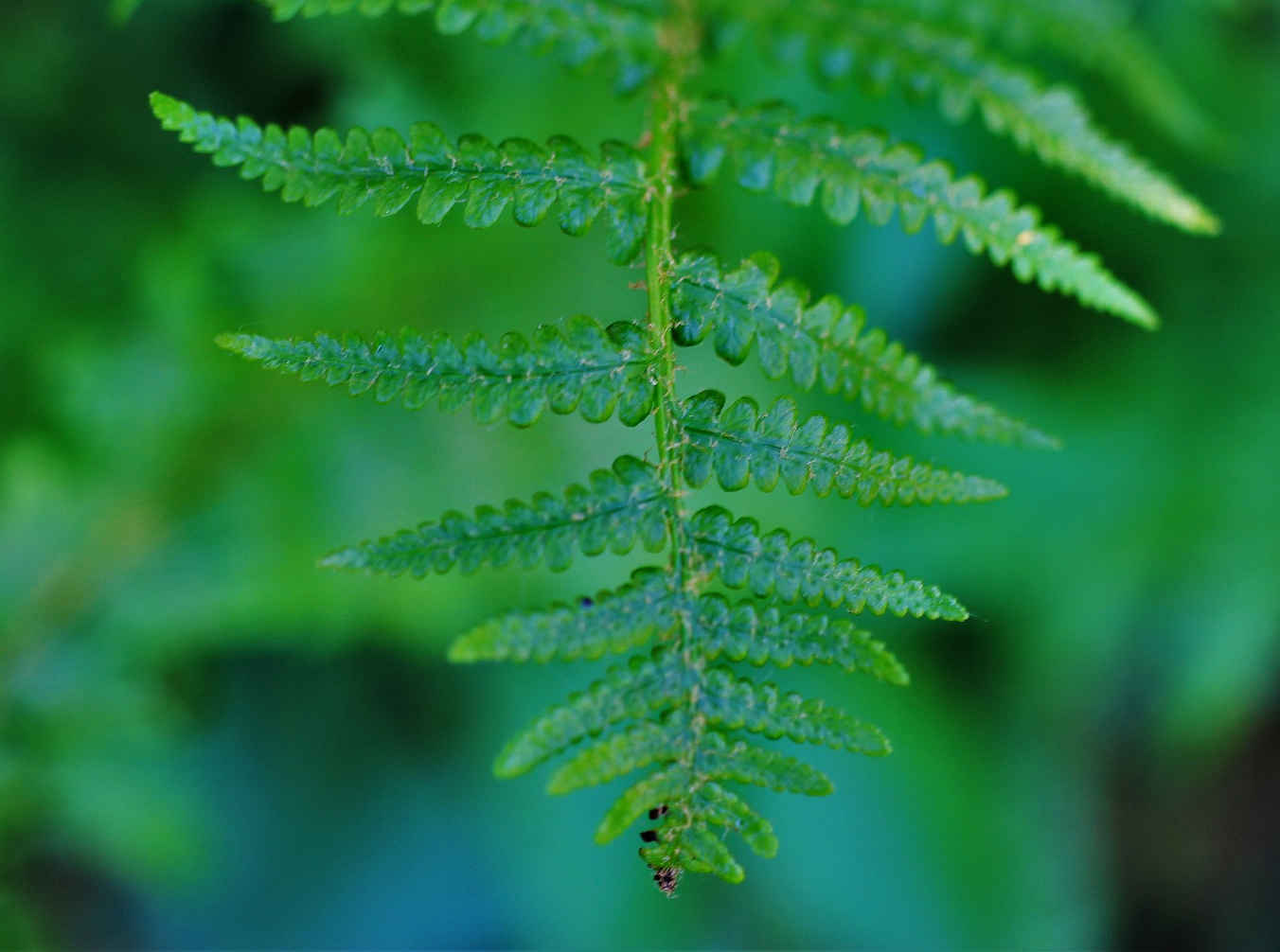
360 million years old—the dinosaur of the plant world. The tapeworm remedy of the ages. Toxic: Filicin overdose is dangerous! For internal use ONLY in ready-to-use preparations. NOT during pregnancy.
Interesting facts about maidenhair ferns
- 360 million years ago, there were towering fern forests—their photosynthesis literally created our present-day atmosphere by absorbing CO2 and releasing oxygen.
- For centuries, wormwood was the only reliable treatment for tapeworms—before the development of synthetic anthelmintics, there was no effective alternative.
- The name "male fern" does not derive from biology, but from the old belief that the sturdier variety was "masculine" in contrast to the delicate Athyrium filix-femina.
Effects & Properties
Filicin (butanophloroglucin + phloroglucin derivatives): Neurotoxic to tapeworms due to its ability to block neuromuscular transmission—the paralyzed parasite loses its ability to attach and is expelled. Also hepatotoxic to humans in case of overdose—use only ready-to-use formulations! Phloroglucide: Has a spasmolytic effect on smooth and skeletal muscle by blocking calcium-dependent contraction. Aspidin: inhibits excessive scarring. tannins: astringent, antimicrobial.
Features: anthelmintic, antispasmodic, analgesic, wound-healing, antibacterial, antirheumatic, cleansing.
Applications
Dryopteris filix-mas for parasites and tapeworms
Tapeworms (Taenia saginata, Taenia solium) attach themselves to the lining of the small intestine using their sucker-like head (scolex). Filicin blocks acetylcholinesterase in the worm’s ganglia, leading to paralysis of the attachment muscles—the paralyzed worm loses its grip and is expelled by peristalsis. Its effectiveness against tapeworms is well documented historically; today it is supplemented by more modern anthelmintics (praziquantel).
Maidenhair fern for rheumatism
Chronic parasitic infestation can cause the immune system to remain in a state of constant activation: Parasitic antigens stimulate cross-reactive autoantibodies that can attack the body’s own tissues—a mechanism that triggers or exacerbates rheumatic inflammation. When worm fern eliminates the parasitic load, the antigenic stimulus decreases and the immune system calms down. In addition, the phloroglucides have a direct anti-inflammatory effect on inflamed joint tissue.
Dryopteris filix-mas for cramps
Phloroglucides relax smooth and striated muscles by blocking calcium-dependent muscle contraction. This explains their broad antispasmodic effect: in the case of calf cramps, the skeletal muscles relax; in cases of biliary colic and intestinal cramps, the smooth muscles of the hollow organs relax; and in cases of menstrual cramps, the myometrium relaxes. A true universal antispasmodic.
Maund-on-the-mountain for skin infections
When used topically, maidenhair fern combines several mechanisms of action: Tannins have an astringent effect—they denature the surface proteins of bacterial cells and help seal the edges of wounds. Aspidin inhibits the overactivation of fibroblasts, which leads to excessive scar tissue growth (keloids). The essential oil has antifungal properties. Together, these effects result in clean, well-healing wounds without excessive scarring.
Instructions for Use
External use: Fern herb wound dressing. Internal use: ONLY as a ready-to-use preparation! Do not self-medicate with the fresh plant.
Pregnancy & Breastfeeding
DO NOT use.
Plant Profile
- Scientific name: Male fern
- Plant family: Worm ferns (Dryopteridaceae)
- Other names: Male fern
- Flowering period: none (ferns don't bloom)
- Origin: Central Europe
- Toxicity: Toxic (filicin in case of overdose)
