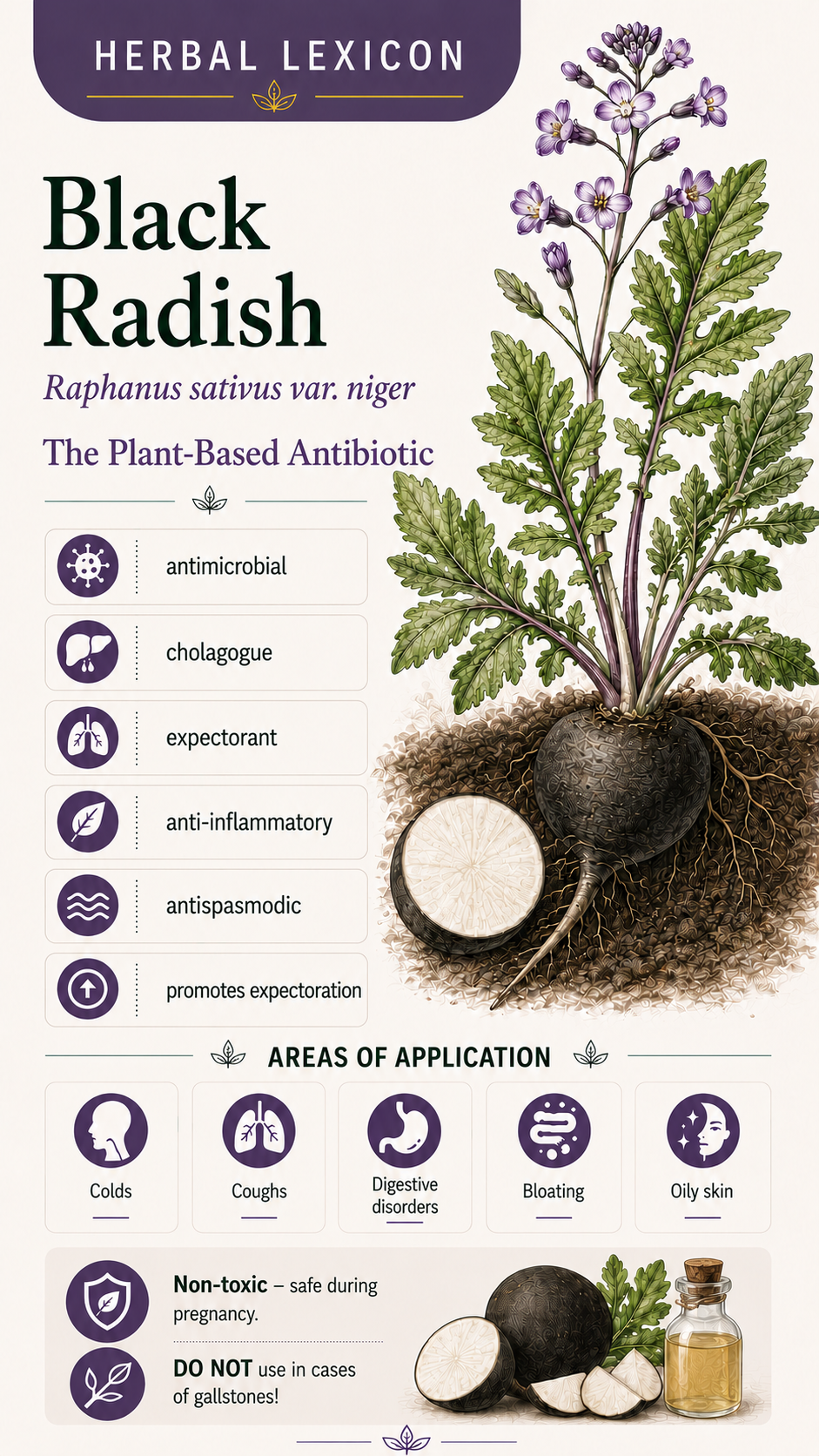


The kitchen's natural antibiotic—known since ancient Egypt. Mustard oils: antibacterial, antiviral, antifungal, and cholagogue.
Interesting facts about black radish
- Egyptian pyramid builders ate it to stay healthy.
- Probably bred from the wild sea buckthorn.
- Once ripe, it must be harvested quickly—otherwise it will bolt.
Effects & Properties
Mustard oils and mustard oil glycosides: released during cutting and chewing – antibacterial, antiviral, and antifungal against a wide range of pathogens. Cholagogue: strongly stimulates bile flow. Mucosal regenerating: in the respiratory tract and intestines.
Features: antimicrobial, cholagogue, expectorant, anti-inflammatory, antispasmodic, expectorant.
Applications
Black radish for colds
The classic radish syrup—made by placing beeswax or honey inside a hollowed-out radish—is one of the oldest home remedies in German folk medicine. The mustard oils fight viruses and bacteria directly in the respiratory tract, soothe irritated mucous membranes, and help loosen and expel mucus. Take one teaspoon of the syrup several times a day.
Radishes for Coughs
When coughing is caused by respiratory infections, mustard oils have a direct antimicrobial effect on the pathogens in the bronchi. At the same time, they soothe irritated mucous membranes and promote expectoration through their mucolytic action. The urge to cough subsides, mucus is coughed up, and the airways become clearer.
Black radish for digestive problems
The cholagogue effect of black radish stimulates the flow of bile into the small intestine—more bile means better fat digestion, more active intestinal enzymes, and an optimized intestinal environment. At the same time, the mustard oils combat dysbiotic intestinal bacteria. Digestive discomfort, sluggishness, and bloating are alleviated.
Radishes for bloating
Flatulence is caused by gas-producing intestinal bacteria when digestion is incomplete. The mustard oils in radishes combat these bacteria and help regenerate the intestinal lining. With fewer harmful bacteria in the intestines, fewer putrefactive gases are produced—and flatulence is reduced.
Black radish for oily skin
Oily skin and blemishes often occur when the body eliminates waste products through the skin. Thanks to its cholagogue effect, black radish stimulates liver metabolism and improves elimination via the bile and intestines. This relieves the skin, and skin metabolism normalizes from within.
Instructions for Use
As a syrup (hollowed-out radish with honey or sugar), fresh juice (up to 100 ml per day), grated in a salad, or as a complex supplement.
Pregnancy & Breastfeeding
Rest assured—these nutrients are healthy for your child, too.
Gallstones
Do not take – Its cholagogue effect can cause bile duct obstruction!
Plant Profile
- Scientific name: Raphanus sativus var. niger
- Plant family: Brassicaceae
- Other names: Winter radish
- Harvest season: Starting in October, before the first frost
- Toxicity: Non-toxic