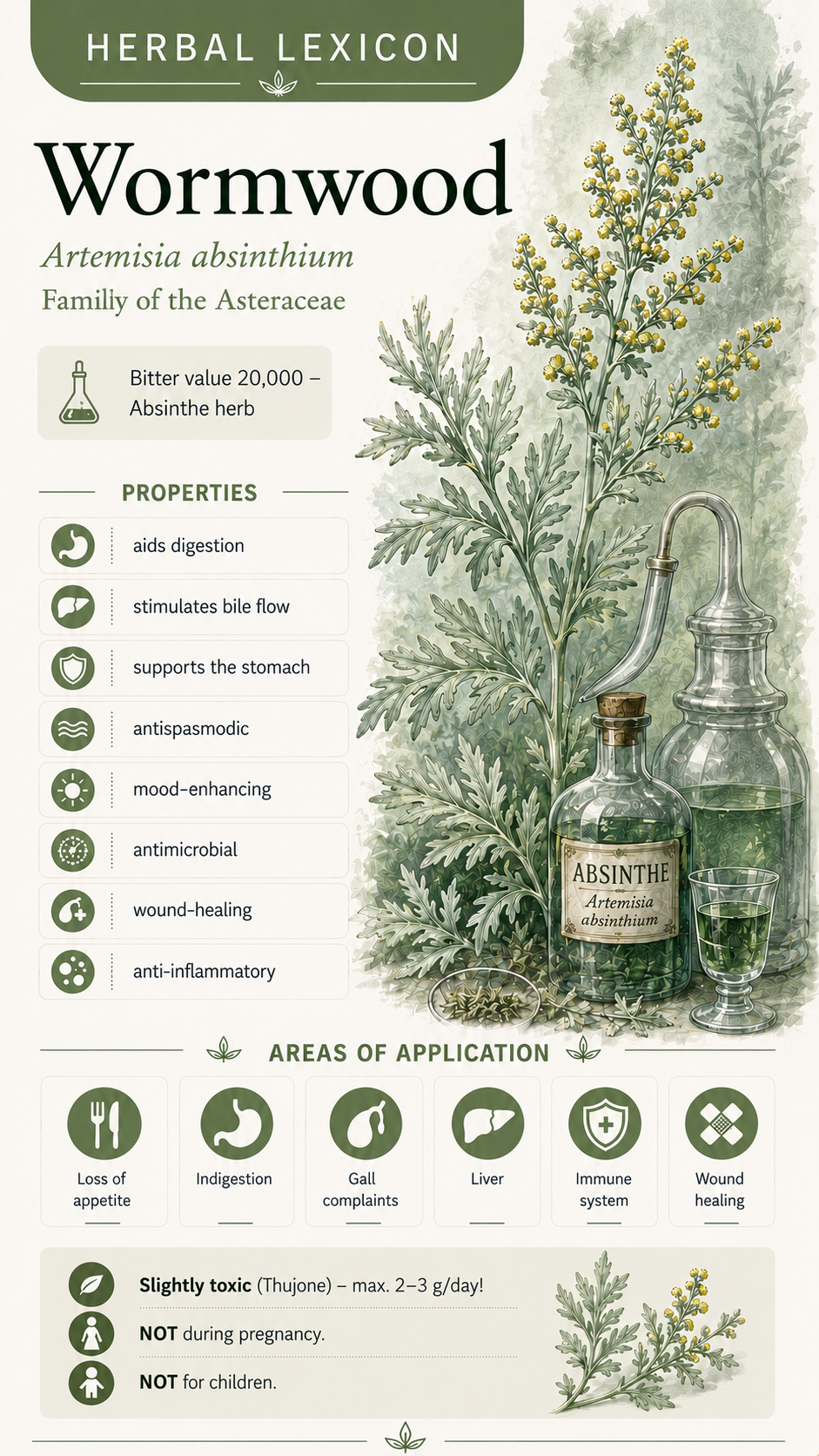

Bitterness value 20,000 – second only to gentian in terms of bitterness among medicinal plants. Hildegard’s “master remedy for all forms of exhaustion.” Mildly toxic (thujone). Maximum 2–3 g daily!
Interesting facts about wormwood
- A bitterness value of 20,000 means that 1 part of wormwood extract is still perceptibly bitter even when diluted 20,000 times. By comparison, coffee has a bitterness value of approximately 1,000.
- The spirit absinthe takes its name from wormwood (Artemisia absinthium), its main ingredient—thujone, found in historical absinthe, was responsible for the “green haze” of the Parisian bohemian scene.
- The Ebers Papyrus (ca. 1550 BCE) documents wormwood as a remedy—one of the earliest written references to a medicinal plant in human history.
Effects & Properties
Absinthin, artabsin (bitter compounds): The strongest natural bitter compound of all. The bitter compounds bind to bitter receptors on the tongue and immediately trigger a reflex: the vagus nerve sends a signal to the digestive system, stimulating all the glands to secrete at the same time—saliva, stomach acid, bile, and pancreatic juice. All at once.
Thujone (essential oil): Antimicrobial and, in small amounts, mildly stimulating to the central nervous system. In case of overdose, thujone blocks an important inhibitory neurotransmitter in the brain (GABA) and has a neurotoxic effect—seizures are possible. Therefore: no more than 2–3 g per day!
Features: Aids digestion, stimulates bile production, strengthens the stomach, relieves cramps, improves mood, and has antimicrobial properties.
Applications
Wormwood for loss of appetite
A lack of appetite often occurs when the digestive glands produce too little digestive juices—the stomach signals to the brain: “I’m not ready yet.” Absinthin and artabsin reflexively activate the entire digestive process via the bitter receptors on the tongue: salivation, stomach acid, bile secretion, and pancreatic enzymes all increase simultaneously. The stomach signals readiness—and appetite sets in.
Artemisia absinthium for digestive problems
Bloating, gas, and heartburn occur when digestion is impaired: stomach emptying is slowed, carbohydrates ferment in the large intestine instead of being digested, and there is insufficient bile to emulsify fats. Wormwood resolves all these issues simultaneously through its bitter compounds: gastric emptying accelerates, bile flow increases, and pancreatic enzymes are activated. Bloating and a feeling of fullness subside quickly.
Wormwood to stimulate bile flow
If the gallbladder releases too little bile into the intestines, fat digestion slows down—fats are not emulsified, remain undigested in the intestines, and cause discomfort. The bitter compounds in wormwood stimulate the gallbladder to contract: more bile flows into the duodenum, and fat digestion returns to normal. Warning: This can trigger colic in people with gallstones—consult a therapist if you have known gallstones.
Artemisia absinthium for liver support
Every day, the liver detoxifies hundreds of foreign substances, medications, and the body’s own metabolic waste products. In cases of chronic stress or functional weakness, this detoxification capacity declines—leading to fatigue, digestive problems, and general malaise. Wormwood stimulates bile acid synthesis via the bitter substance reflex chain (the first step in liver detoxification) and thus indirectly strengthens overall liver function.
Instructions for Use
As tea, drops, or spray. Daily dose: MAXIMUM 2–3 g—do not exceed this amount! Take the drops on the tongue (the bitter taste is detected by taste receptors on the tongue—tablets lose this effect).
Pregnancy & Breastfeeding
DO NOT use – Thujone may interfere with a child’s development.
Children
NOT recommended – Thujone is contraindicated for children.
Gallstones & Allergies
Use with caution in cases of gallstones—the bile-stimulating effect may trigger colic. Allergy to Asteraceae: Cross-reaction is possible.
Plant Profile
- Scientific name: Artemisia absinthium L.
- Plant family: Asteraceae
- Other names: Wormwood, Absinthe
- Flowering period: July through September
- Origin: Europe, Asia, North Africa, North America
- Toxicity: Mildly toxic (thujone)