

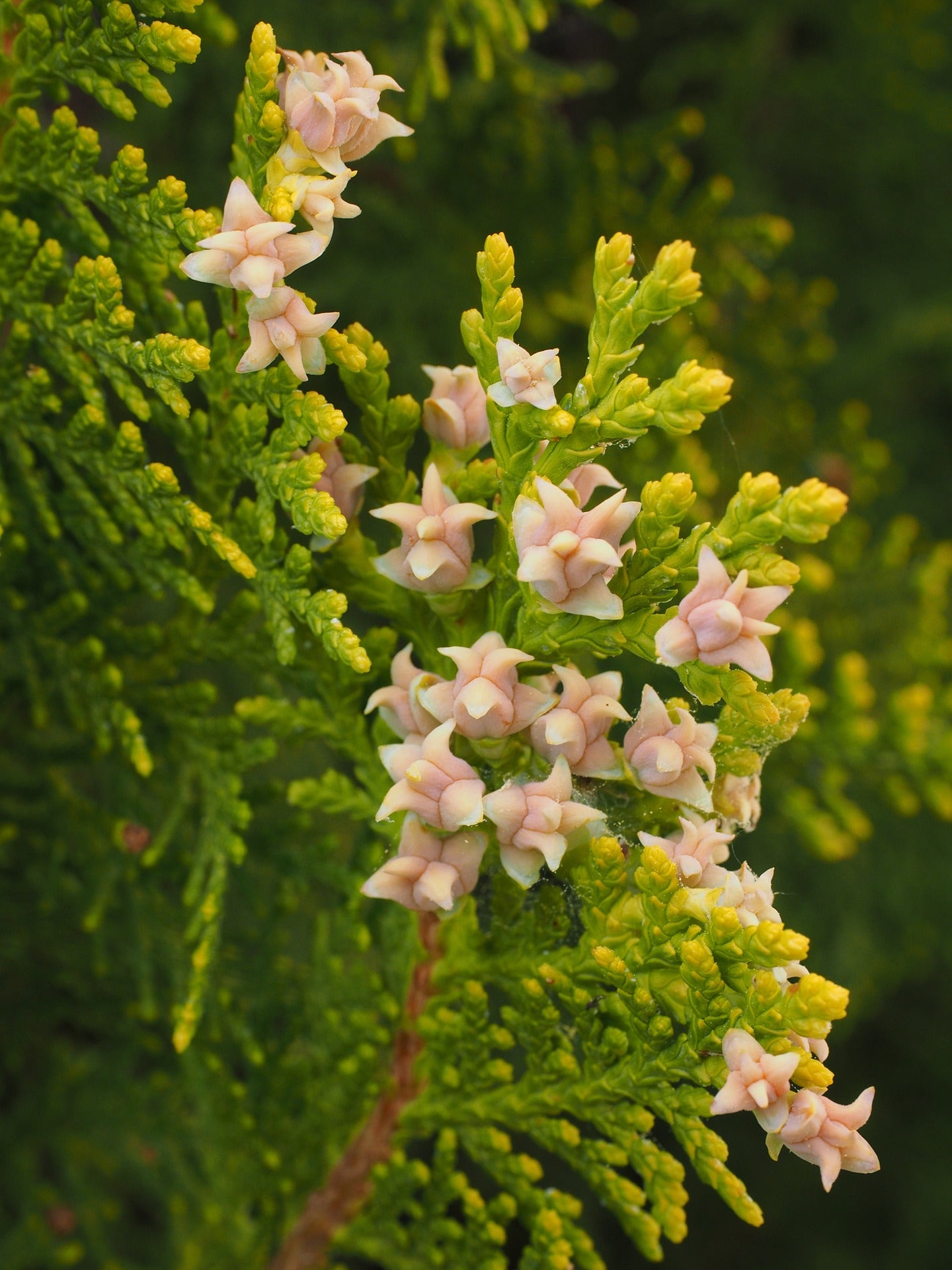
The arborvitae from North America—present in Europe for 500 years and the namesake of thujone, the active ingredient in absinthe. Highly toxic: use only in homeopathy or spagyric medicine!
Interesting facts about thuja
- Thujone (the active ingredient in absinthe) takes its name from Thuja.
- External stimulation therapy for rheumatism has been used since the Middle Ages.
- Thuja wood was used in ancient times in sacrificial rituals related to the cycle of life.
Effects & Properties
Thujone: antiviral, immunostimulatory (activates white blood cells). Polysaccharides: purify the lymphatic system and boost immune function. External use: antiseptic, antimicrobial, and regenerative. Internal use: only homeopathic remedies or spagyric remedies!
Features: antiviral, lymphatic cleansing, immune-boosting, antimicrobial, disinfectant, pain-relieving.
Applications
Thuja for warts
Warts are caused by HPV viruses, which stimulate uncontrolled growth of skin cells. Thuja works in two ways: its essential oil (thujone) directly kills the virus. At the same time, thuja cleanses the lymphatic system and strengthens the immune system, enabling the body to better fight off the viruses on its own. Apply externally as a mother tincture by dabbing it directly onto the wart—protect the surrounding skin, as the tincture is irritating to the skin.
Thuja for skin conditions
Chronic skin conditions associated with lymphatic congestion benefit from thuja’s lymph-cleansing properties. It relieves lymphatic congestion, eliminates microbial contamination, and supports the skin’s role as an excretory organ. Rashes and chronic skin lesions subside.
Thuja for Mucosal Disorders
Mucosal disorders with an infectious component—such as chronic sinusitis, recurrent throat infections, and mucosal polyps—respond well to thuja. The antiviral effect of thujone and the lymphatic cleansing action work together: the mucous membranes decongest, infections are fought off, and the immune system regenerates.
Thuja for Urinary Tract Infections
Chronic urinary tract infections that keep recurring are often caused by lymphatic congestion. Thuja has a direct antimicrobial effect on the pathogens and simultaneously cleanses the lymphatic system. Chronic infections can be permanently resolved once the lymphatic system has been cleansed.
Instructions for Use
External use: mother tincture (for warts and the skin). Internal use: homeopathic remedies or spagyric preparations only. As a course of treatment.
Pregnancy & Breastfeeding
ABSOLUTELY contraindicated – neither internally nor externally! Thujone stimulates the uterus and can cause miscarriages.
Thujone hypersensitivity
If you are allergic to sage or wormwood (which also contain thujone), avoid thuja.
Plant Profile
- Scientific name: Western red cedar
- Plant family: Cypress family (Cupressaceae)
- Other names: Tree of Life
- Flowering period: March through May
- Origin: North America
- Toxicity: Highly toxic
