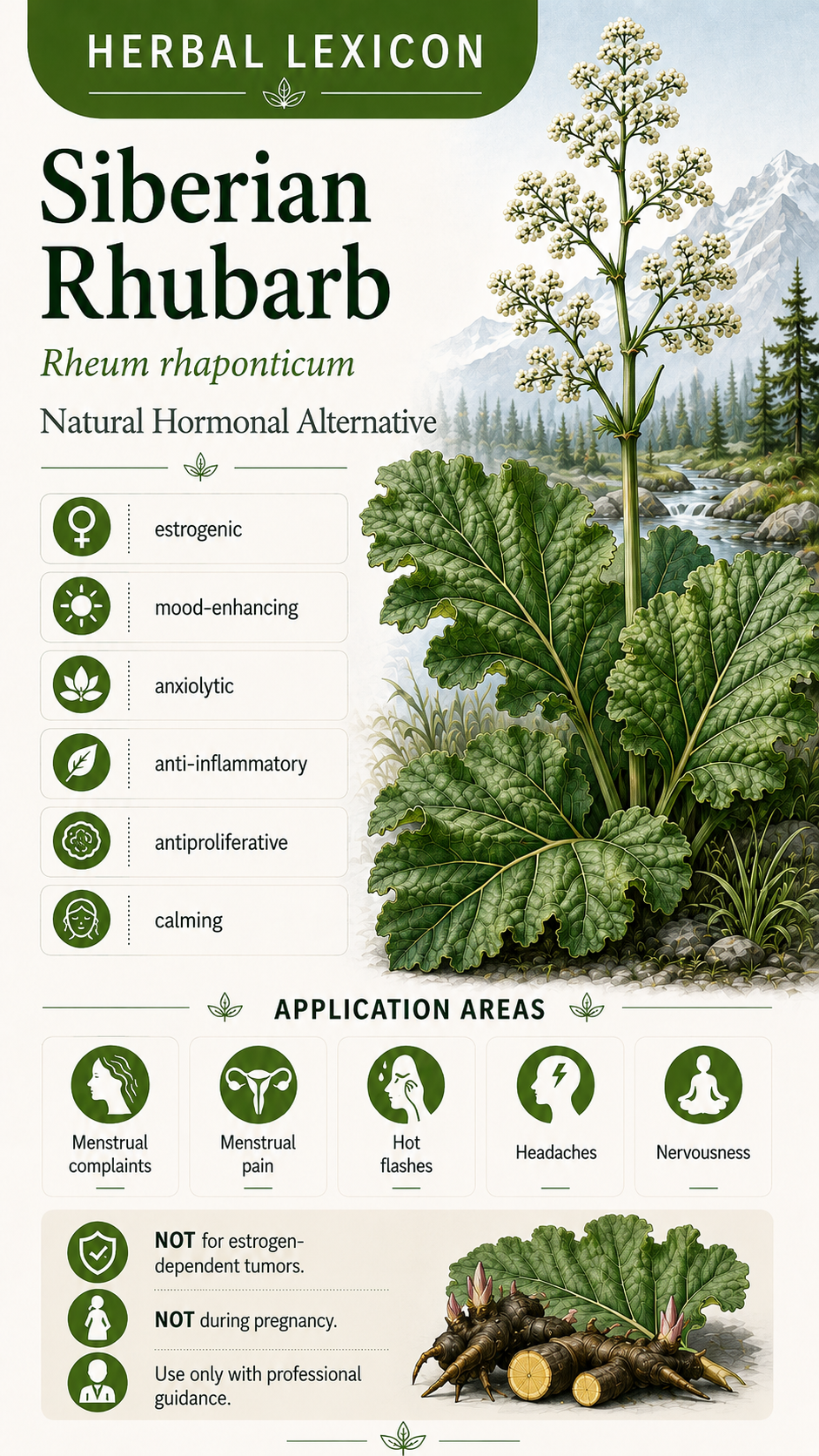

The natural hormonal alternative – Rhaponticin activates beta estrogen receptors without stimulating alpha receptors, which promote cell growth. Self-medication is not recommended.
Interesting facts about Siberian rhubarb
- Theoretically, this is also possible after breast cancer (beta-receptor selectivity), but caution is advised—always consult with an oncologist.
- It is considered a wild form of edible rhubarb.
- Recommended by midwives for cleansing the uterus after childbirth.
Effects & Properties
Rhaponticin (Hydroxystilbenes): Beta-estrogen receptor-activating – Compensates for estrogen deficiency. Alpha receptors are hardly activated (no growth-promoting effect on breast and uterine tissue). No anthraquinones → no laxative effect (unlike other rhubarb species).
Features: estrogenic, mood-enhancing, anxiolytic, anti-inflammatory, antiproliferative.
Applications
Siberian rhubarb for menopausal symptoms
During menopause, estrogen levels drop, leading to hot flashes, mood swings, sleep disturbances, and low mood. Rhaponticin compensates for the estrogen deficiency by acting on beta-estrogen receptors, which are primarily found in the bones, brain, and cardiovascular system. Hot flashes become less frequent and less intense, and mood and sleep improve.
Rheum rhaponticum for menstrual cramps
Menstrual cramps are caused by an imbalance between estrogen and progesterone—too little estrogen during certain phases of the menstrual cycle causes the uterine muscles to cramp more severely. Rhaponticin restores the estrogen-progesterone balance and reduces the hormonal imbalance that triggers cramps.
Siberian rhubarb for headaches
Hormone-related migraines are caused by a drop in estrogen levels just before or during menstruation. Rhaponticin stabilizes estrogen levels, reduces the magnitude of the estrogen drop, and thereby decreases the frequency and intensity of hormone-related migraine attacks.
Rheum rhaponticum for nervousness
Nervousness, mood swings, and difficulty concentrating during perimenopause and menopause are often caused by hormonal imbalances. Rhaponticin helps restore hormonal balance, restores calm and focus, and alleviates the emotional instability associated with this transitional phase.
Instructions for Use
Single-ingredient product or mixture. 3 times a day. Self-medication is not recommended – expert guidance from a physician or alternative practitioner.
Pregnancy & Breastfeeding
Contraindicated – has hormonal effects.
Estrogen-dependent tumors
Do not take—even if the drug is theoretically selective for beta receptors, as a precaution.
Plant Profile
- Scientific name: Rheum rhaponticum
- Plant family: Knotweed family (Polygonaceae)
- Other names: Rhapontic rhubarb, Siberian rhubarb
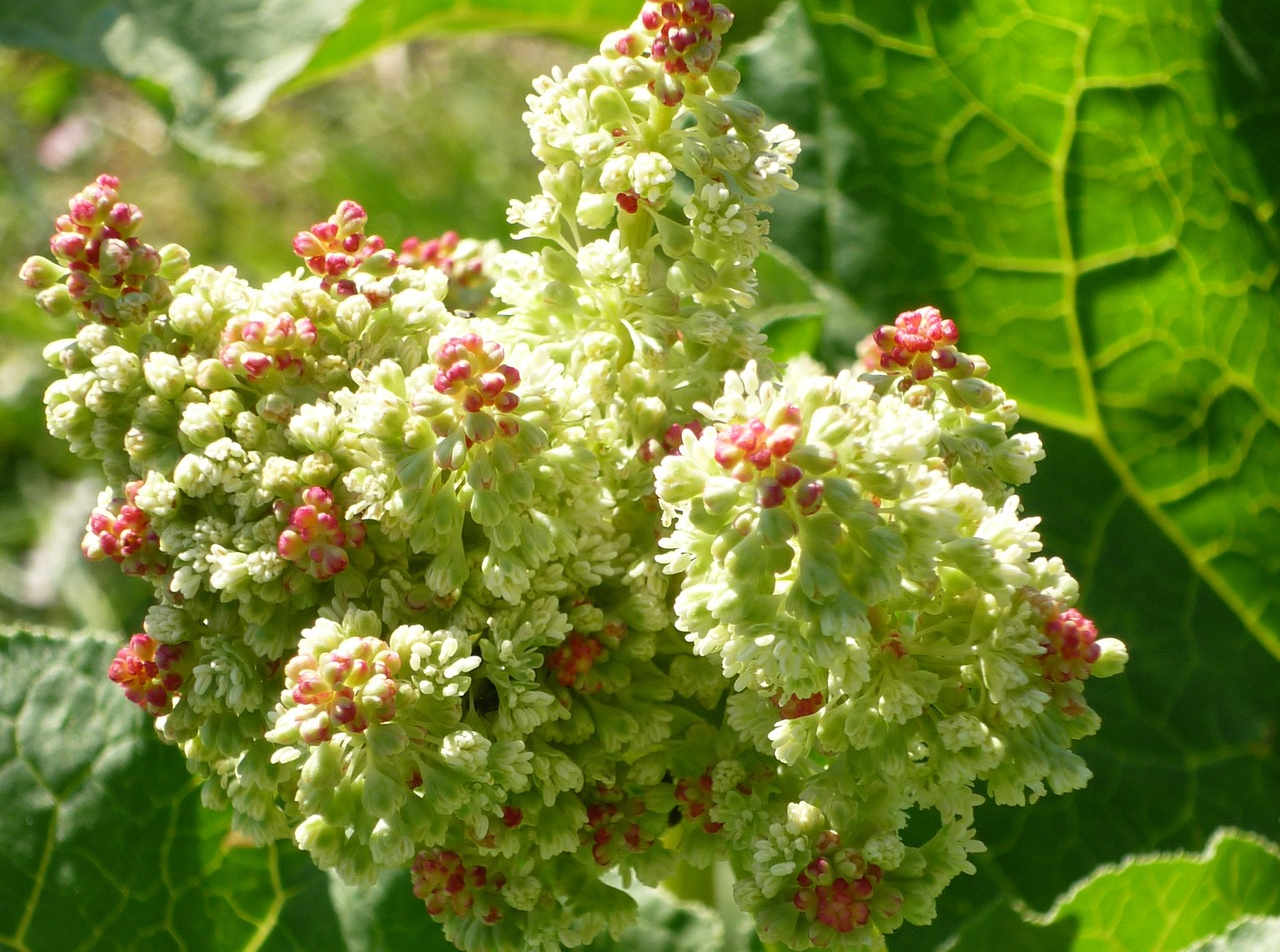
- Flowering period: May through June
- Origin: Siberia, Norway
- Toxicity: Low toxicity