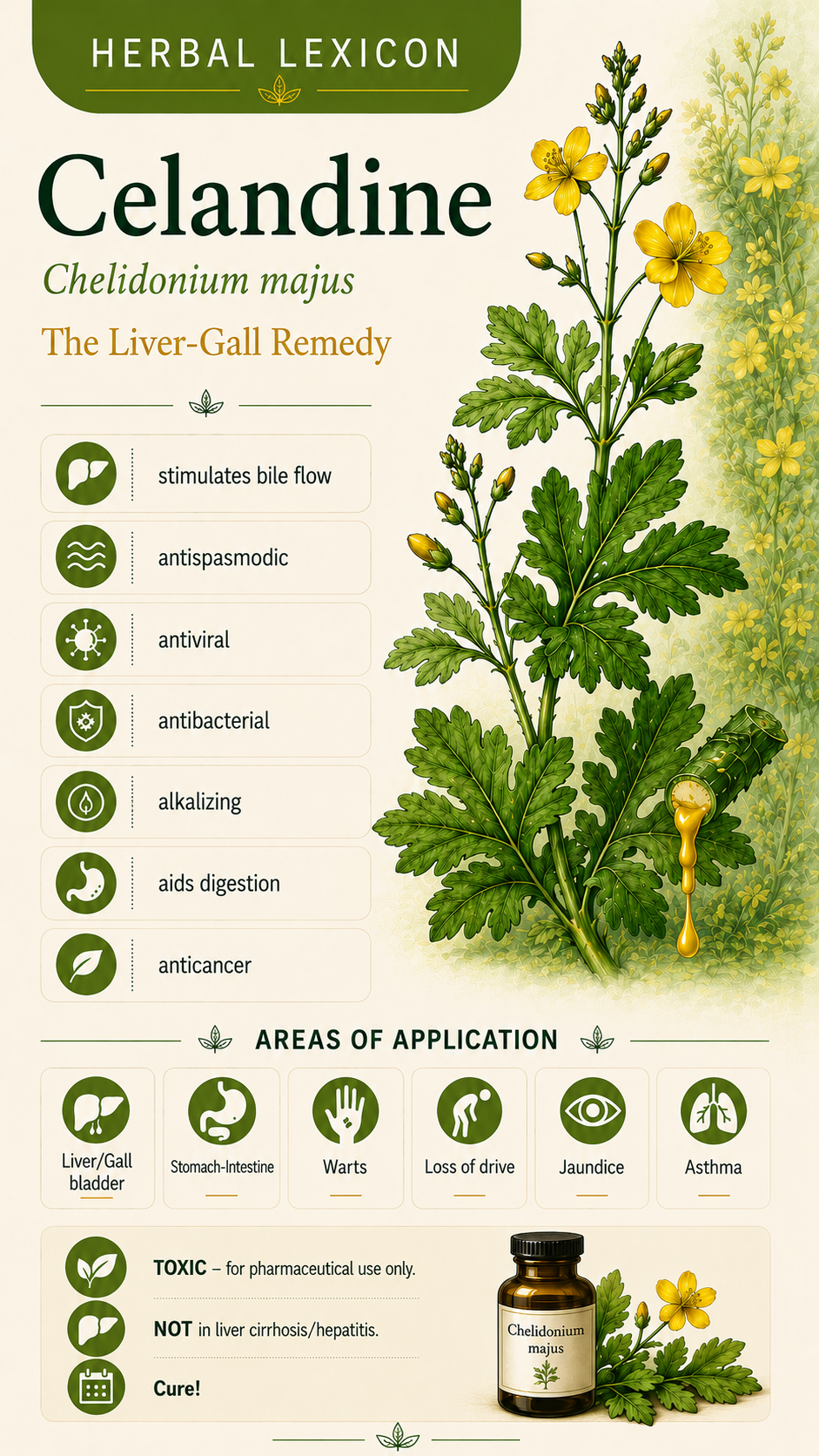

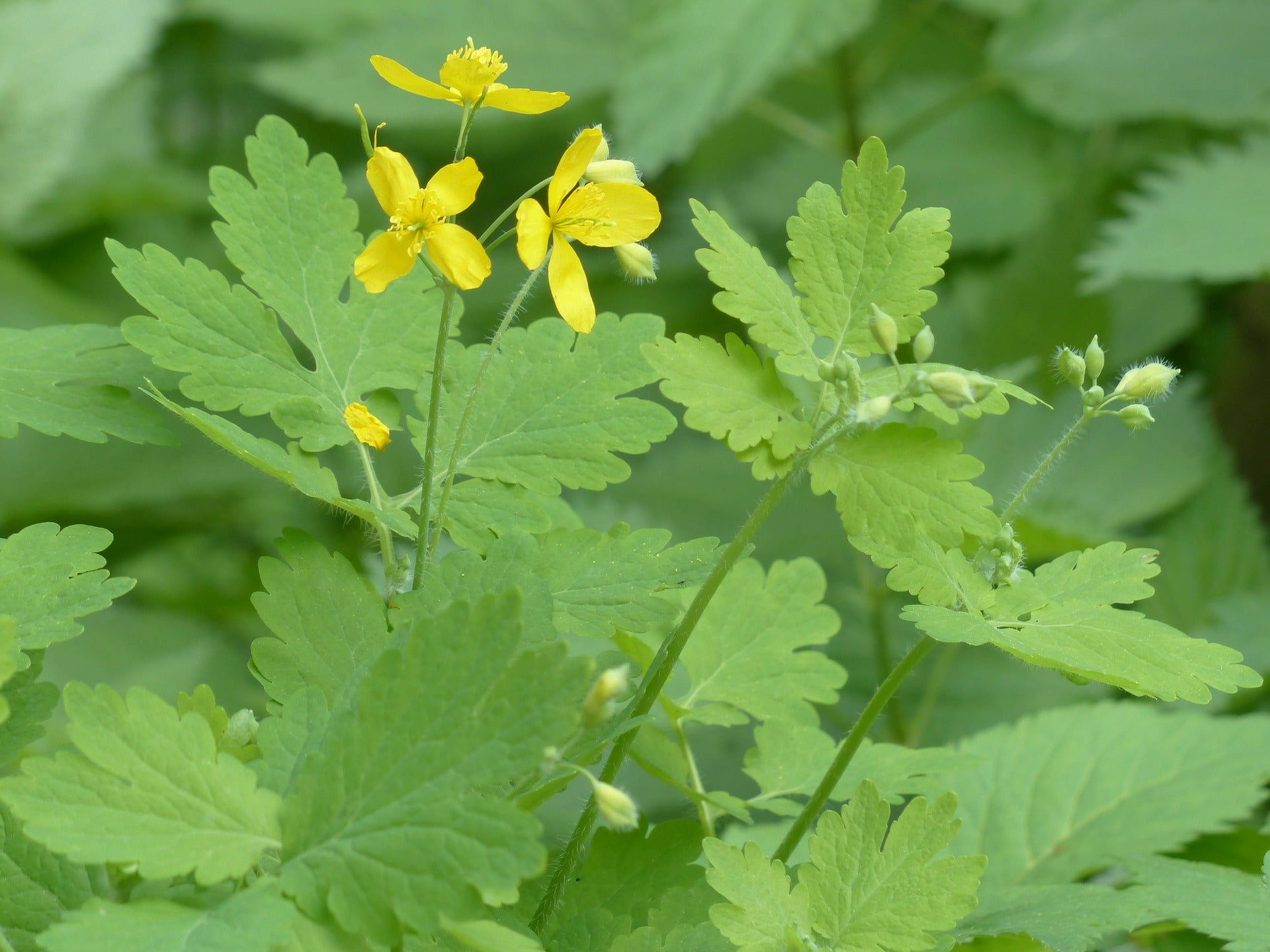
The ultimate remedy for liver and gallbladder problems—it grows by the wayside and is often mistaken for a weed. Available only at pharmacies and intended for short-term use!
Interesting facts about celandine
- Seeds are dispersed by ants (myrmecochory).
- Brought to the U.S. by settlers—specifically to treat skin conditions.
- It was already used to treat stomach cramps in the Middle Ages.
Effects & Properties
Alkaloids (Chelidonine, berberine, sanguinarine): antispasmodic for smooth muscle, promotes bile flow, antiviral, and antibacterial. The yellowish-milky fresh juice Irritates the skin and is slightly corrosive – effective against warts.
Features: bile-stimulating, antispasmodic, antiviral, antibacterial, decongestant, digestive.
Applications
Celandine for liver and gallbladder problems
Liver and gallbladder problems occur when the liver produces too little bile or the bile ducts are constricted. Chelidonium works in two ways: it directly stimulates the liver cells to increase bile production and, at the same time, relaxes the smooth muscles of the bile ducts to allow bile to flow freely into the small intestine. This helps restore normal function to the digestive system.
Chelidonium for gastrointestinal problems
Gastrointestinal problems caused by insufficient bile flow occur when too little bile reaches the small intestine—pH levels are off, and intestinal enzymes cannot function properly. Celandine normalizes bile flow and, as a result, the intestinal environment. Bloating, diarrhea, and cramps subside.
Celandine for Lack of Motivation
A lack of energy combined with a feeling of physical heaviness often occurs when the digestive organs are sluggish and the body is unable to extract much energy from food. Celandine stimulates all the digestive glands—the liver, gallbladder, and pancreas—thereby improving nutrient absorption. This generates new energy, and drive and vitality return.
Chelidonium for headaches
Liver-bile-type headaches are caused by vascular spasms in the head region when the liver is overloaded. Celandine relieves these spasms through its antispasmodic alkaloid action and stimulates bile flow, which relieves the strain on the liver. The underlying mechanism is addressed.
Celandine for jaundice
Jaundice occurs when bile cannot flow into the intestines and instead enters the bloodstream. Celandine helps regulate bile production and relieves bile duct spasms—it is beneficial for both the production and obstruction types of jaundice.
Celandine for warts
When the yellowish, milky fresh juice is dabbed directly onto the wart (be sure to protect the surrounding skin!), it works in two ways: its mildly caustic effect damages the wart tissue, and the antiviral alkaloids target the HPV virus that causes the wart. Warts disappear after repeated use.
Instructions for Use
Available only at pharmacies (Mother tincture, spagyric preparation, up to D8). For short-term treatment. Not for long-term use.
Pregnancy & Breastfeeding
Contraindicated – toxic, harmful to the liver and fetus.
Pre-existing liver conditions
Not in cases of cirrhosis of the liver, gallstones, or chronic hepatitis.
Plant Profile
- Scientific name: Greater celandine
- Plant family: Poppy family (Papaveraceae)
- Other names: Wartwort
- Flowering period: May through September
- Origin: Native to (Europe)
- Toxicity: Poisonous (the root is highly poisonous in the fall)