
One of the leading herbal remedies for vein health in naturopathy—backed by multiple studies. Available only as a ready-to-use medication!
Interesting facts about horse chestnut
- Not related to the sweet chestnut.
- Name given by the Ottomans: Medicine and horse feed.
- All European horse chestnut trees from a single shipment of seeds in 1576.
Effects & Properties
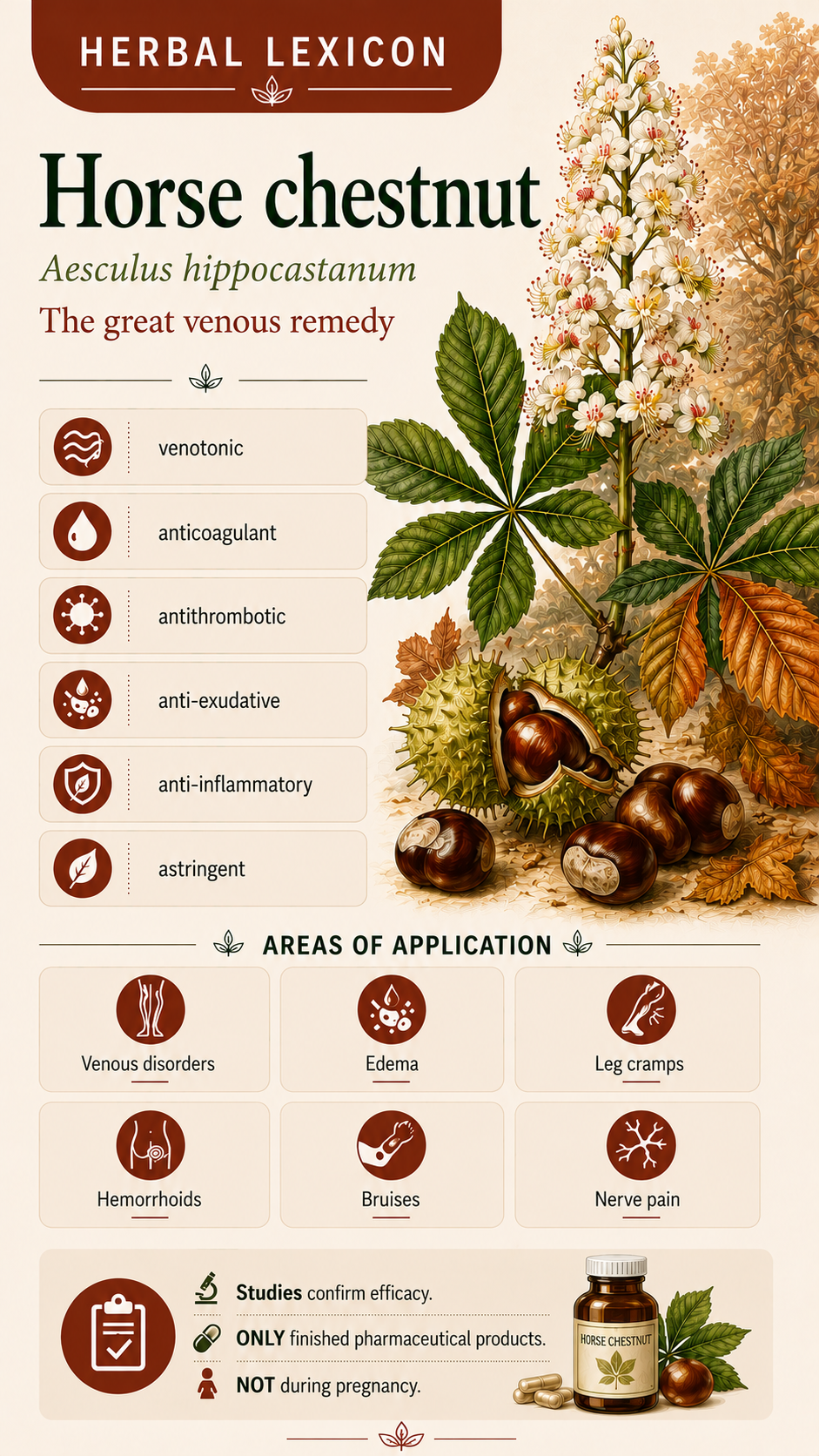
Aescin (Triterpene saponin, 5%): seals capillary walls (prevents fluid leakage into the tissue), improves venous tone, and prevents blood platelets from clumping together (antithrombotic). Clinical studies: comparable to Class II compression stockings.
Features: venotonic, anticoagulant, antithrombotic, anti-exudative, anti-inflammatory, astringent.
Applications
Horse Chestnut for Venous Problems
Chronic venous insufficiency occurs when the vein walls and valves weaken—blood pools in the legs, causing swelling, and the legs feel heavy and tired. Aescin strengthens venous tone: the veins contract, allowing blood to flow away more efficiently. Capillary walls are sealed, preventing fluid from leaking into the tissue. Clinical studies show that horse chestnut is as effective as Class II compression stockings.
Aesculus for calf cramps
Leg cramps are often caused by reduced blood flow to the muscles—not enough oxygen and nutrients reach the muscle, causing it to cramp. Horse chestnut improves microcirculation in the leg muscles: more nutrients and oxygen reach the tissue, blood supply to the muscles returns to normal, and cramps occur less frequently.
Horse chestnut for bruises
Bruises occur when blood leaks from damaged capillaries into the surrounding tissue. Horse chestnut improves venous drainage in the affected area and has anti-inflammatory properties. Aescin also inhibits hyaluronidase, an enzyme that promotes tissue breakdown. Bruises are reabsorbed more quickly, and the healing process is accelerated.
Aesculus for Hemorrhoids
Hemorrhoids are caused by dilated veins in the hemorrhoidal plexus. As a sitz bath: The tannins constrict the dilated vessels (astringent effect), reducing the swelling. When taken internally, horse chestnut improves venous drainage from the pelvic area, which permanently reduces pressure on the hemorrhoidal vessels.
Horse Chestnut for Skin Conditions
For inflammatory skin conditions characterized by redness, swelling, and itching, horse chestnut has astringent and anti-inflammatory properties. It helps restore normal blood flow to the inflamed areas, reduces swelling, and relieves itching.
Aesculus for nerve pain
Nerve pain is often caused by compression of the nerves due to fluid buildup and swelling in the surrounding tissue. Horse chestnut improves venous drainage and reduces fluid buildup. This relieves nerve compression and reduces pain.
Instructions for Use
Finished pharmaceutical products ONLY (constant dose of aescin). As a course of treatment, for both internal and external use.
Pregnancy & Breastfeeding
Contraindicated – Aescin inhibits blood clotting, which is critical during pregnancy.
Plant Profile
- Scientific name: Horse chestnut
- Plant family: Soapberry family (Sapindaceae)
- Other names: Chestnut, White Chestnut
- Flowering period: April through May
- Origin: Balkans
- Toxicity: Non-toxic (as a finished pharmaceutical product)