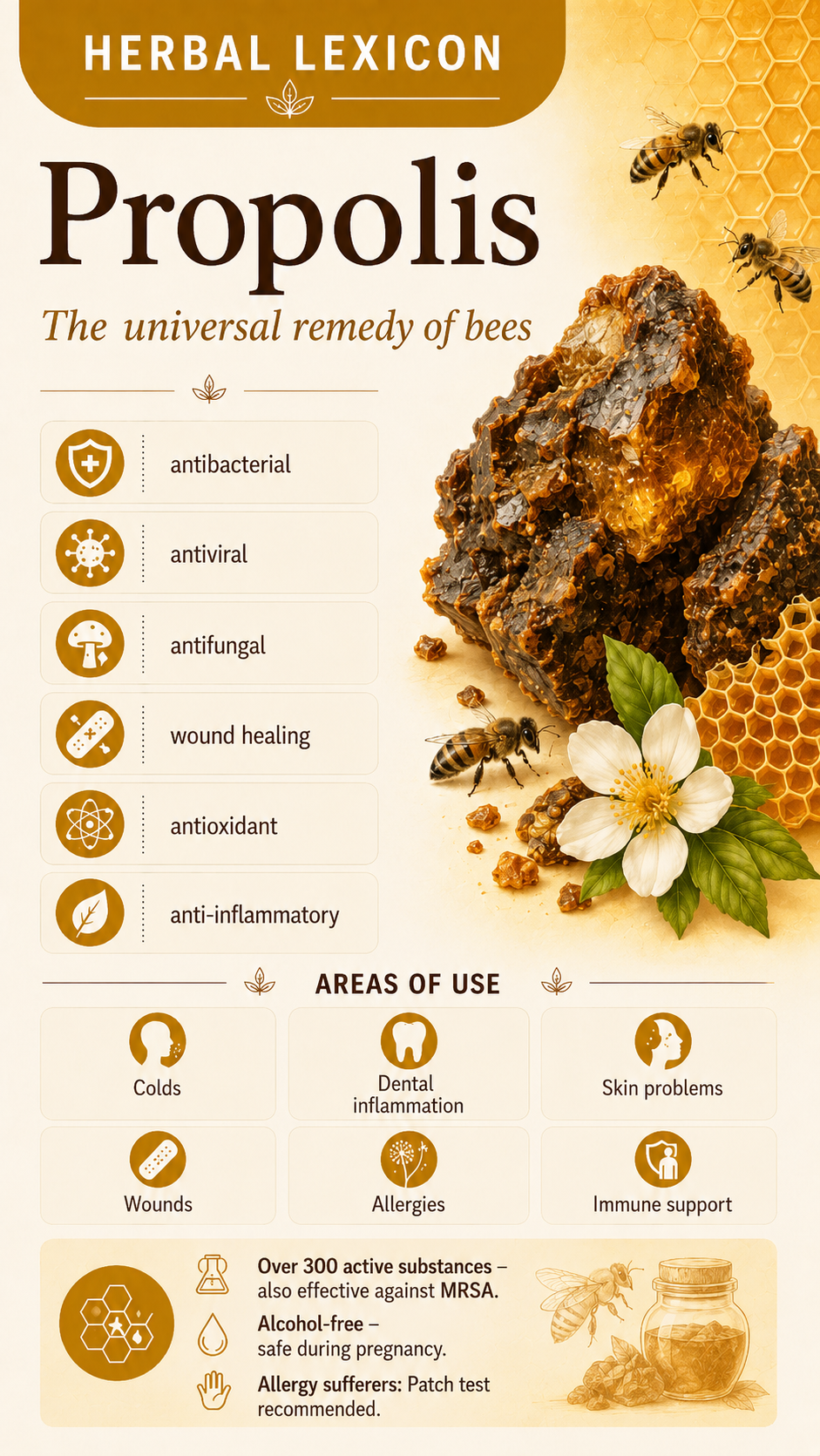

The bees' universal remedy—known since ancient Egypt, and scientifically studied today for its more than 300 active ingredients.
Interesting facts about propolis
- Up to 500 g of propolis per bee colony per year.
- Dead foreign bodies in the comb are embalmed with propolis.
- Laboratory tests: effective against MRSA hospital bacteria.
Effects & Properties
About 300 active ingredients: Flavonoids (pinocembrin, chrysin), phenols (caffeic acid), enzymes, polysaccharides. Pinocembrin inhibits bacterial cell wall synthesis—including that of MRSA bacteria. Caffeic acid derivatives and cinnamic acid have antiviral effects. Chrysin exhibits antifungal properties against Candida.
Features: antibacterial, antiviral, antifungal, promotes wound healing, antioxidant, anti-inflammatory.
Applications
Propolis for colds
With colds, rhinoviruses and bacteria are both at play. Propolis is the treatment of choice: caffeic acid derivatives inhibit rhinoviruses and herpesviruses, pinocembrin kills bacteria, and polysaccharides activate the immune system. This combination makes propolis a natural broad-spectrum remedy. Take several times a day in lukewarm water: Heat would destroy the enzymes, so never use boiling water.
Propolis for boosting the immune system
Preventive care during cold season: The antioxidant properties of propolis protect immune cells from oxidative stress and help maintain their function. Take 10–15 drops daily in lukewarm water for 3–5 weeks, ideally combined with vitamin C. Beekeepers regularly use this regimen themselves—they are known for their resilience during cold season.
Propolis for Gum Problems and Canker Sores
Periodontal disease causes chronic inflammation of the gums—mouthwashes made from diluted propolis drops reduce inflammation, stop the gums from receding, and help reduce the depth of gum pockets. For canker sores—painful ulcers on the oral mucosa—apply directly to the affected area: healing is significantly accelerated and the pain subsides almost immediately.
Propolis for skin problems
Staphylococci, skin fungi, and chronic skin inflammation respond well to propolis. When applied as an ointment or oil (no alcohol—alcohol dries out the skin), propolis has antibacterial effects against surface bacteria, antifungal effects against fungal infections, and anti-inflammatory properties. The skin regenerates, and redness and inflammation subside.
Propolis for Wounds
The combination of disinfectant properties (pinocembrin and caffeic acid kill wound-causing bacteria) and wound-healing enzymes makes propolis an effective wound-healing agent. It accelerates wound healing, prevents infections, and reduces scarring. Propolis has also been clinically proven to be effective in treating leg ulcers (ulcer cruris).
Propolis for Allergies
The flavonoid pinocembrin inhibits the release of histamine from mast cells—much like a natural antihistamine. For hay fever and other allergies, start taking propolis early in the year, before pollen levels rise: the mast cells will then be less reactive, and the allergic reaction will be milder.
Instructions for Use
10–15 drops 2–3 times a day. Take while lukewarm – No hot water (enzymes are destroyed). For external use as an ointment or oil.
Pregnancy & Breastfeeding
Alcoholic products: not suitable. Non-alcoholic: use with caution and consult a professional. Be aware of potential allergens.
Allergy Warning
Caffeic acid derivatives and pollen may cause contact allergies. A skin test is recommended before first use.
Profile
- Content: Propolis (bee resin)
- Producer: Honeybee (Apis mellifera)
- Annual production: up to 500 g per colony
- Active ingredients: over 300 (flavonoids, phenols, enzymes)