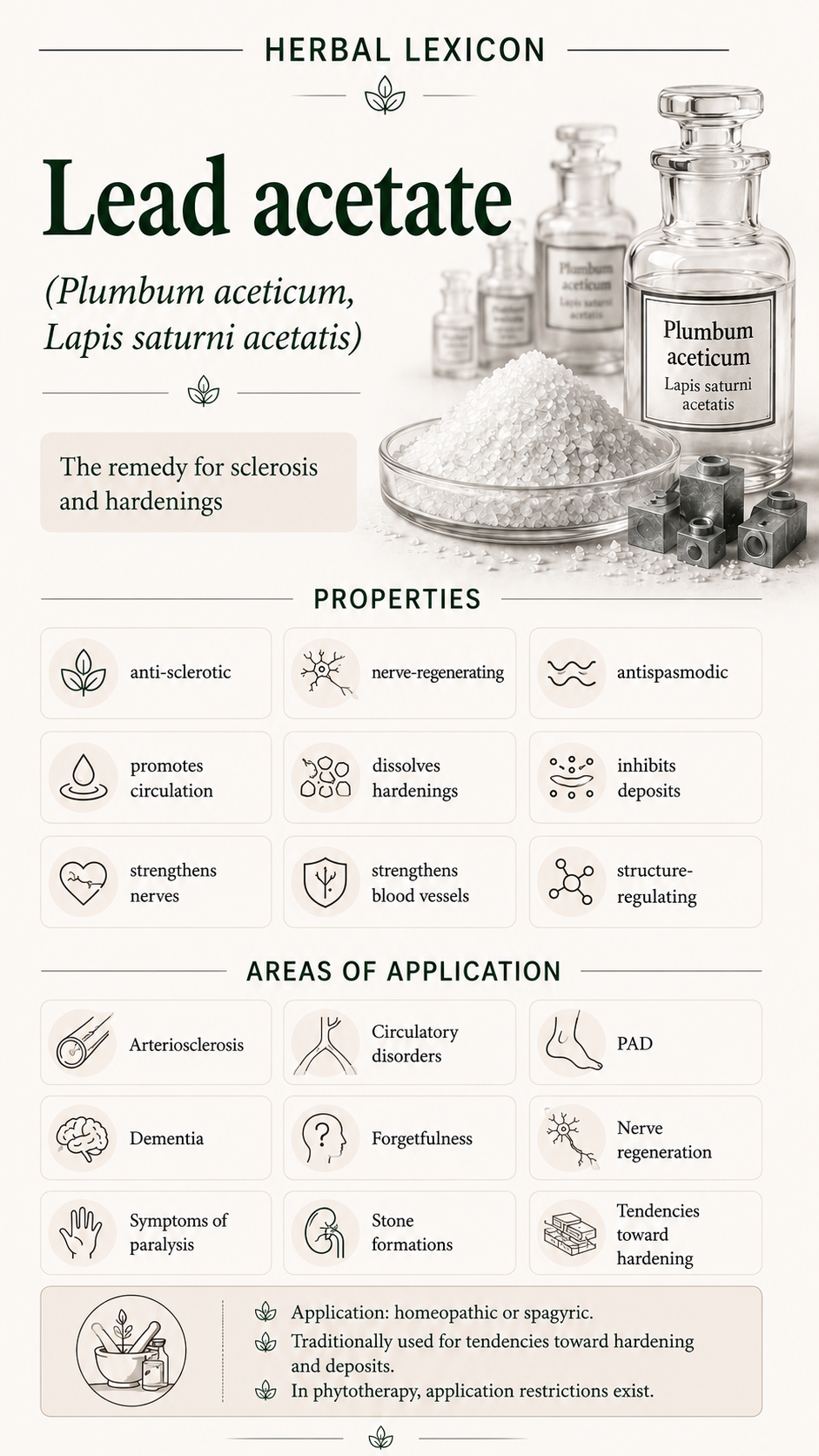


Lead acetate (Plumbum aceticum) is a lead compound and, as a heavy metal salt, is highly toxic in its pure form. In naturopathy, only the spagyrically prepared, highly diluted form is used—all information on this page refers to this spagyric preparation.
Fascinating Facts About Lead Acetate
- Lead acetate is also called "lead sugar" because of its sweet taste.
- It was actually used as a sweetener in the past—with disastrous consequences for one's health.
- Lead symbolizes the planet Saturn, the lord of time and old age.
Effects & Properties
Anti-atherosclerotic: Counteracts the tendency of blood vessels to harden and supports their elasticity. Nerve-regenerating: stimulates nerve regeneration and may help alleviate symptoms of chronic paralysis. Antispasmodic: Because of its effect on the nerves, it can also relieve existing muscle cramps.
Features: anti-sclerotic, nerve-regenerating, antispasmodic, and vasodilatory.
Areas of Application
Plumbum aceticum for Vascular Constriction
In cases of circulatory disorders, such as those associated with peripheral arterial disease, plaques build up on the walls of blood vessels, causing them to narrow. Spagyrically prepared lead acetate is used as an adjunctive treatment to counteract the tendency for plaque buildup and support vascular elasticity.
Lead acetate for memory loss
As we age, memory and mental clarity may decline. In the spagyric tradition, Plumbum aceticum is associated with the issues of aging and is said to have a positive effect on the nervous system, gently supporting the body through age-related changes.
Lead acetate for symptoms of paralysis
In cases of numbness and paralysis, spagyric Plumbum aceticum is traditionally used as an adjunct treatment to support nerve regeneration, so that mobility and sensation can gradually improve.
Instructions for Use
Only in a spagyrically processed, highly diluted form (D4 or higher) as a component of homeopathic-spagyric complex remedies. Lead acetate is classified as a slow-acting remedy; it is typically used as part of a course of treatment lasting several weeks. The undiluted raw substance is toxic and must not be ingested under any circumstances.
Pregnancy & Breastfeeding
Plumbum aceticum should not be taken during pregnancy or while breastfeeding.
Profile
- Content: Lead acetate (Plumbum aceticum spag.)
- Description: Lead sugar
- Presence in the body: Blood, heart, lungs, liver, kidneys, brain, digestive tract
- Applications: Vascular elasticity, nerve regeneration
- Toxicity of the starting material: Highly toxic – to be used only in spagyric preparations
- Typical potency: D4 and above