

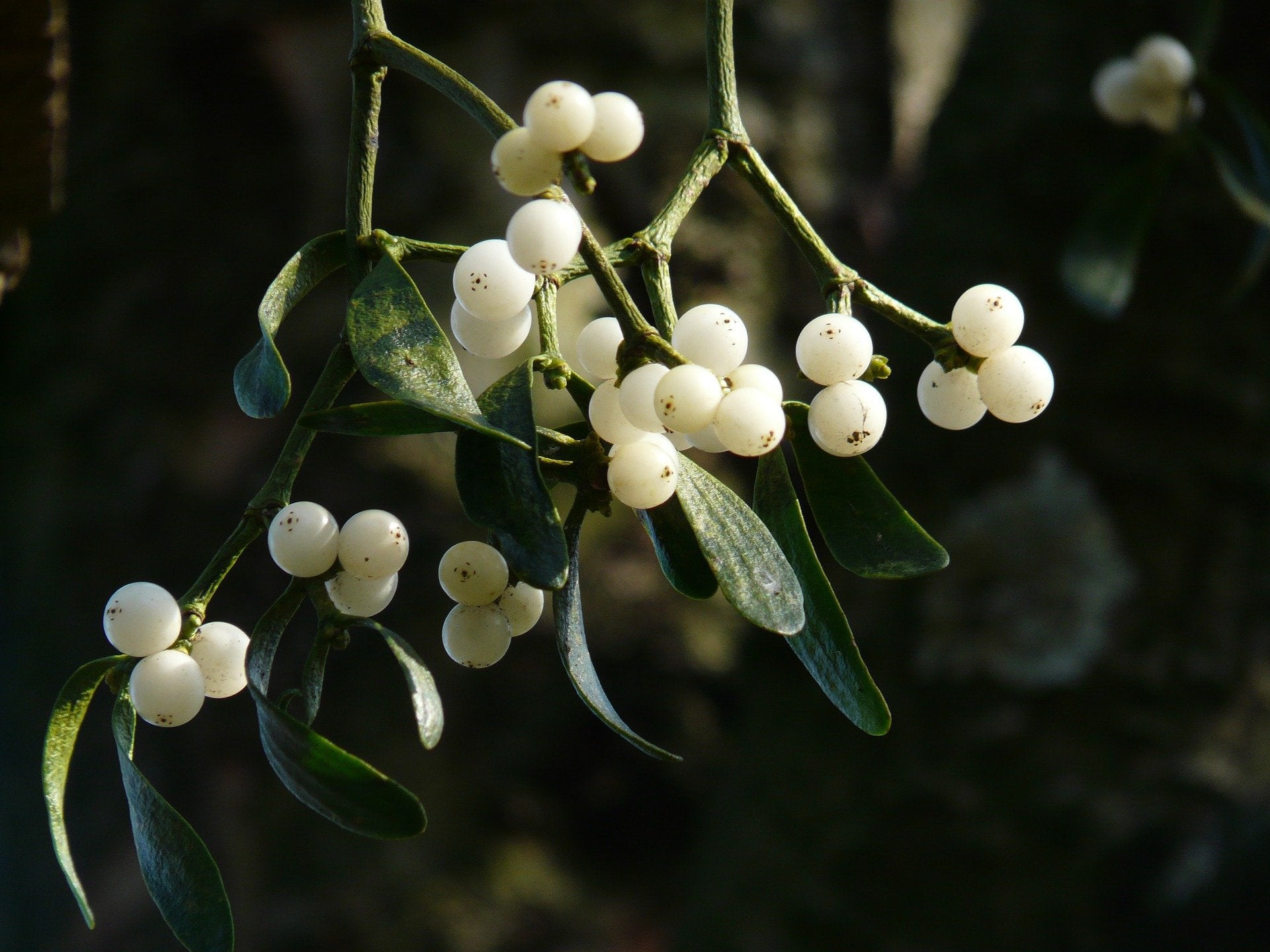
From a Celtic magic potion to a modern complementary cancer therapy—mistletoe is a semi-parasitic plant with fascinating healing potential.
Interesting facts about mistletoe
- Evergreen spheres among bare winter trees—a sign of strong vitality.
- Oak mistletoe is considered particularly effective.
- The mistletoe tradition dates back to Celtic rituals.
Effects & Properties
Lectins: promote apoptosis (programmed cell death) in abnormal cells and activate the nonspecific immune response. Viscotoxins: Immune stimulation, leukocyte stimulation. Oral use: Regulates blood pressure and strengthens the venous system. Injection: Triggers a targeted, controlled immune response.
Features: boosts the immune system, regulates blood pressure, helps manage diabetes, revitalizes, and helps prevent dizziness.
Applications
Mistletoe for High Blood Pressure
High blood pressure is often caused by atherosclerosis—calcified, stiff blood vessels can no longer regulate blood pressure effectively. The mistellectins and flavonoids have an antioxidant effect that counteracts the atherosclerotic processes in the blood vessel walls and normalizes vascular tone. Blood pressure drops to a healthier level.
Mistletoe for Diabetes
In type 2 diabetes, the cells’ sensitivity to insulin is reduced—sugar cannot be efficiently absorbed into the cells. Mistletoe extracts stimulate cellular metabolism and improve glucose tolerance. Studies show that certain components of mistletoe can stimulate insulin secretion and lower blood sugar levels.
Mistletoe to induce fever
People who never develop a fever have an underactive immune system—fever is an important defense mechanism the body uses against pathogens and abnormal cells. When administered as a subcutaneous injection, mistletoe extract triggers a controlled immune response: body temperature rises slightly (controlled therapeutic fever), and white blood cell production increases. This immune activation is used specifically for therapeutic purposes.
Mistletoe for Epilepsy
Epileptic seizures are caused by excessive electrical activity in the brain—the neural thresholds are too low. The viscotoxins and lectins in mistletoe raise these thresholds, thereby reducing the excessive activity. This can lead to a decrease in the frequency and intensity of seizures.
Mistletoe for joint problems
Joint disorders are caused by a decrease in the production of synovial fluid and the breakdown of cartilage. Mistletoe extracts stimulate the production of synovial fluid and inhibit the inflammatory response in the joint. Cartilage breakdown is slowed, and mobility improves.
Mistletoe for Constipation
In cases of sluggish digestion caused by reduced activity of the digestive glands, mistletoe helps stimulate the body’s overall metabolism. It stimulates the digestive glands, improves intestinal peristalsis, and normalizes bowel movements.
Instructions for Use
Oral: cold tea extract or ready-to-use mixture. Injectable: immunotherapy administered by a trained therapist.
Pregnancy & Breastfeeding
Contraindicated – Viscotoxins and immune reactions may harm the fetus.
Contraindications
Never at: Pregnancy; chronic, progressive infections; primary brain or spinal cord tumors (risk of increased intracranial pressure!); current fever (risk of uncontrolled rise!).
Plant Profile
- Scientific name: Mistletoe
- Plant family: Sandalwood family (Santalaceae)
- Flowering period: January through April
- Origin: Native to (Europe)
- Toxicity: Toxic
