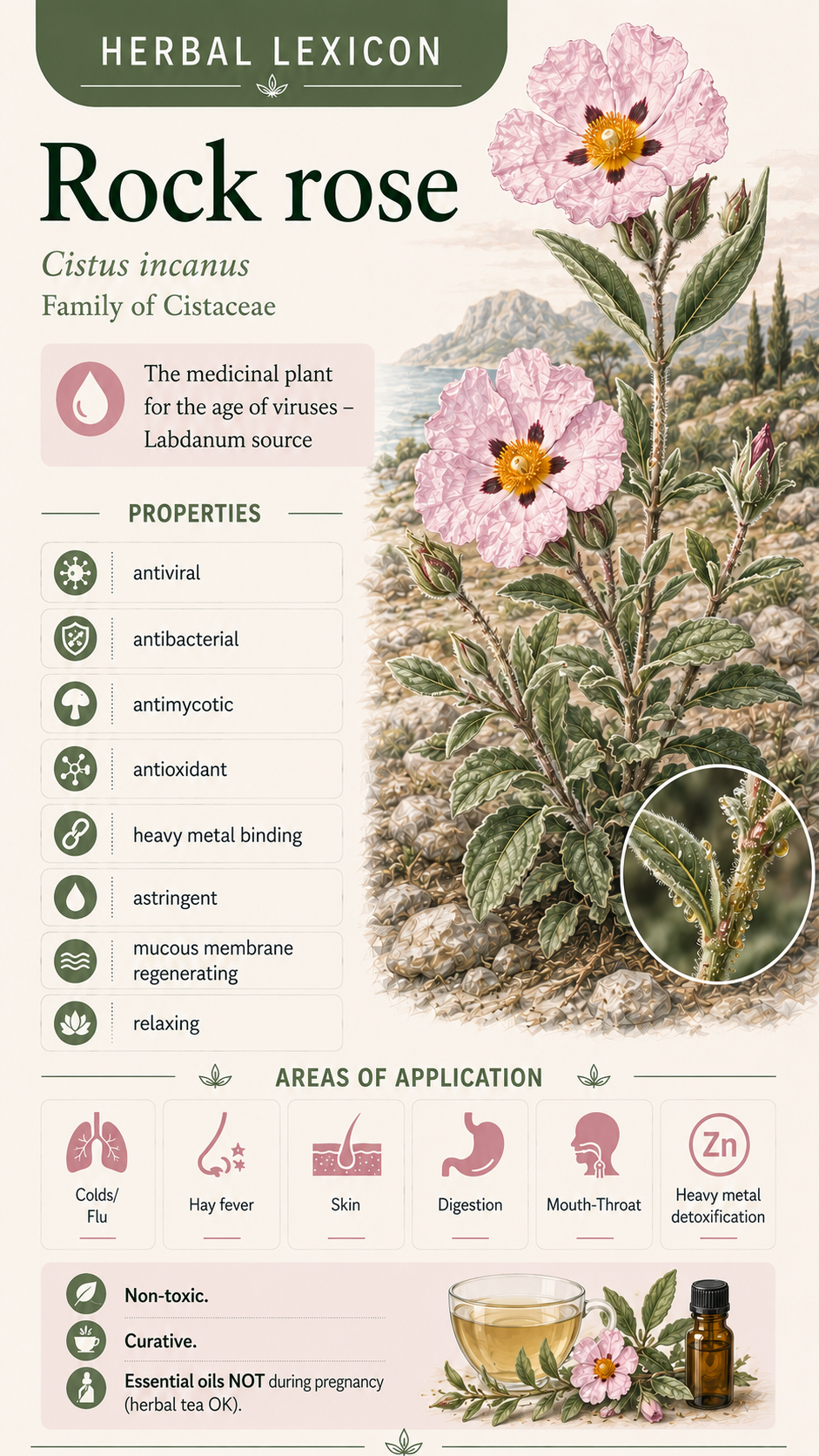

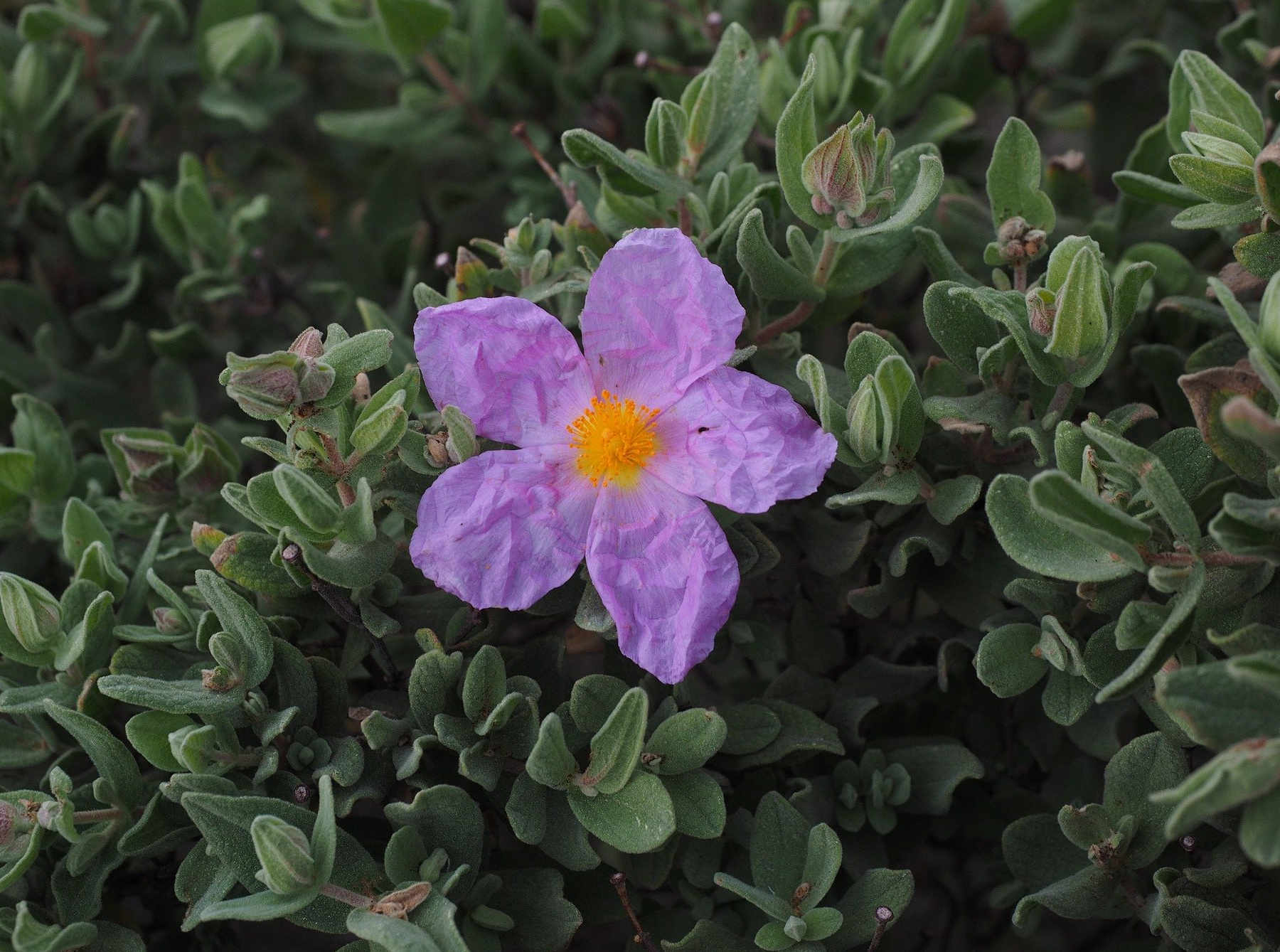
The medicinal plant for the age of viruses – a base note in perfumes since ancient times. Its antioxidant properties surpass those of red wine and green tea. Clinically proven effective against influenza; shown to be effective against HIV in laboratory studies. Pregnancy: Tea is OK, essential oils are NOT.
Interesting facts about rockrose
- The potency increases from west to east: Cistus incanus from the eastern Mediterranean region (Greece, Crete) has the highest polyphenol content.
- In a placebo-controlled study (Kalus et al., 2009), cistus extract was shown to significantly reduce the duration of the common cold; in laboratory studies, it also demonstrated activity against the HIV virus.
- Labdanum—the sticky resin of the rockrose—was harvested in ancient times by combing the hair of goats; today, it is a sought-after base note in perfumes for musk accords.
Effects & Properties
Polyphenols (ellagitannins, proanthocyanidins, catechins): inhibit viral attachment to host cells by binding to viral surface proteins (hemagglutinin in influenza, gp120 in HIV). Exceptionally high antioxidant capacity (ORAC value significantly higher than that of red wine and green tea). tannins: astringent effect on mucous membranes – reduces fluid retention, alleviates swelling. Labdanum: antimicrobial, antifungal, skin-nourishing. Heavy metal binding: Polyphenols form chelate complexes with Hg²⁺, Cd²⁺, and Cu²⁺—which are then excreted via the intestines and kidneys.
Features: antiviral, antibacterial, antifungal, antioxidant, heavy metal-binding, astringent, mucosal-regenerating.
Applications
Rockrose for colds and the flu
Respiratory viral infections begin with the attachment of viruses to receptors on the respiratory tract mucosa: Influenza viruses bind to sialic acid receptors on the ciliated epithelium via hemagglutinin. Cistus polyphenols competitively inhibit this attachment: they bind to the viral surface proteins themselves and block the receptor binding site—preventing the virus from docking onto the host cell. At the same time, their high antioxidant potential reduces the oxidative stress that promotes viral infection. Clinically demonstrated by Kalus et al. (2009).
Cistus incanus for hay fever
Hay fever is caused by IgE-mediated mast cell degranulation following contact with pollen antigens: histamine, leukotrienes, and prostaglandins are released, causing the nasal mucosa to swell. Cistus tannins have an astringent effect on the hyperemic nasal mucosa: they draw water from the swollen mucosa through protein precipitation and reduce the amount of edema. At the same time, the polyphenols inhibit histamine release from mast cells through antioxidant membrane stabilization.
Cistus for heavy metal detoxification
Heavy metals (mercury from amalgam, cadmium, lead) accumulate in connective tissue and impair enzyme function. Polyphenols from rockrose form stable chelate complexes with these metal ions: the metal ions are trapped and can no longer bind to biological target molecules. The chelate complexes are water-soluble and are excreted via the intestines and kidneys—a mild, natural chelating agent.
Cistus incanus for inflammation of the mouth and throat
Periodontal disease is caused by biofilm-forming bacteria (Porphyromonas gingivalis) in the gum pocket: bacterial toxins activate immune cells, and collagenases break down connective tissue and bone. Cistus polyphenols inhibit biofilm growth by binding to bacterial surface proteins. As a mouthwash: Cistus disinfects, stimulates gum regeneration, and inhibits bacterial collagenase activity.
Instructions for Use
For short-term use only—not for long-term use. Drink as a tea, especially during cold season. Follow the package insert for ready-to-use preparations.
Pregnancy & Breastfeeding
DO NOT use cistus essential oils during pregnancy (as they can induce menstruation). Cistus tea is safe to drink during pregnancy.
Plant Profile
- Scientific name: Cistus incanus L. (syn. Cistus creticus)
- Plant family: Cistaceae
- Other names: Hairy rockrose, Ladan
- Flowering period: April through June
- Origin: Mediterranean Europe (especially the Eastern Mediterranean)
- Toxicity: Non-toxic