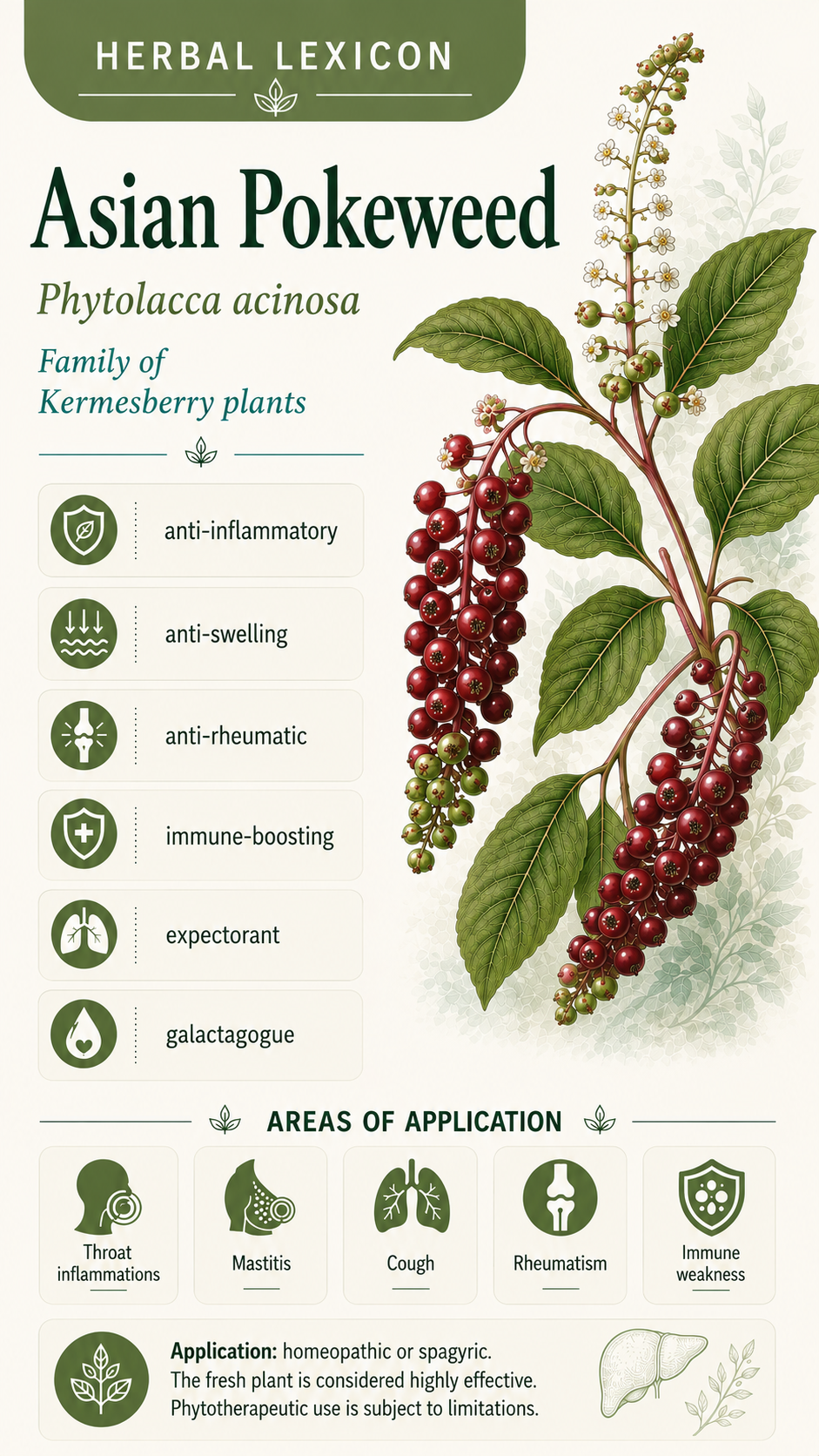

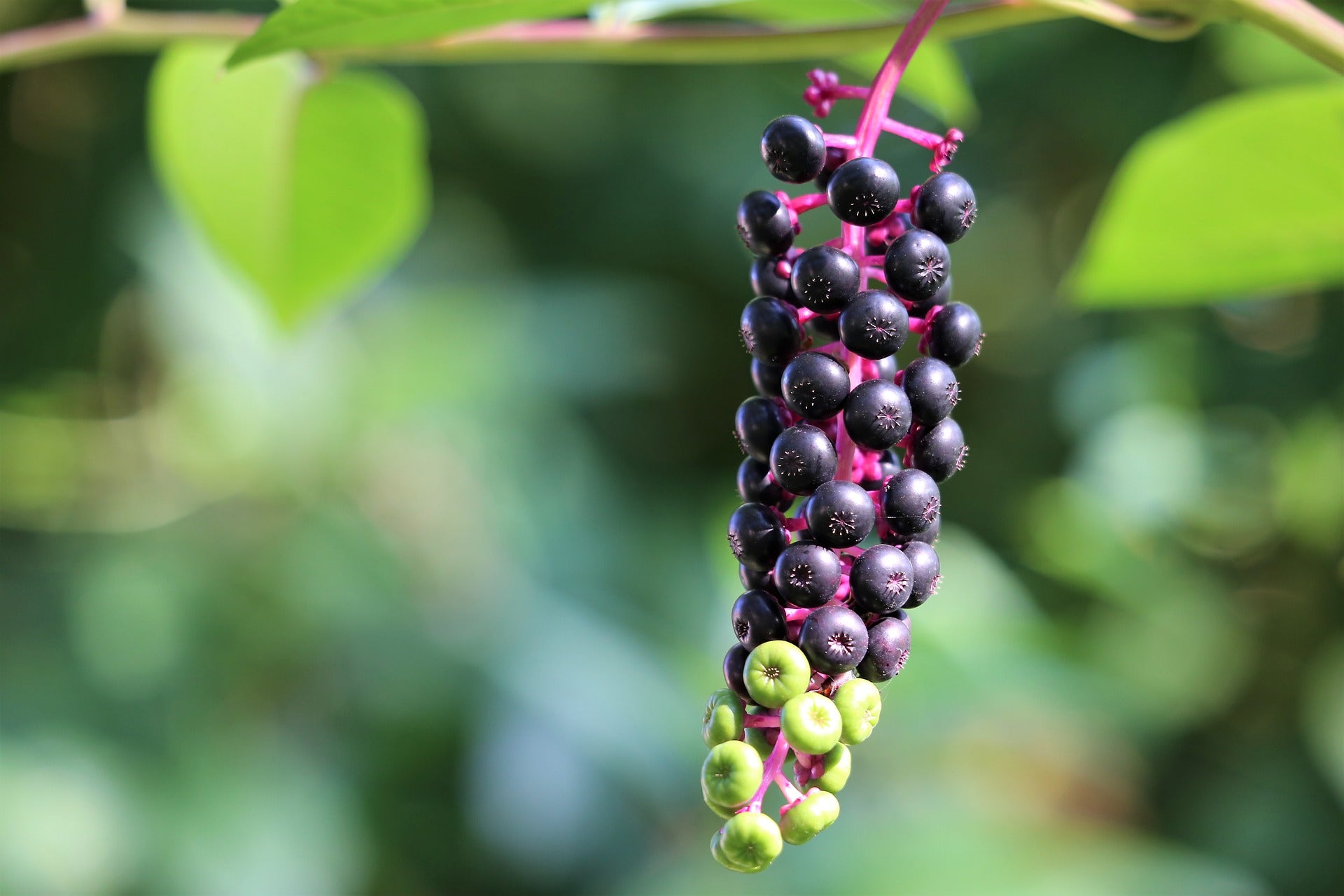
The plant associated with bright red, hot inflammations—historically used as a dye and in cosmetics, and today as an important homeopathic remedy.
Interesting facts about kermes berries
- Young parts are edible, old parts are poisonous—toxicity increases with age.
- The subject of research on immunodeficiencies.
- Used in the cosmetics industry for lipsticks.
Effects & Properties
A special feature of the kermes berry: bright red, hot, swollen inflammations with pronounced sensitivity to touch—that is the classic indication. The active ingredients (saponins, phytolaccagenin, lectins) have anti-inflammatory, decongestant, and analgesic effects on these characteristic forms of inflammation. Only homeopathic or spagyric.
Features: anti-inflammatory, decongestant, anti-rheumatic, immune-boosting, lactation-promoting.
Applications
Kermesberry for coughs
For hot, dry bronchial infections associated with colds—coughs with an inflammatory character, red mucous membranes, and fever. Phytolacca has an antiviral effect against the causative agents, acts as an expectorant on the bronchi, and has an anti-inflammatory effect on the irritated mucous membrane. The characteristic features of “hot, dry, bright red” indicate the appropriate use.
Phytolacca acinosa for mastitis
In cases of mastitis (breast inflammation) during breastfeeding, the affected breast is bright red, swollen, hot, and tender to the touch—exactly the symptoms for which Phytolacca is the remedy of choice. In homeopathic or spagyric form, it has anti-inflammatory and decongestant effects: the breast softens again, the pain subsides, and breastfeeding becomes possible once more.
Kermesberry for bloating
Phytolacca stimulates bile flow and has a mild laxative effect—both of which help ease digestion and assist the body in releasing trapped gas. This helps relieve bloating and improves overall well-being.
Phytolacca acinosa for Immune Deficiency
Recent studies show that Phytolacca helps reduce swelling in swollen and overloaded lymph nodes, thereby supporting the lymphatic system’s immune function. It strengthens the non-specific immune system. Phytolacca is therefore of interest in research on the treatment of immune deficiencies.
Kermes berries for sore throats
Non-bacterial throat inflammation characterized by a bright red, swollen throat lining and painful swallowing is the classic indication. Phytolacca has a decongestant and anti-inflammatory effect on the affected mucous membranes: the swelling subsides, swallowing becomes easier again, and the pain eases.
Phytolacca acinosa for wounds
For wounds with an inflammatory nature and a viral component, Phytolacca has antiviral and anti-inflammatory effects. As an ingredient in wound ointments, it promotes healing and prevents inflammation from spreading to the surrounding tissue.
Instructions for Use
Acute: every hour to several times a day as a homeopathic or spagyric remedy.
Pregnancy & Breastfeeding
Strongly discouraged—do not take. In cases of mastitis during breastfeeding, use only after consulting a healthcare professional.
Important: Only homeopathic or spagyric
All parts of the plant are poisonous—never use it as a raw herb or extract.
Plant Profile
- Scientific name: Phytolacca acinosa
- Plant family: Phytolaccaceae
- Other names: Scarlet berry
- Flowering season: June through September
- Origin: Asia
- Toxicity: Toxic – only in homeopathic/spagyric forms