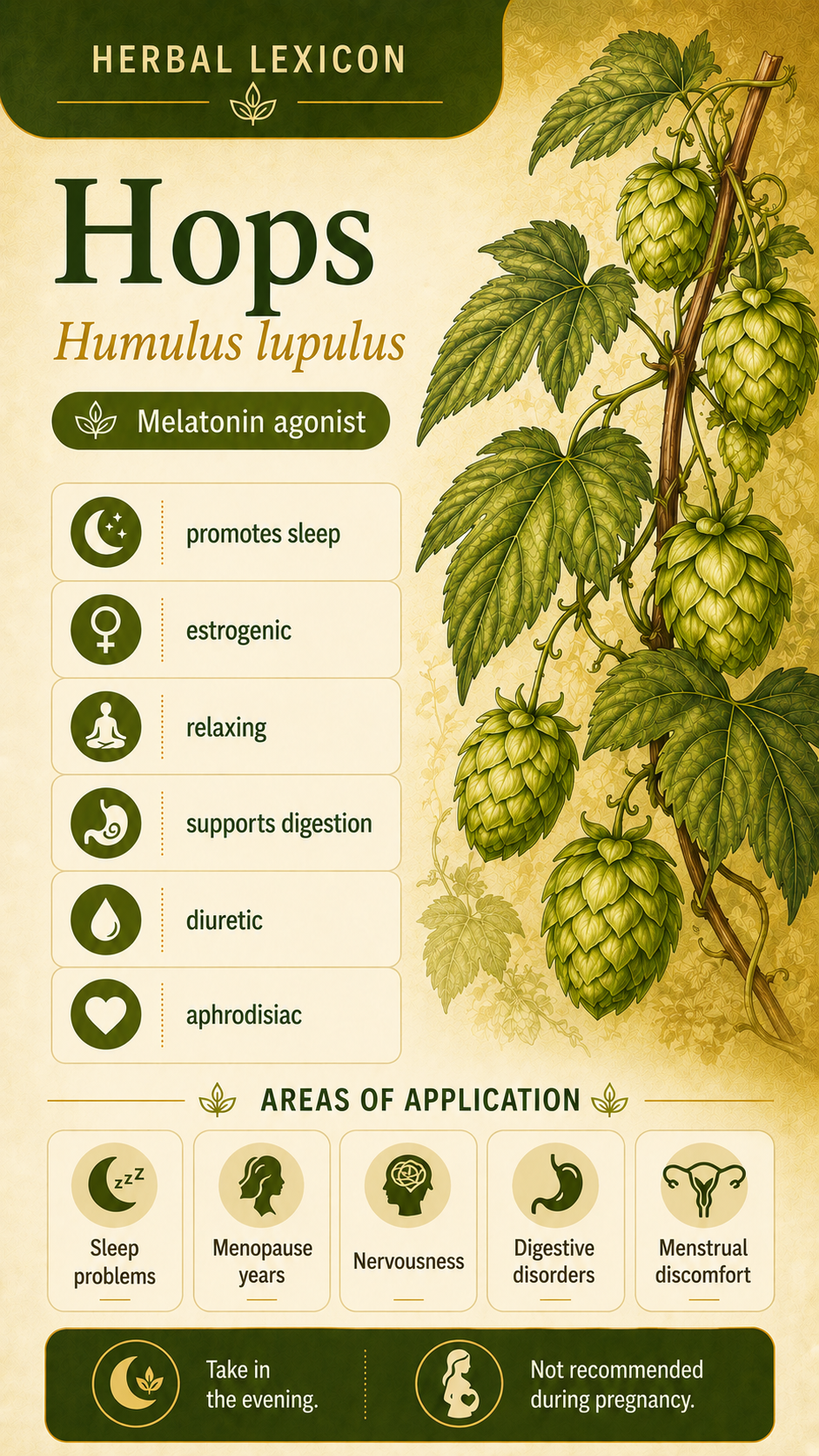


The number one cultivated plant as a remedy—hops bind to melatonin receptors and serve as a herbal alternative to synthetic melatonin.
Interesting facts about hops
- Replaced belladonna and henbane as an ingredient in beer.
- It belongs to the hemp family—it is related to cannabis.
- The Hallertau region in Bavaria: the world's largest contiguous hop-growing region.
Effects & Properties
Hop resin binds Melatonin receptors in the brain—making hops a natural, plant-based melatonin. phytoestrogens (Hopein) have an estrogenic effect on hormone balance. Bitter compounds stimulate the liver, gallbladder, and pancreas to increase secretion. Also as Aromatherapy product It works—fresh hops in the bedroom make you sleepy.
Features: promotes sleep, has estrogenic effects, calms, aids digestion, acts as an aphrodisiac.
Applications
Hops for Sleep Problems
Sleep problems arise when melatonin levels do not rise sufficiently in the evening or when the brain fails to switch to "night mode." Hop resin contains substances that bind to the same receptors as the body’s own sleep hormone, melatonin—preparing the brain for sleep. The effect is so strong that sensitive people may feel sleepy even after a long walk through a hop field. Hops are a highly effective herbal alternative to synthetic melatonin.
Humulus lupulus for menstrual cramps
Menstrual cramps are often caused by a relative estrogen deficiency during certain phases of the menstrual cycle—the uterus contracts spasmodically, leading to pain. The phytoestrogens in hops bind to estrogen receptors and help alleviate this deficiency. Combined with lady’s mantle and black cohosh for comprehensive support of the female menstrual cycle.
Hops as a sedative
Chronic stress keeps the nervous system in a constant state of alert—cortisol levels remain elevated, and relaxation is virtually impossible. Through its melatonin-agonist effect, hops have a calming effect on the nervous system. When taken orally, they help reduce hyperactivity; when used in aromatherapy—such as by placing fresh hops in a room—they act directly on the limbic system via the olfactory nerve.
Humulus lupulus for digestive problems
Digestive problems arise from two sources: nervous overstimulation causes the digestive tract to spasm, and insufficient digestive juices lead to incomplete digestion. Hops have a dual effect: they relieve stress-induced tension in the digestive tract through their calming effect on the central nervous system, and the bitter compounds directly stimulate the liver, gallbladder, and pancreas to increase secretion.
Hops for stomach problems
The stomach is sensitive to stress—depending on the stage of irritation, it may produce too much or too little stomach acid. Hops regulate stomach acid production through their calming effect on the autonomic nervous system. Whether consumed as tea or taken as a medicinal remedy, they help relieve both heartburn caused by excess acid and bloating caused by low stomach acid.
Instructions for Use
In the evening to aid sleep; during the day to aid digestion and soothe the nerves; 3 times a day for estrogen-related issues.
Pregnancy & Breastfeeding
No worries—midwives recommend hops for sleep problems during pregnancy. For infants: Hang a bunch of hops above the crib.
Hops and Alcohol
Hops ≠ beer. Alcohol is no substitute for the health benefits of hops—it puts additional strain on the stomach and liver.
Plant Profile
- Scientific name: Humulus lupulus
- Plant family: Cannabaceae
- Other names: Hoppen, Hopf
- Flowering period: July through September
- Origin: Native to (Europe)
- Toxicity: Non-toxic