

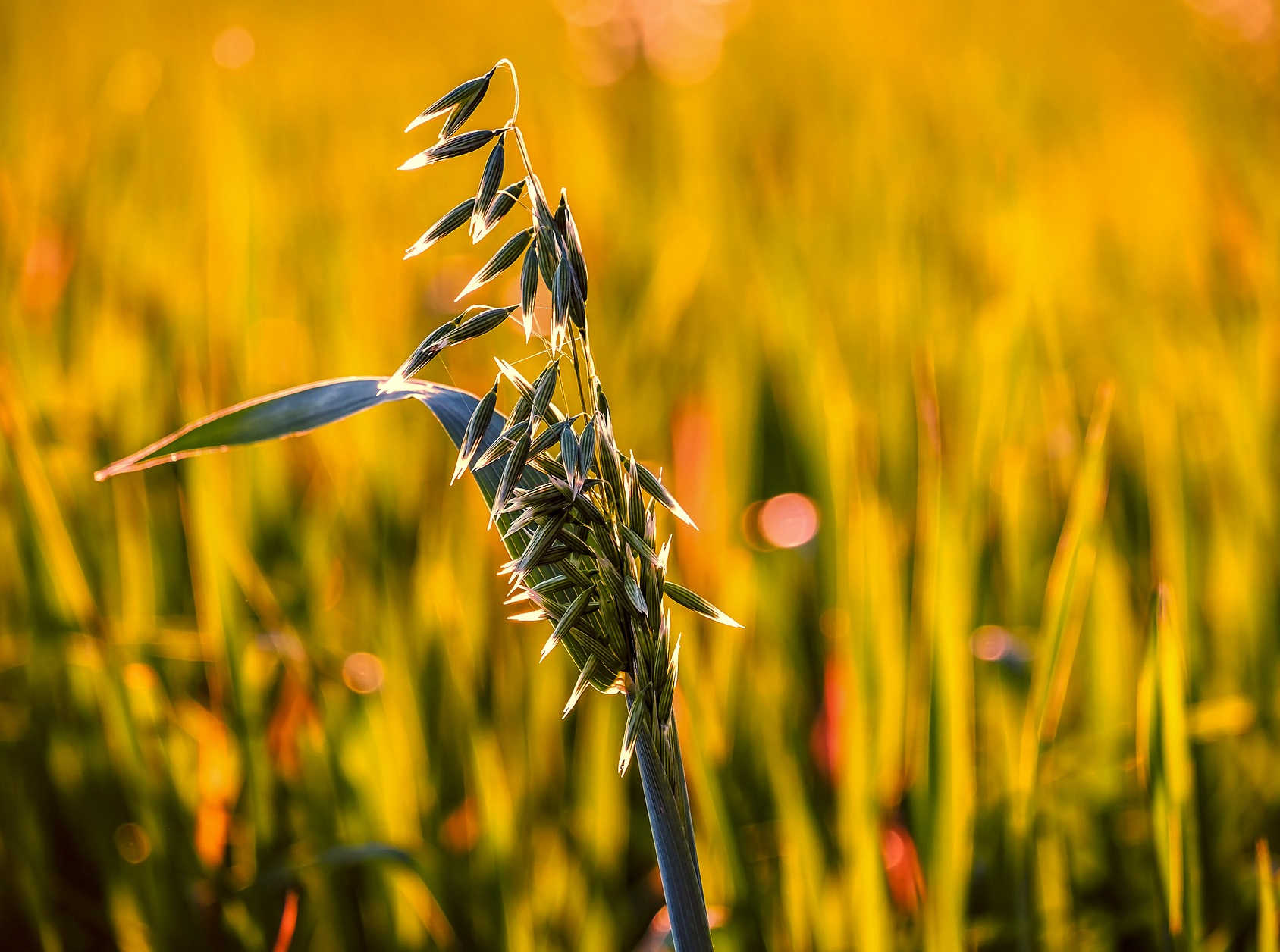
Oats are one of the most valuable grains in naturopathy. First documented in the Bronze Age, they have now been rediscovered as a restorative and sedative.
Interesting facts about oats
Oats are much more than just a breakfast cereal—their history and health benefits make them a fascinating remedy.
- The expression "I'm getting restless" comes from unhulled feed oats, which used to make horses hyperactive.
- Traditional porridge is considered very healthy for the stomach and intestines.
- Oats are so cold-hardy that they can be grown at altitudes of up to 1,600 meters.
Effects & Properties
Oats are a source of energy in every way. Beta-glucans They support gut health, promote lactic acid-producing lactobacilli, and have been shown to lower cholesterol. Iron, magnesium, and zinc strengthen the nervous system. The flavonoid linarin promotes sleep.
Features: invigorating, high in fiber, soothing, nerve-strengthening, immune-boosting, cholesterol-lowering.
Applications
Thanks to its wide variety of nutrients, oats have a wide range of uses.
Oats for Sleep Problems
Sleep problems are often caused by a lack of nutrients that the nervous system needs to fall asleep—magnesium relaxes the muscles, zinc regulates nerve metabolism, and B vitamins support serotonin production. Oat straw tea and tinctures have also been shown to promote sleep through the flavonoid linarin. The body finds it easier to fall into restful sleep.
Avena sativa for the immune system
The gut is the immune system’s most important site—70% of immune cells are located in the intestinal mucosa. Beta-glucans from oats promote lactic acid-producing lactobacilli in the small intestine and activate immune cells directly in the intestinal mucosa. A healthy gut is the foundation of a strong immune system.
Oats for concentration problems
Difficulty concentrating occurs when the nervous system lacks essential nutrients—B vitamins for nerve transmission, iron for energy production, magnesium for nerve cell relaxation, and zinc for healthy nerve metabolism. Oats provide all these nutrients in a bioavailable form. Regular consumption of oats measurably improves the ability to concentrate.
Avena sativa for nervous exhaustion
Nervous exhaustion occurs when the central nervous system has been overloaded for a long time and has depleted its nutrient stores—the cells can no longer produce energy, and signals are transmitted poorly. Oats replenish depleted nerve stores: they contain exactly the nutrients the central nervous system needs to function properly and regenerate.
Oats as a tonic
With the highest protein content of all grains, oats are the ideal restorative food following illness, surgery, or prolonged periods of exhaustion. Protein is the building block of recovery—muscles, immune cells, and nerve cells all need it to rebuild. Oats also provide all the micronutrients necessary for the body to process protein.
Oats and Diabetes
Oats have a very low glycemic index—the beta-glucans slow down digestion and thus the rise in blood sugar after eating. Blood sugar rises slowly and steadily, without the dangerous spike-and-crash that promotes insulin resistance. For people with diabetes, regular consumption of oats is one of the most effective dietary strategies.
Avena sativa for hypercholesterolemia
Beta-glucans from oats bind to bile acids in the intestines, which use cholesterol to produce new bile acids—thereby lowering total and LDL cholesterol levels in the blood. Studies show that regular consumption of oats significantly lowers blood lipid levels, thereby reducing the risk of atherosclerosis, heart attack, and stroke.
Oats for Liver and Gallbladder Disorders
Oats promote the flow of bile from the gallbladder into the intestines, thereby preventing bile congestion. A gallbladder that is not under stress also relieves the liver, which is responsible for bile production. For liver and gallbladder disorders, oats act as a gentle, long-term remedy.
Oats for Eczema
Atopic dermatitis often has a psychological component—stress exacerbates the symptoms. Oat straw baths help relieve itching and soothe the skin when used topically. When taken internally, B vitamins and trace minerals provide the nervous system with the nutrients it needs to dampen the stress response and alleviate skin reactions.
Instructions for Use
As muesli, porridge, tincture, tea, or an oat straw bath. Simple and versatile.
Pregnancy & Breastfeeding
No problem. Oatmeal is highly recommended as a breakfast cereal—it provides protein, zinc, magnesium, and iron.
Grain allergy
An allergy to oats is distinct from allergies to other grains—confirm this with an allergy test.
Plant Profile
- Scientific name: Oat
- Plant family: Grasses (Poaceae)
- Other names: Buddy, pal
- Flowering period: June through August
- Origin: The Near East, native for approximately 5,000 years
- Toxicity: Non-toxic
