
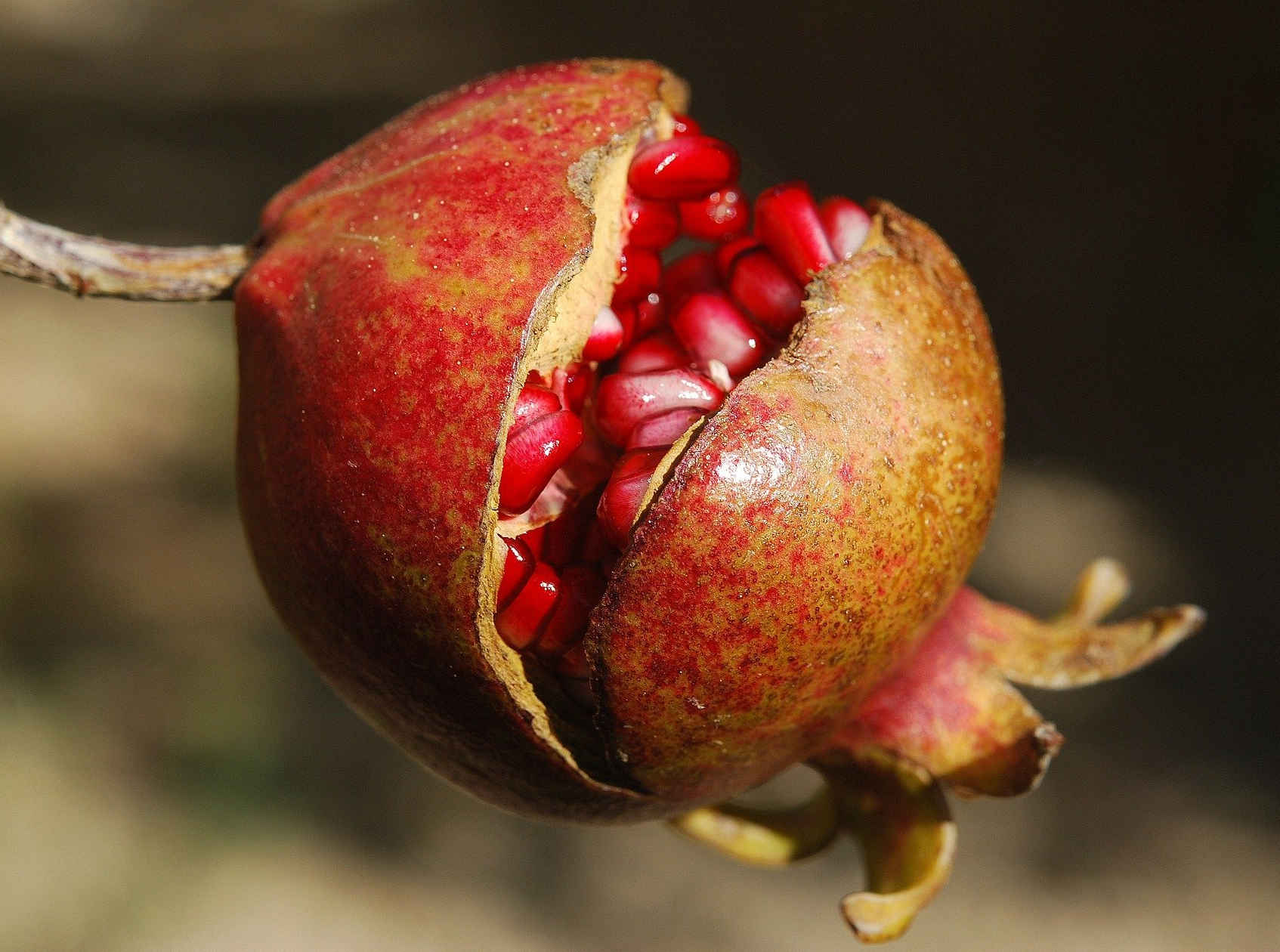
The fruit of eternal youth—the pomegranate bridges ancient mythology and modern antioxidant science.
Interesting facts about pomegranates
- A large portion of imported pomegranates is used in the production of cosmetics.
- Pomegranate seeds are used to dye carpets.
- 'Grenades' and 'pomegranate' – same etymology: Latin granatum = filled with seeds.
Effects & Properties
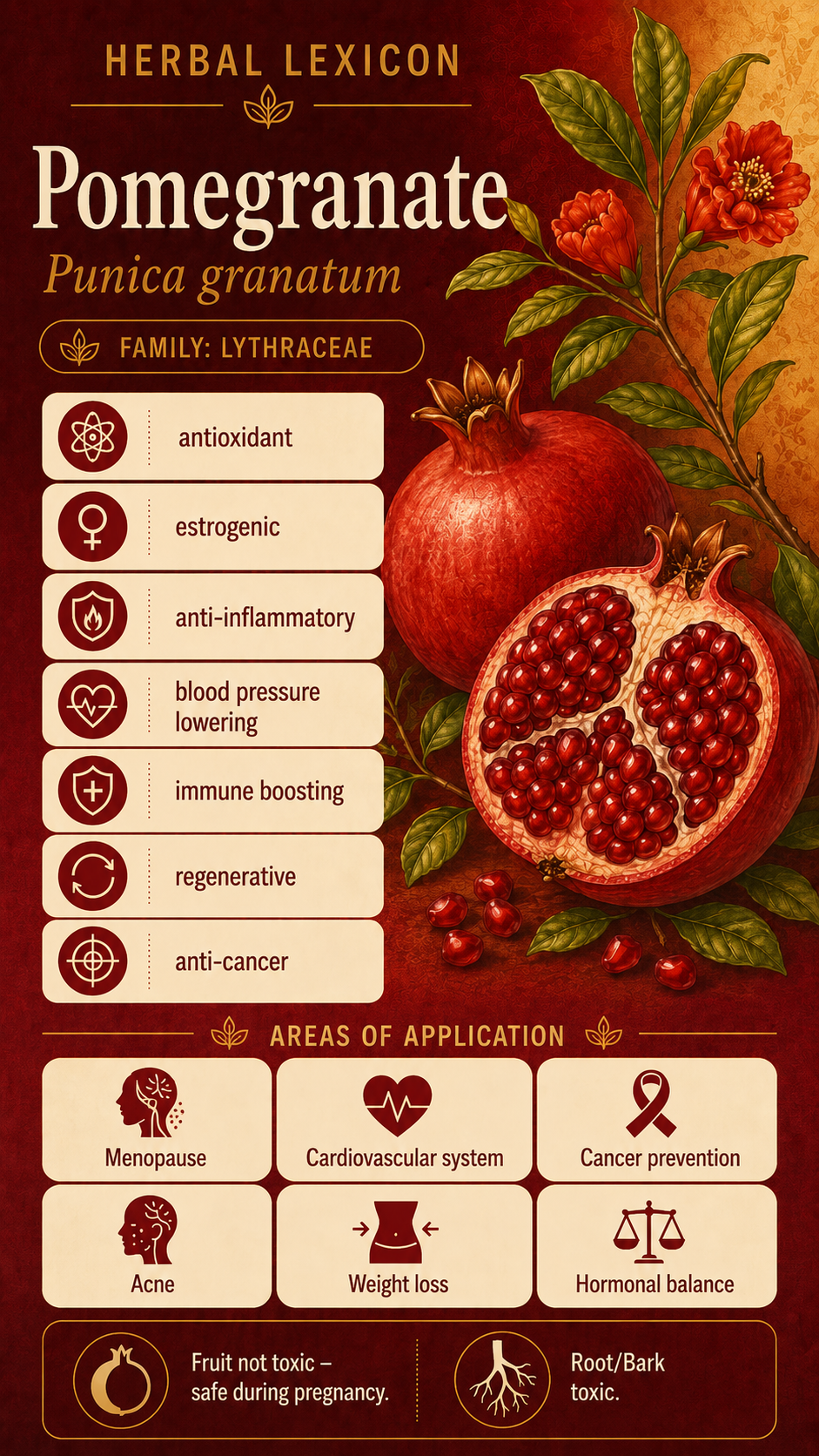
Antioxidants (Polyphenols, flavonoids, anthocyanins, vitamin C) act as free-radical scavengers, protecting blood vessels and cells from oxidative stress. phytoestrogens balance hormone levels. Meta-analysis: Vascular deposits around 35% off when consumed daily. The fruit is non-toxic – the root and bark are highly toxic!
Features: antioxidant, estrogenic, anti-inflammatory, blood pressure-lowering, immune-boosting.
Applications
Pomegranate for Acne
Hormone-related acne is caused by overstimulation of the sebaceous glands and is often accompanied by inflammatory processes in the skin. Pomegranate oil has a local anti-inflammatory effect and inhibits the skin bacterium Propionibacterium acnes. At the same time, it promotes the regeneration of scar tissue and improves skin texture. When applied topically as an oil, significant improvements are evident.
Punica granatum for menopausal symptoms
During menopause, estrogen levels drop—leading to hot flashes, mood swings, and vaginal dryness. The phytoestrogens in pomegranate are mild plant-based estrogens that gently bind to the body’s own receptors and help alleviate hormonal changes. They are particularly beneficial during perimenopause; after menopause, pomegranate oil significantly improves skin quality.
Pomegranates and Weight Loss
Pomegranates are rich in minerals and anthocyanins, which boost metabolism. Anthocyanins stimulate the pancreas and digestive glands, improve fat metabolism, and support insulin sensitivity. They have a low glycemic index—blood sugar rises slowly, and cravings are kept at bay.
Punica granatum for cardiovascular problems
In a meta-analysis, patients drank pomegranate juice daily for one year. The results were impressive: diastolic and systolic blood pressure decreased, blood flow to the heart muscle improved significantly, and atherosclerotic deposits in the carotid arteries decreased by up to 35%. This is primarily due to polyphenols and flavonoids, which act as antioxidants.
Pomegranate for Hormonal Balance
The phytohormones in pomegranates gently regulate hormone balance—not only in women, but in men as well. In men, they help lower stress hormone levels and improve the balance between testosterone and cortisol. The adaptogenic effect on the hormonal system makes pomegranates a valuable everyday remedy.
Punica granatum as a preventive measure against cancer
Studies have shown various anti-cancer properties: In estrogen-dependent breast cancer, phytoestrogens blocked the cancer-promoting effects of estrogen and inhibited tumor-induced angiogenesis. In lymphoma cells, regression to healthy cells or controlled cell death was observed. Pomegranate also has positive effects on PSA levels in prostate cancer. Valuable as a preventive measure.
Instructions for Use
As fruit, juice, or seed oil—consumed regularly for long-term benefits.
Pregnancy & Breastfeeding
No need to worry—in Iran, pomegranates are traditionally recommended during pregnancy.
Pomegranate and Pill
No significant effect on the birth control pill—the hormone dosage in the pill is too high for the weak phytoestrogens in pomegranates to have any noticeable effect on it.
Important: Fruit vs. Bark/Root
Fruit: non-toxic. Root and bark: highly toxic – Do not eat.
Plant Profile
- Scientific name: Punica granatum
- Plant family: Lythraceae
- Other names: Grenadine, Paradise Tree
- Flowering period: July (Europe)
- Origin: The Near East
- Toxicity: Fruit non-toxic – root/bark highly toxic