

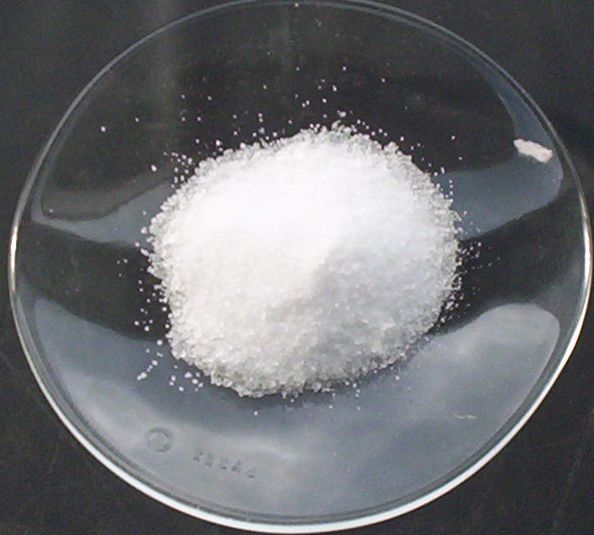
Glauber's salt is the Schüssler salt associated with excretion—Schüssler Salt No. 10, named after its discoverer, Johann Rudolf Glauber, in the 17th century. As a mineral salt used for diuresis and detoxification, it serves as the final step in many cleansing and detoxification regimens.
Fascinating Facts About Glauber's Salt
- As a pure substance, it is obtained primarily from the naturally occurring mineral mirabilite.
- It can also be produced artificially by reacting rock salt with sulfuric acid—a reaction that produces hydrochloric acid and sodium sulfate.
- Outside the field of medicine, it plays an important role as a filler in laundry detergents and in glass manufacturing.
- When Glauber's salt dissolves in water, the solution cools noticeably—an endothermic dissolution process that Johann Rudolf Glauber had already observed.
Effects & Properties
Osmotic laxative: Sodium sulfate increases the osmotic pressure inside the intestine. Water is drawn into the intestinal lumen and retained there, softening the stool and accelerating intestinal transit. Liver Cleanser: stimulates the production of bile, which can flow more readily and in greater quantities into the intestines, where it binds to harmful substances. Diuretic: binds excess water in the tissues and helps eliminate it through the kidneys and lymphatic system. Metabolism-boosting: promotes the secretion of digestive fluids from the kidneys, intestines, gallbladder, and pancreas, thereby indirectly aiding in detoxification.
Features: laxative, detoxifying, diuretic, liver-cleansing, purgative, anti-inflammatory.
Storage Locations & Deficiency Symptoms
Mainly in the extracellular space of all tissues, particularly in the liver, gallbladder, kidneys, and connective tissue. Possible symptoms of deficiency:
- Constipation, sluggish digestion, bloating
- Water retention in the legs, feet, and eyelids
- Rheumatic symptoms in cold, damp weather
- Metabolic skin conditions with a tendency to become scaly or weeping
Areas of Application
Gluer's Salt for Constipation
Constipation often occurs when too much water is drawn from the intestinal contents, causing the stool to become hard and difficult to pass. Sodium sulfuricum increases the osmotic pressure inside the intestine, thereby drawing water back into the intestine in a targeted manner. The stool becomes softer, and intestinal transit is naturally accelerated without artificially stimulating the intestinal muscles.
Glauber's salt for detoxification and to support fasting
An unhealthy lifestyle characterized by a high-fat diet, alcohol, and stress often leads to the accumulation of metabolic waste products in the tissues. Glauber’s salt stimulates bile production and helps the liver bind metabolic waste products and excrete them through the intestines. Traditionally, the raw substance is therefore used at the beginning of fasting regimens; in spagyric medicine and homeopathy, the potentized form is used as part of a treatment regimen to support the detoxification process.
Sodium Sulfate for Rheumatic Ailments
If the body does not completely eliminate waste products, they can accumulate in the connective tissue and joints and contribute to rheumatic symptoms, especially in cold, damp weather. Glauber’s salt helps remove these deposits from the extracellular space and can thus provide additional relief.
Glauber's salt for skin and mucous membrane conditions
Metabolism-related skin conditions—such as those in the psoriatic spectrum, cradle cap, or weeping eczema—are often linked to inadequate internal detoxification. Sodium sulfuricum supports elimination through the liver and intestines, thereby relieving the skin—which acts as a secondary excretory organ—and allowing the skin’s condition to improve.
Glauber's salt for water retention
Swollen legs, feet, and eyelids occur when fluid accumulates in the tissues—a common issue, especially as pregnancy progresses. Glauber's salt helps regulate fluid balance, allowing retained fluid to be more effectively drained and excreted; when used early on, it can also serve as a preventive measure.
Glauber's salt for metabolic support
Sodium sulfuricum not only stimulates excretion but also supports the function of the kidneys, intestines, gallbladder, and pancreas in the production and secretion of digestive juices. This benefits the entire metabolism—for example, after nights of heavy partying with copious amounts of alcohol—which is why the salt is also popularly regarded as a tried-and-true hangover remedy.
Instructions for Use
Available as tablets, globules, or drops; traditionally taken as a course of treatment lasting several days to weeks; in spagyric medicine, also used as a component of complex mixtures. For acute symptoms, take several times a day; for chronic conditions, take one to three times a day—the frequency is reduced as symptoms improve.
Pregnancy & Breastfeeding
No concerns—there are no special precautions to take when taking this medication during pregnancy or while breastfeeding.
Profile
- Content: Sodium sulfate (Glauber's salt)
- Description: Salt of Excretion
- Occurrence: Intestines, liver, gallbladder, kidneys, connective tissue
- Schüssler No.: 10
- Typical potency: D6
